What Fruit Trees Grow in Ontario

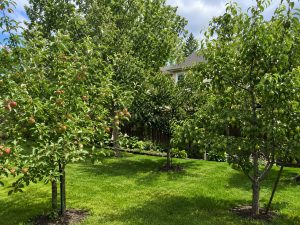
Many fruit trees grow well in Ontario, but success depends on choosing the right tree for the local climate, soil, sun exposure, and yard space. Apples, pears, plums, cherries, and some peach varieties can all grow in Ontario when planted in the right location and cared for properly.

For homeowners in Simcoe County and the Barrie area, the biggest mistake is not choosing a fruit tree. It is choosing one that looks good at the nursery but does not fit the property, the winter conditions, or the amount of maintenance the tree will need.

Common Fruit Trees That Grow in Ontario

Ontario can support several types of fruit trees, especially in areas with full sun, good drainage, and protection from harsh wind. Some varieties are better suited to colder inland areas, while others perform better in milder pockets closer to large bodies of water.

Common fruit trees grown in Ontario include:

  • Apple trees
  • Pear trees
  • Plum trees
  • Cherry trees
  • Peach trees
  • Apricot trees
  • Nectarine trees
  • Crabapple trees
  • Mulberry trees
  • Serviceberry trees

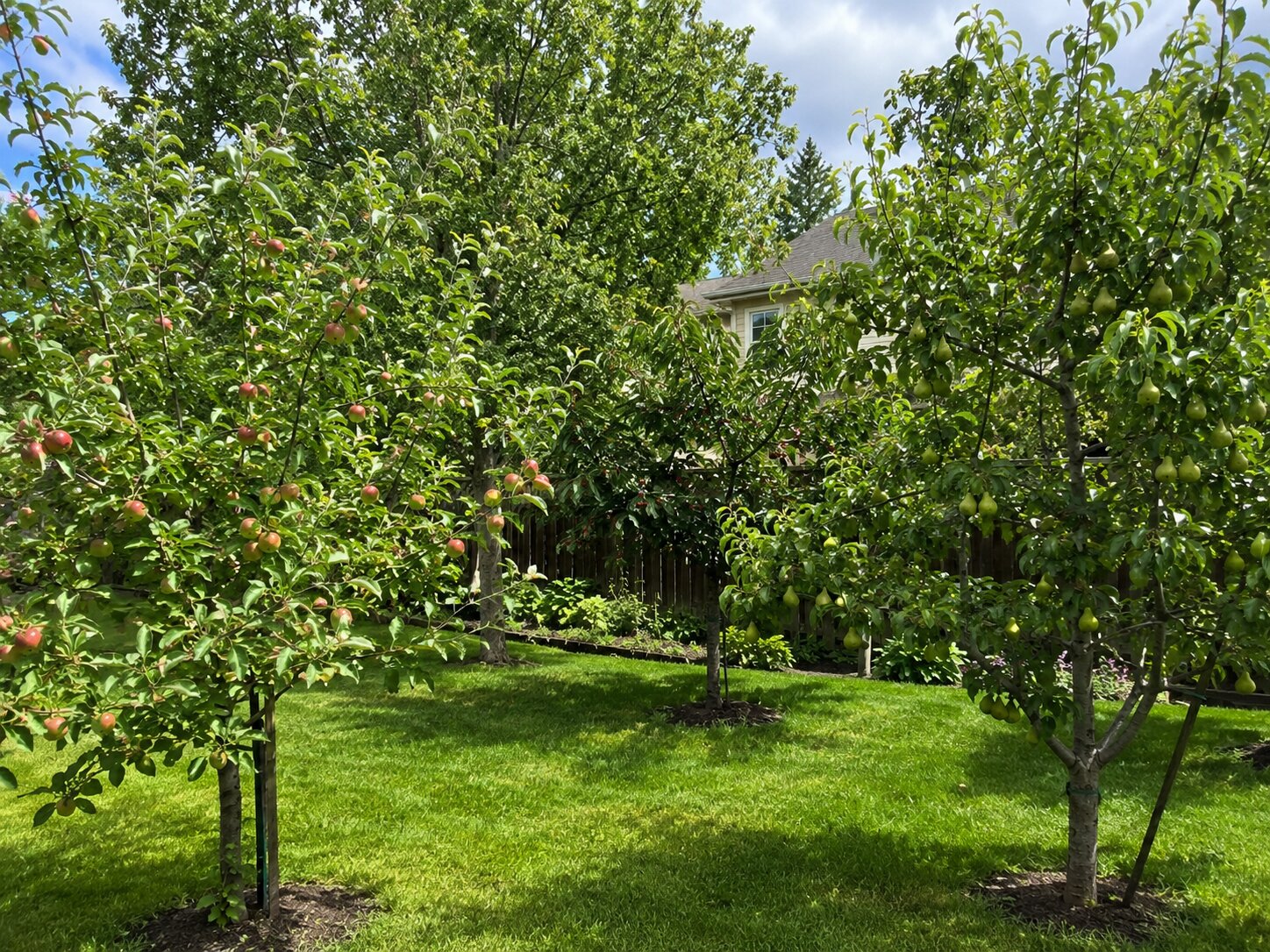
Apple trees are usually the most reliable choice for Ontario homeowners. Pears and plums can also do well with the right variety. Cherries, peaches, apricots, and nectarines need more careful placement because they can be more sensitive to spring frost and winter injury.

Crabapple trees are often planted for flowers and wildlife value, but many also produce small edible fruit. Serviceberry is not always treated like a traditional orchard tree, but it can be a strong choice for homeowners who want spring flowers, edible berries, and a tree that handles Ontario conditions well.

Little Tip:

Choose fruit tree varieties by hardiness zone, not only by the fruit you want. A beautiful peach tree that struggles every winter will usually create more work than results.

Apple Trees Are the Most Reliable Fruit Tree for Ontario Yards

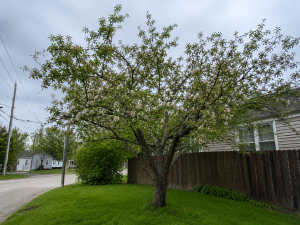
Apple trees are one of the strongest fruit tree options for Ontario because many varieties tolerate cold winters. They can grow well in backyard settings, rural properties, and older residential landscapes across Simcoe County.

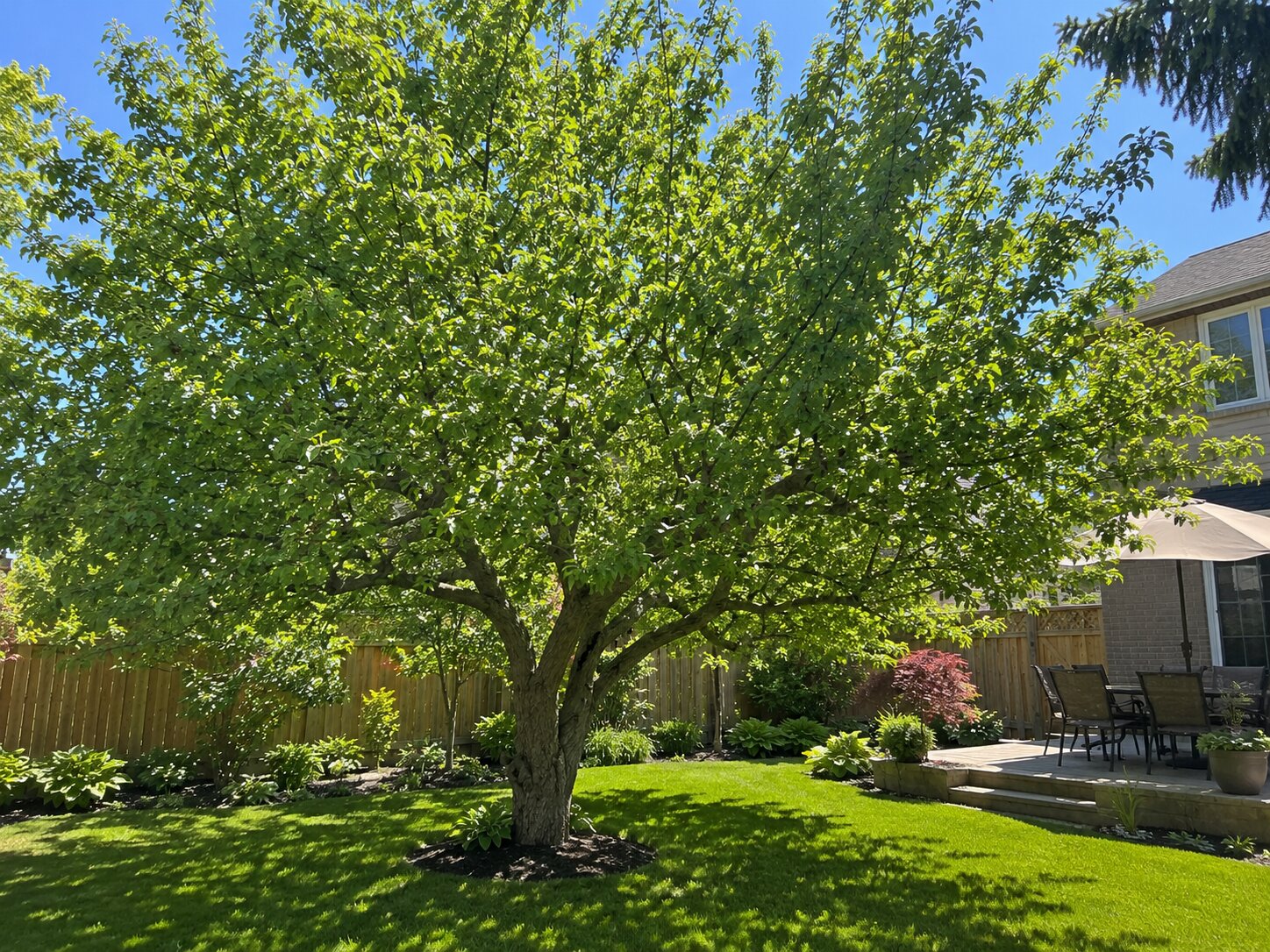
A healthy apple tree needs full sun, good airflow, and regular pruning. Without pruning, apple trees often become crowded, shaded through the centre, and more prone to weak branches. Fruit may still grow, but production usually becomes less consistent.

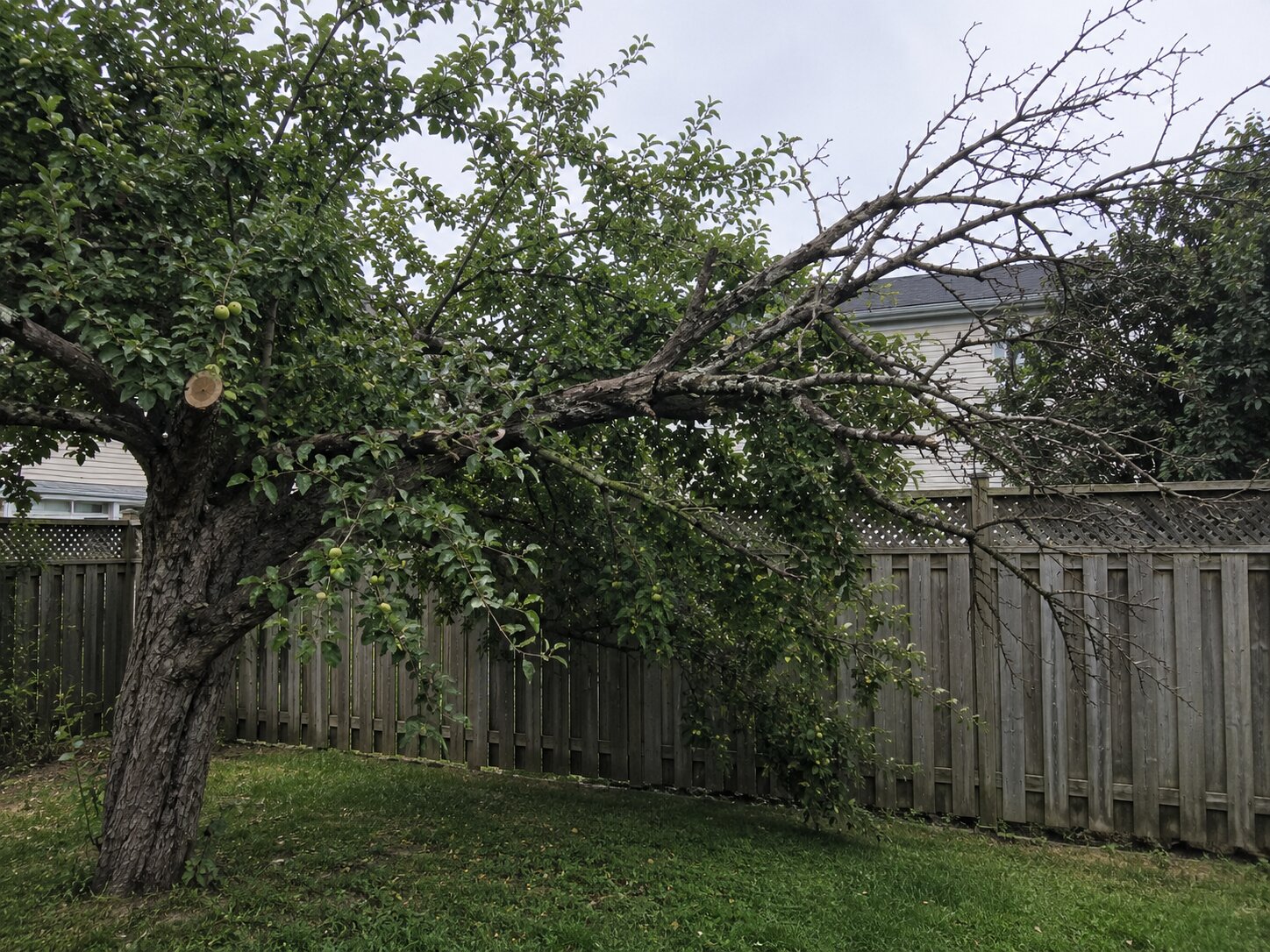
Older apple trees can also hide structural problems once the canopy fills in. A tree may look full and productive from a distance while carrying deadwood, crossing limbs, or heavy branches with poor attachment points.

Pear Trees Can Grow Well With the Right Variety

Pear trees can grow in Ontario, but variety selection matters. Some pears are hardy enough for colder regions, while others need a more protected location.

European pears are common in home landscapes, but they often need careful pruning to maintain shape. Pear trees can grow upright and dense, which makes canopy structure important from a young age.

Good airflow helps reduce disease pressure. Sunlight also helps fruit mature properly, especially in yards where buildings, fences, or larger trees create afternoon shade.

Local Tip:

In Barrie and nearby inland areas, spring frost can damage blossoms. Planting pear trees in a spot with morning sun and decent airflow can help reduce frost pockets around the tree.

Plum Trees Are a Good Option for Many Ontario Properties

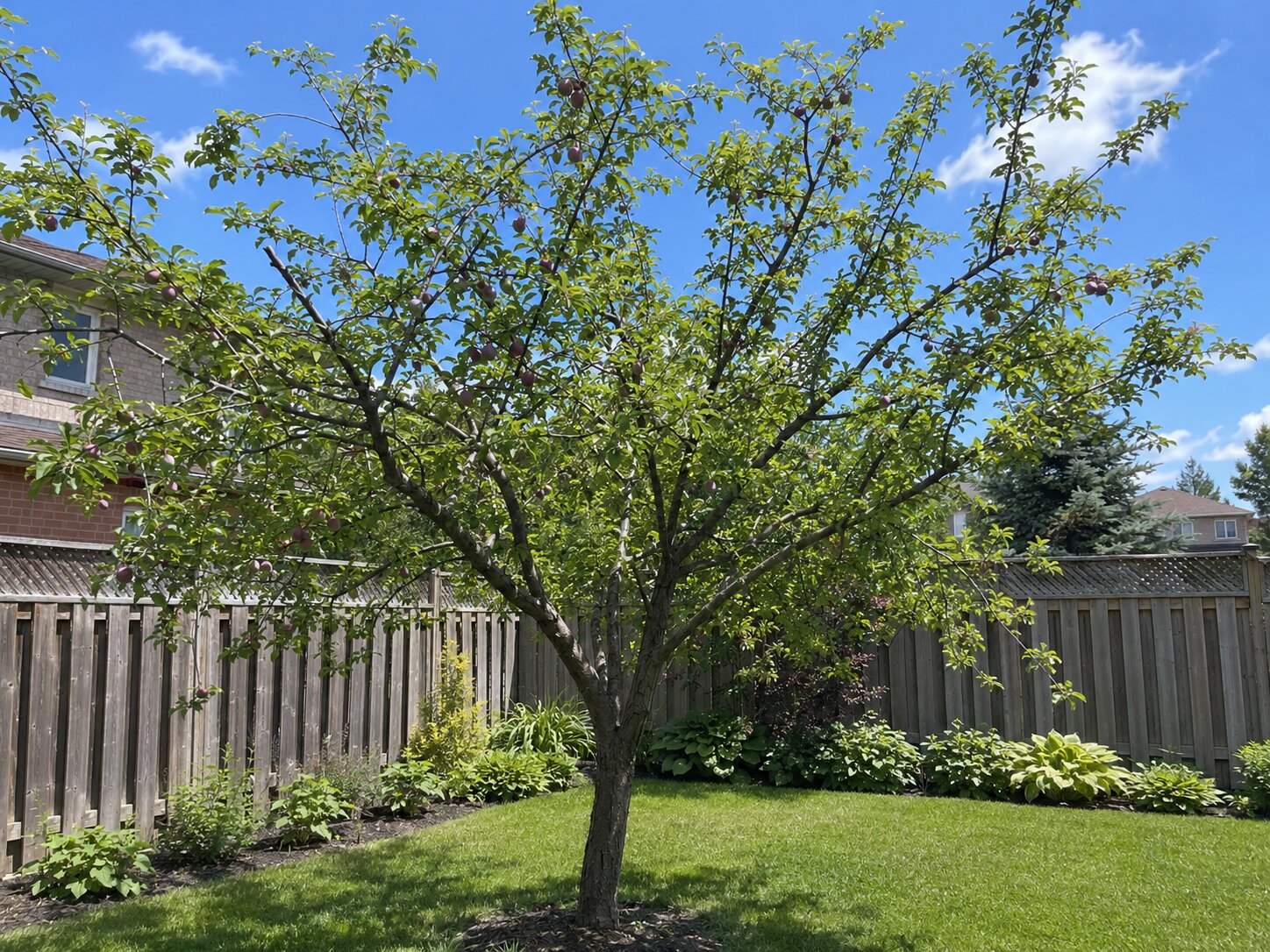
Plum trees can perform well in Ontario when the site is suitable. They generally need full sun and well-drained soil. Some plum varieties also need another compatible plum nearby for pollination.

Plums can grow quickly, which means pruning should not be ignored. A young plum tree that is left alone for several years can become crowded and awkward to correct later.

Branches may also become heavy when fruit production is strong. Proper spacing through the canopy helps reduce breakage and allows more light to reach developing fruit.

Cherry Trees Need Sun, Airflow, and Careful Placement

Cherry trees can grow in Ontario, especially sour cherries, which are usually hardier than sweet cherries. Sweet cherries can be more sensitive and may need a warmer, more protected site.

Good placement is important because cherry blossoms can be vulnerable to late frost. Trees planted in low, damp, shaded areas are more likely to struggle.

Cherry trees also benefit from careful pruning. Dense canopies hold moisture, and that can create better conditions for disease. A tree with balanced structure is easier to maintain and safer around a yard.

For general summer care across fruit trees and shade trees, our guide on Essential Summer Tree Care Tips for Ontario Homeowners gives homeowners a broader look at watering, heat stress, and seasonal maintenance.

Peach, Apricot, and Nectarine Trees Are More Sensitive

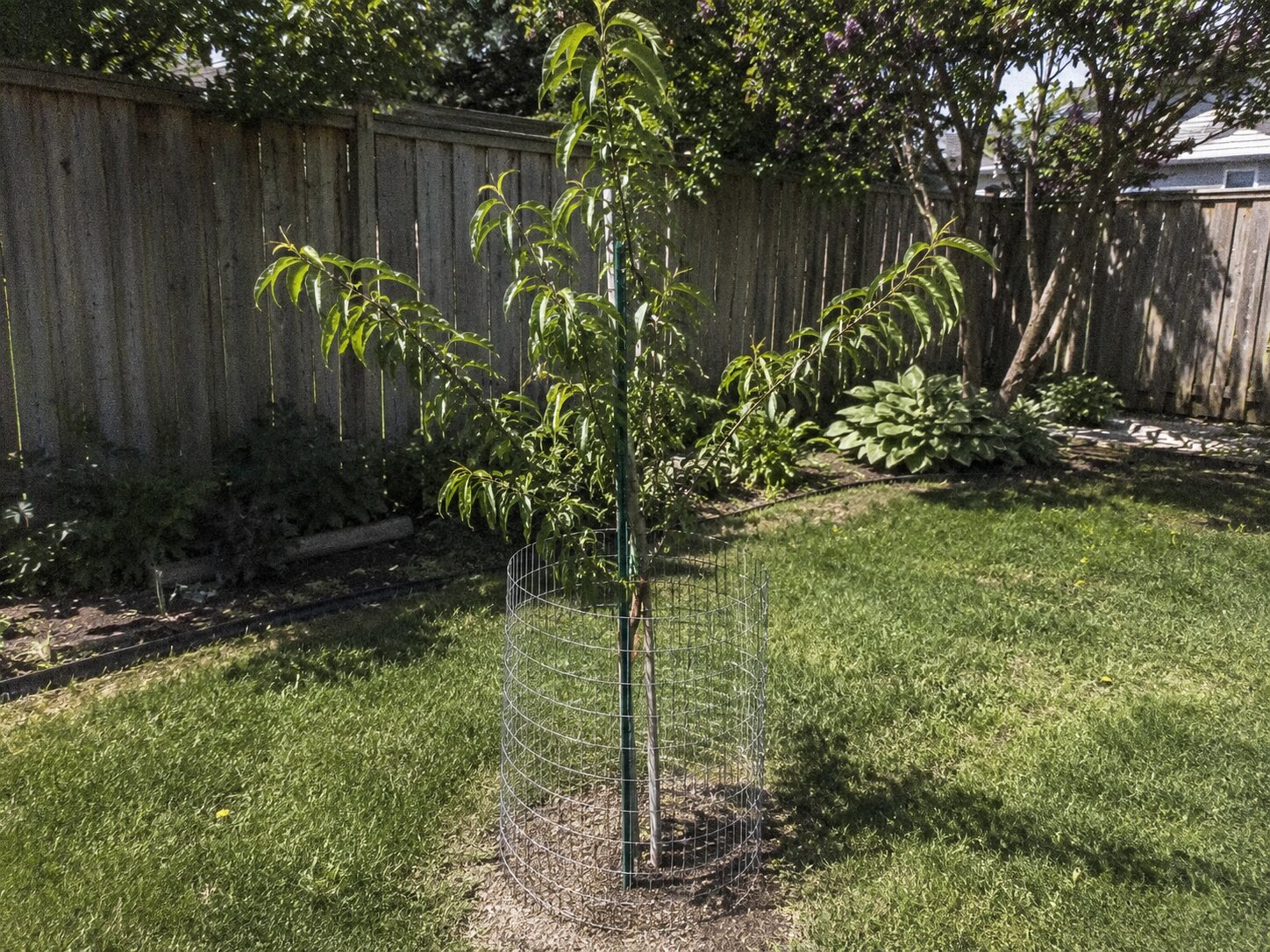
Peach, apricot, and nectarine trees can grow in parts of Ontario, but they are less forgiving than apples or pears. Winter injury, late frost, and poor site selection can all limit success.

These trees usually need a warm, sunny, protected spot. South-facing areas can help, especially where cold wind is reduced. Heavy clay soil, standing water, and exposed locations make success harder.

Apricot trees can be especially tricky because they often bloom early. A warm spell followed by frost can damage blossoms before fruit has a chance to develop.

Local Tip:

For tender fruit trees, the planting location matters almost as much as the variety. A protected microclimate beside a fence, hedge, or building can sometimes make a noticeable difference.

Mulberry and Serviceberry Trees Are Worth Considering

Not every fruit tree in Ontario needs to look like a traditional orchard tree. Mulberry and serviceberry can be strong options for homeowners who want edible fruit with a more natural landscape feel.

Mulberry trees can produce a lot of fruit, but placement is important. Fallen berries can stain patios, walkways, cars, and decks. A mulberry tree may be better placed away from hard surfaces.

Serviceberry trees are often easier to fit into residential yards. They offer spring flowers, edible berries, fall colour, and wildlife value. For smaller properties, they can be a practical alternative to larger fruit trees that need more pruning and space.

Pruning Makes a Big Difference With Fruit Trees

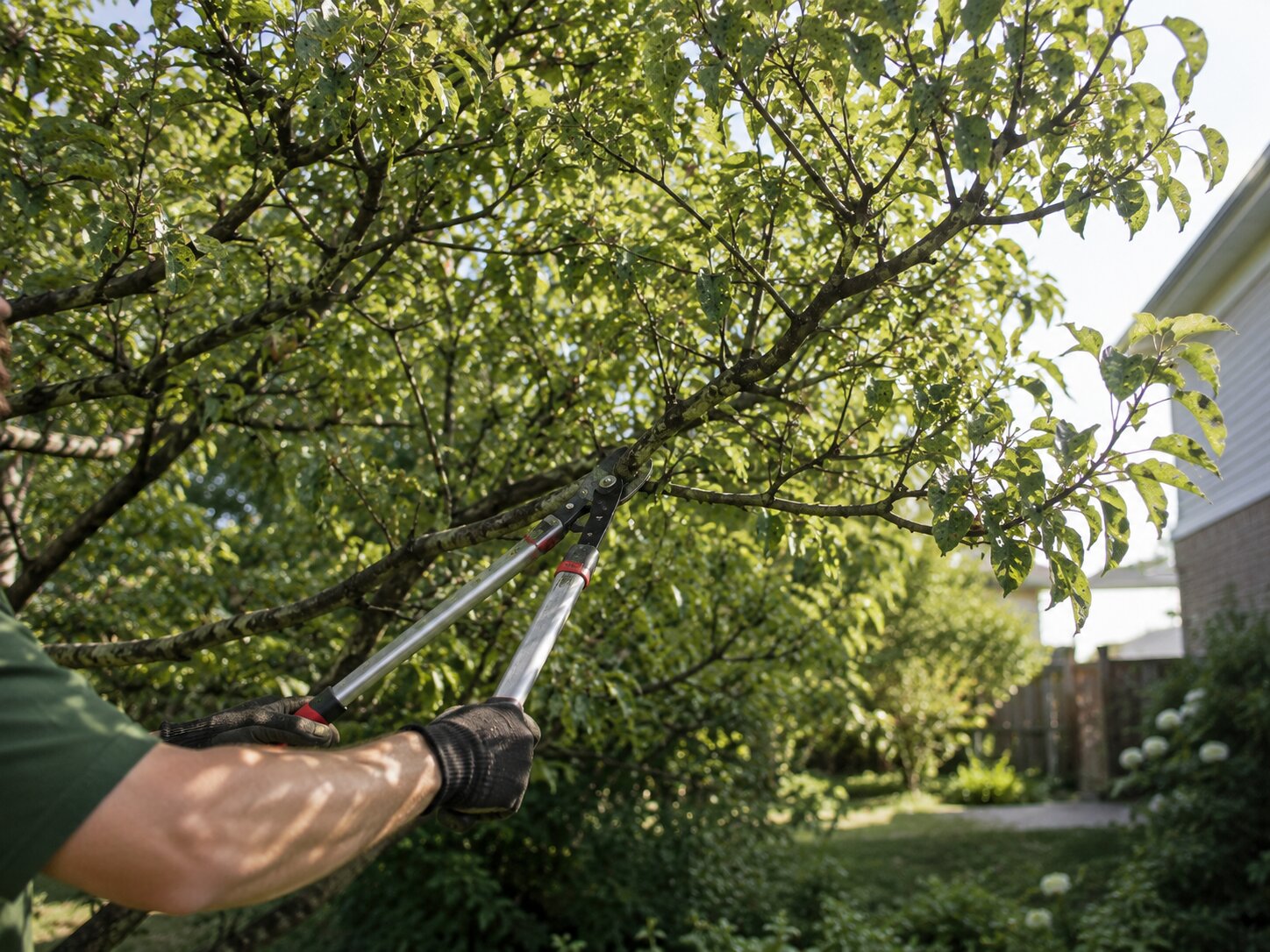
Fruit trees need more pruning than many ornamental trees. The goal is not just size control. Pruning helps shape the tree, reduce weak branches, improve sun exposure, and support better fruit production.

Young fruit trees need early structure. Mature fruit trees need maintenance. Older neglected trees may need a staged pruning plan over more than one season.

Hard cuts made at the wrong time can create stress and weak regrowth. Over-pruning can also reduce fruit production, especially when too much healthy fruiting wood is removed at once.

For homeowners in Barrie dealing with overextended fruit tree limbs near roofs, fences, or driveways, our Reduction Pruning Service can help reduce branch length while protecting the overall shape of the tree.

Fruit Trees Need Sun and Airflow to Produce Well

Most fruit trees need at least six hours of direct sun per day. More sun usually means better fruit quality, stronger growth, and fewer moisture problems inside the canopy.

Airflow is just as important. When branches become too dense, leaves and fruit stay wet longer after rain. That can increase disease pressure and make the tree harder to manage.

In Barrie yards with older apple, pear, or plum trees, professional canopy spacing can help restore light and airflow. Our Tree Thinning service is often useful when a fruit tree has become too crowded but still has a healthy structure worth preserving.

Choosing the Right Fruit Tree for an Ontario Yard

The best fruit tree for an Ontario yard is the one that fits the site. Apple trees are usually the safest starting point. Pears and plums can also be dependable. Cherries, peaches, apricots, and nectarines need more planning.

Before planting, look at sun exposure, drainage, available space, nearby structures, and how much maintenance the tree will need. A fruit tree planted too close to a fence, driveway, shed, or roofline can become a future pruning problem.

Good fruit tree care starts before the tree goes in the ground. The right variety, planted in the right spot, with proper pruning over time, will usually outperform a tree chosen only for the fruit on the tag.

Older Fruit Trees May Need More Than Pruning

Some older fruit trees can be restored. Others have too much decay, storm damage, or structural weakness to make pruning worthwhile.

The decision depends on the tree’s condition, location, and risk level. A declining fruit tree in the middle of a field is different from one leaning over a driveway, fence, garage, or walkway.

Homeowners comparing symptoms across the property can use our Tree Health Check Simcoe County article as a practical starting point before deciding whether a tree needs pruning, monitoring, or removal.

In Collingwood and nearby Simcoe County communities, older residential lots often have mature fruit trees that were planted decades ago. When decline reaches the point where safety becomes the main concern, our Tree Removal Collingwood page gives homeowners local removal context.

In Innisfil, fruit trees near cottages, lake-area homes, and family properties can become difficult to manage once trunks decay or large limbs fail. Our Tree Removal Innisfil page outlines local service support when removal becomes the safer option.

Tree Care Services Near You!

Finding Expert arborists

Curious about tree trimming, stump grinding, or professional tree removal? Explore our website to learn more about how Tyler’s Tree Services can help keep your property safe and beautiful. Whether you need expert advice or a service quote, we’ve got you covered!

8 Years+ Of Expertise

With nearly a decade of experience, we handle everything from precise trimming to safe removals, ensuring top-quality care.

WSIB Certified

Fully insured and WSIB certified, we follow strict safety standards to protect your property and our crew on every job.

Satisfaction Guaranteed

We’re committed to expert service and clean results, ensuring you’re fully satisfied with every tree we trim or remove.

Fully Insured

We are insured with $5M coverage ($2M per occurrence), ensuring a worry-free experience on every job you hire us for.

Disclaimer

The information in this article was compiled from reputable public sources and interpreted by an expert copywriter for general educational purposes. While Tyler’s Tree Services makes every effort to provide accurate and up-to-date guidance on tree care and safety in Orillia, conditions can vary by property, tree species, and season. This content is not a substitute for a professional arborist’s inspection or advice. Tyler’s Tree Services and its authors are not responsible for any actions taken based on this article. For personalized tree care recommendations or safety concerns, we strongly recommend consulting a certified arborist

When to Prune Apple Trees in Ontario

This guide explains the best pruning season, what branches to remove, and how proper pruning improves airflow, tree structure, and fruit production for healthier apple trees long term.

Read More

What Fruit Trees Grow in Ontario

Many fruit trees grow in Ontario when matched to the right site and climate. This guide covers reliable options like apple, pear, plum, and others. It also explains why sunlight, airflow, pruning, and tree health matter for long-term fruit production.

Read More
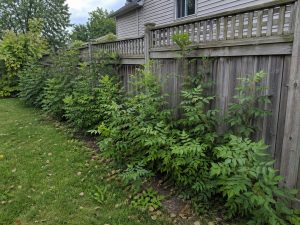
sumac spreading near fence Ontario

How To Get Rid of Sumac

Sumac can spread quickly across Ontario properties. Learn how to identify, control, and safely remove it, and know when professional removal is the right step for your yard.

Read More
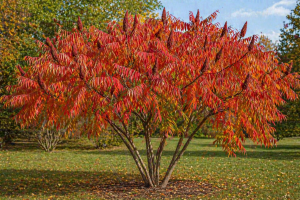
sumac tree Ontario

Sumac Tree in Canada

Sumac trees are common across Ontario. Learn how to identify safe vs poisonous sumac by leaves, berries, and growth patterns with this simple guide for homeowners.

Read More

Sugar Maple Tree in Ontario

Sugar Maple Trees in Ontario Barrie Simcoe County: identification, growth, and care tips to manage structure, prevent damage, and maintain long-term property value.

Read More
dead-limb-removal-orillia-home

Dead Limb Removal Orillia

Orillia’s mix of lake winds and heavy snow makes dead tree limbs dangerous. Learn how to spot weak branches and keep your home safe this fall.

Read More
tree-roots-driveway-barrie-ontario

Tree Root Damage Barrie

Roots may be hidden underground, but they can crack driveways and shift foundations. Discover how Barrie homeowners can prevent costly root damage.

Read More
dangerous-dead-limb-barrie-tyler-tree-services

Dead Limb Removal Barrie

Dead limbs are one of the top causes of storm damage in Barrie. See the warning signs and how professional removal protects your home year-round.

Read More