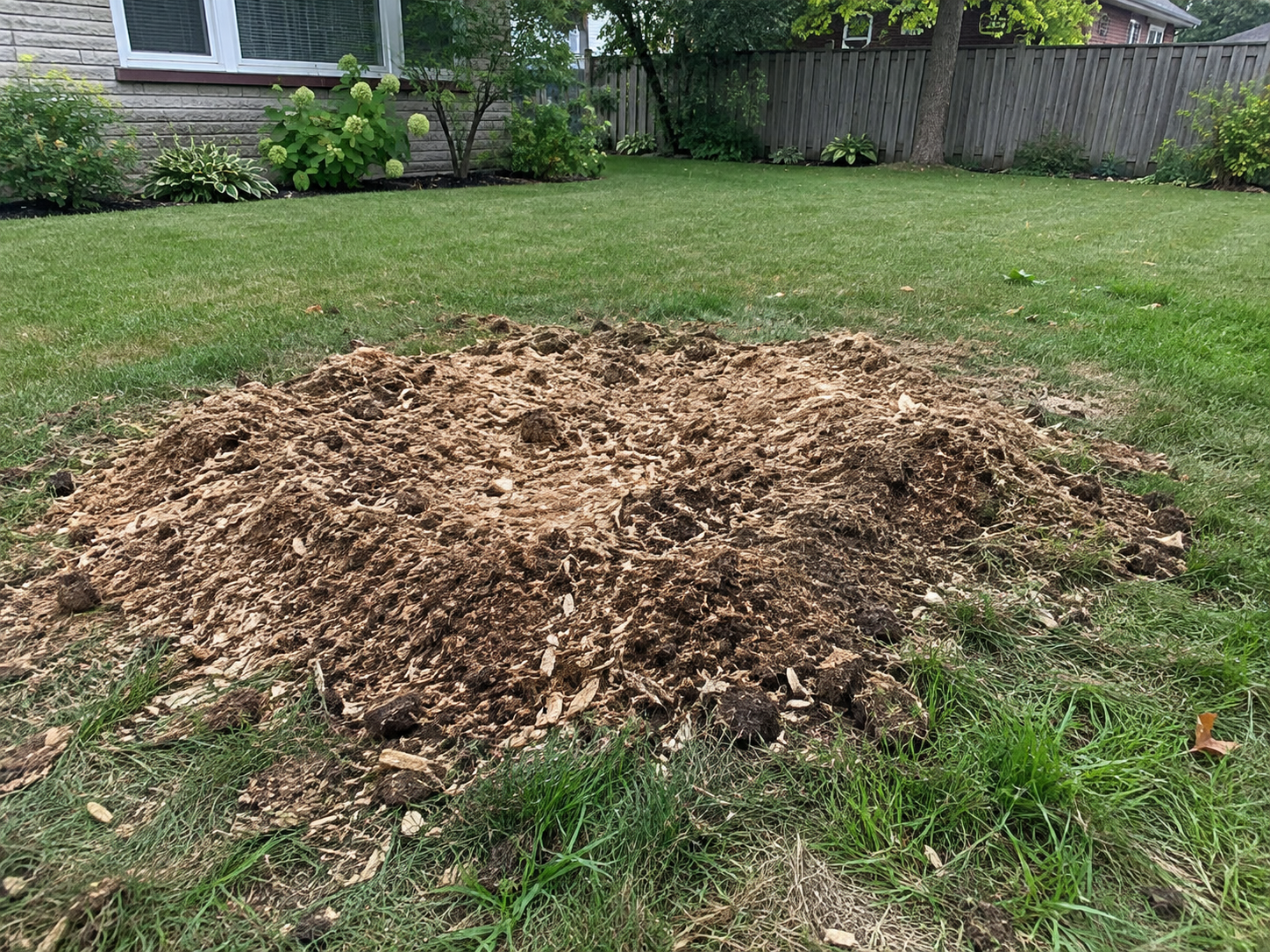
After stump grinding, the area can often be reused for grass, garden beds, or new landscaping, but the site usually needs preparation first. The visible stump may be gone, but wood chips, remaining roots, uneven soil, and drainage conditions can affect what grows there next.
The best choice depends on what you want the area to become. A lawn repair is usually simpler than planting a new tree or installing a permanent landscape feature.
Before planting anything, decide how the space needs to function. A small lawn patch, a flower bed, a shrub border, and a replacement tree all need different preparation.
Stump grinding creates a mix of soil and wood chips where the stump used to be. That material may look level right after the work is done, but it can settle as the chips break down and the remaining root material decays underground.
For Barrie homeowners planning to reuse the space soon after grinding, our stump grinding services can help remove the visible stump and explain how the area will likely be left once grinding is complete.
Tell us your plan before the stump is ground. Lawn repair, replanting, and hardscape prep each call for a different cleanup expectation.
Wood chips are useful in the right place, but too many chips mixed into the planting area can make it harder for grass, flowers, shrubs, or trees to establish.
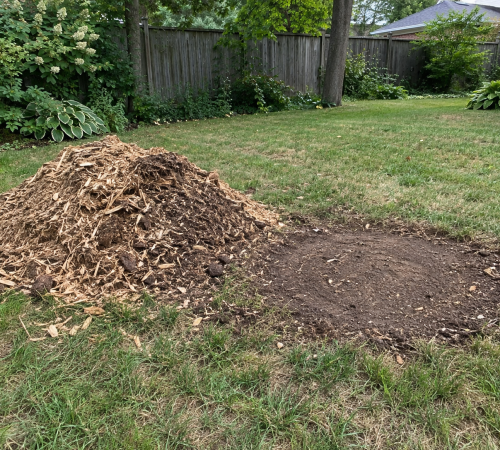
After stump grinding, the hole is often filled with grindings from the stump. Some homeowners choose to leave that material temporarily. For planting, it is usually better to remove a good portion of the chips and replace the area with quality soil.
This matters because fresh wood material breaks down over time. As it decomposes, the area may settle and the soil conditions can shift. Plants need soil contact, moisture, and room for roots to establish, not a deep pocket of loose chips.
In Simcoe County, pines near roads and driveways can be hit by salt, reflected heat, compacted soil, and snowbank pressure. Those site conditions can make browning worse even when the tree does not have a single obvious injury.
Settling is normal after stump grinding. The larger the stump, the more material has been disturbed below the surface.
Some settling can happen within weeks. More can happen over the first season as chips compress and old root material starts to decay. If the area is filled once and ignored, a low spot may appear later.
For grass or a small garden bed, that can usually be corrected with topsoil. For patios, walkways, sheds, or other permanent features, settling needs more planning. A fresh stump-grinding area should not be treated like compacted, undisturbed ground.
Our guide on what happens to roots after stump grinding explains why roots remain underground and how natural decay can affect the area over time.
In Ontario yards with clay-heavy soil, low spots can hold water after rain. Watch the area after a few storms before making permanent landscape decisions.
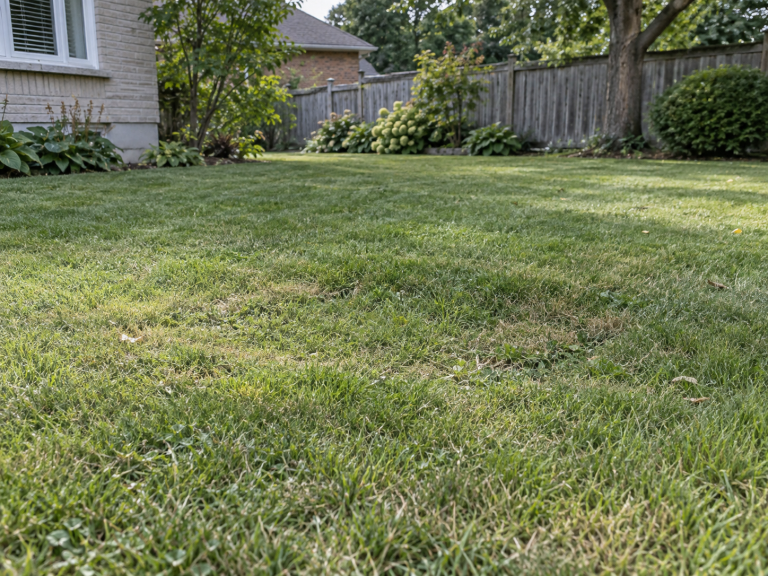
Grass is one of the most common choices after stump grinding. It is usually the easiest way to return the area to a clean lawn surface.
The area should be cleared of excess chips, topped with soil, levelled, and seeded. Good seed-to-soil contact matters when establishing new grass. If grass seed sits mostly on wood chips, germination and root development may be uneven.
Watering also needs attention. The area may dry differently than the surrounding lawn because the soil has been disturbed. Light, consistent watering can help the new grass establish, but drainage and shade will still affect results.
If the stump was large, expect some touch-up work later. A bit of extra topsoil and seed may be needed after the first round of settling.
A garden bed can work well after stump grinding when the site is prepared properly. Flowers, perennials, and some shrubs may establish better than grass in certain areas, especially where the site already has shade, uneven soil, or nearby roots.
The main step is improving the planting zone. Remove excess stump grindings, add proper soil, and check how water moves through the area. If the old stump was close to a fence, patio, driveway, or house, drainage should be watched carefully.
Do not assume every plant will perform the same way in that spot. Soil depth, sunlight, moisture, remaining roots, and nearby tree competition can all affect growth. A shallow decorative bed may be realistic sooner than a deeper planting plan.
Planting a new tree directly in the old stump location is usually not the best first choice without proper preparation. The old root system may still be underground, the soil may be uneven, and the planting hole may contain too much decomposing wood material.
A new tree needs stable soil, proper depth, drainage, and enough space for roots to spread. When the old stump area is packed with chips and decaying roots, the new tree may struggle to establish.
In many cases, planting the replacement tree a few feet away is better. That gives the new tree a cleaner start and avoids forcing young roots into the same disturbed pocket.
If the original tree was removed because of disease, poor drainage, root damage, or site stress, replacing it in the exact same spot can repeat the problem. The reason for removal should guide the planting plan.
The condition of the old tree can affect what should happen after grinding. A healthy tree removed for space is different from a dead, decayed, storm-damaged, or diseased tree.
If the old tree was removed because it was declining, the site should be considered carefully before replanting. Soil compaction, drainage, shade, construction damage, or disease pressure may still be present after the stump is gone.
In Barrie and surrounding Simcoe County communities, our tree removal services can be planned with the future use of the area in mind, especially when the homeowner knows they want lawn repair, a garden bed, or replacement planting afterward.
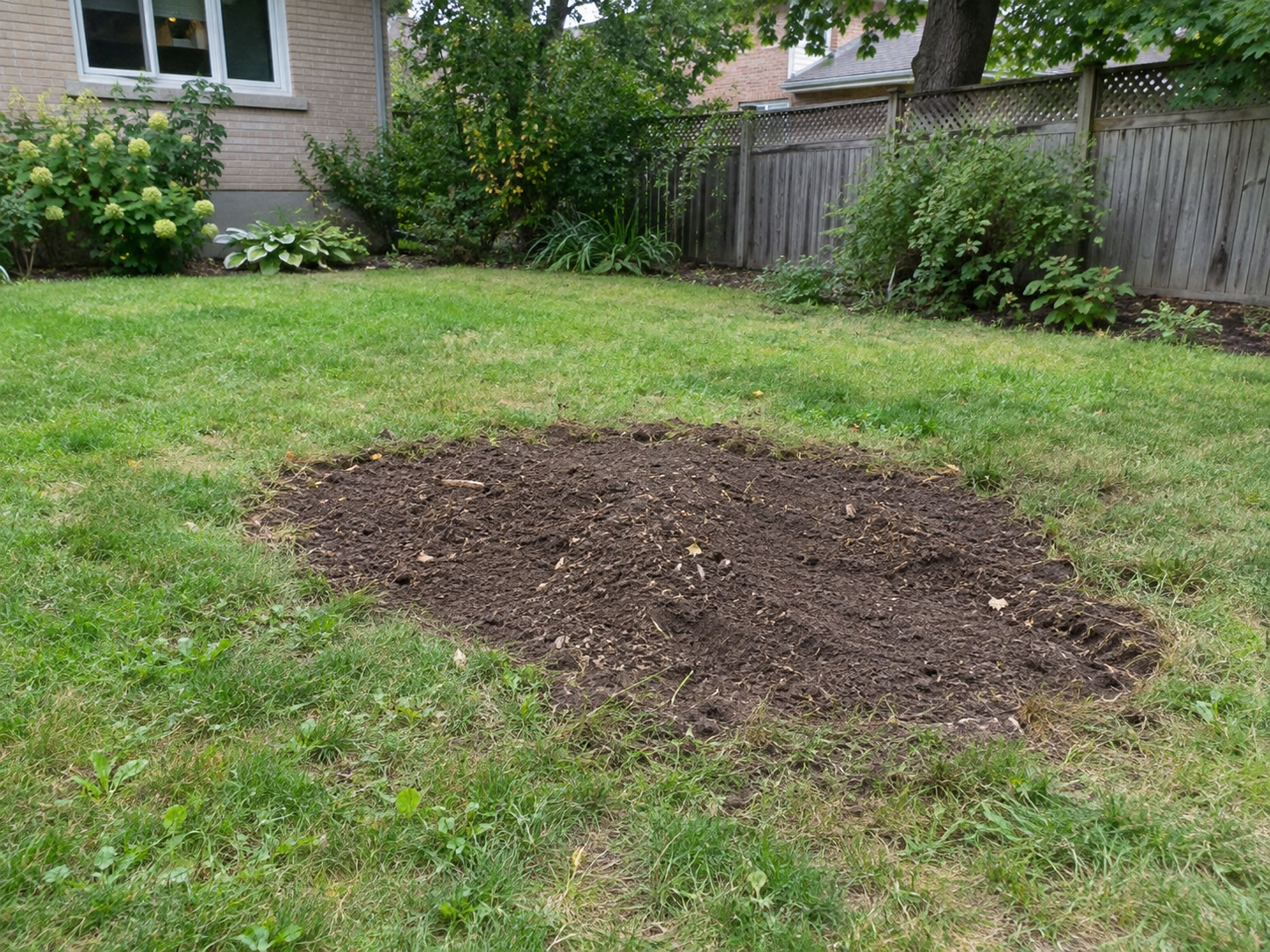
Water movement matters after stump grinding. A low area can collect water, while a raised area of chips can dry out too quickly.
Before planting, check the spot after rain. If water sits for long periods, grass and many landscape plants may struggle. If the area dries faster than the surrounding lawn, new plantings may need more attention while they establish.
Drainage is especially important near patios, foundations, fences, sheds, and walkways. Adding soil without understanding where water goes can create a new low spot or push water toward an area where it should not collect.
A clear plan makes the finished area easier to use. Before stump grinding, ask how deep the stump can be ground, what happens to the grindings, and what cleanup is included.
It also helps to explain the next use of the area. If you want grass, we can talk through surface cleanup and soil replacement. If you want a garden bed, the focus may be on removing more chips from the planting zone. If you want a new tree, the location and soil preparation matter more.
Ask Tyler’s Tree Services how the site will be left after grinding so you can plan the next use of the area. Send the details and request a quote before the work begins so we can understand the stump, access, cleanup expectations, and future plans for the space.
Curious about tree trimming, stump grinding, or professional tree removal? Explore our website to learn more about how Tyler’s Tree Services can help keep your property safe and beautiful. Whether you need expert advice or a service quote, we’ve got you covered!

With nearly a decade of experience, we handle everything from precise trimming to safe removals, ensuring top-quality care.

Fully insured and WSIB certified, we follow strict safety standards to protect your property and our crew on every job.

We’re committed to expert service and clean results, ensuring you’re fully satisfied with every tree we trim or remove.

We are insured with $5M coverage ($2M per occurrence), ensuring a worry-free experience on every job you hire us for.
The information in this article was compiled from reputable public sources and interpreted by an expert copywriter for general educational purposes. While Tyler’s Tree Services makes every effort to provide accurate and up-to-date guidance on tree care and safety in Barrie & Simcoe County. Conditions can vary by property, tree species, and season. This content is not a substitute for a professional arborist’s inspection or advice. Tyler’s Tree Services and its authors are not responsible for any actions taken based on this article. For personalized tree care recommendations or safety concerns, we strongly recommend consulting a certified arborist
