5 Essential Summer Tree Care Tips for Ontario Homeowners-Tyler-Tree-Services

5 Essential Summer Tree Care Tips for Ontario Homeowners

Heavy heat and sporadic summer storms can take a toll on your landscape trees—especially here in Barrie and across Ontario. Follow these five key practices to keep your trees healthy, resilient, and beautiful all season long.

1. Deep, Infrequent Watering for Ontario Trees

Young and newly planted trees need regular, thorough watering to establish deep roots. Use a soaker hose or “tree bag” at the base, allowing water to seep slowly into the root zone for 30–60 minutes once every 5–7 days. This encourages roots to grow deeper and withstand dry spells better spsonline.com.

Steps that Home Owner Can Take:

  1. Place a soaker hose or tree-watering bag (e.g. Treegator) at the base, extending out to the drip line.
  2. Run water so it drips slowly for 30–60 minutes once every 5–7 days.
  3. Check soil moisture 10 cm down with a soil probe or screwdriver—stop when it feels damp.

When to Call Tyler:

– If leaves still wilt within 48 hours of watering, roots may be damaged or girdled—Tyler can assess root health and soil compaction.

2. Mulch to Retain Moisture

A 5–10 cm layer of organic mulch (wood chips, shredded bark) around the tree’s drip line reduces evaporation, moderates soil temperature, and suppresses weeds. Keep mulch 5–10 cm away from the trunk to prevent rot and pest harborage aaatrees.net.

Steps that Home Owner Can Take:

    1. Clear grass/weeds within a 1 m radius around the trunk.

    2. Spread 5–10 cm of shredded bark or wood chips in a donut shape—keep mulch 5–10 cm from the trunk flare.

    3. Replenish once mid-summer if it’s broken down.

When to Call Tyler:

– If you spot fungus fruiting bodies or excessive mulch “volcanoes,” Tyler can remove diseased material and advise on safe depths.

Mulch to Retain Moisture - Tylers Tree Service Expert Tree

3. Summer Pruning for Ontario Trees’ Storm Readiness

Light summer pruning removes dead or crossing branches that could snap under wind or heavy rain. It also improves air circulation, reducing disease risk. Reserve heavy structural cuts for late winter—summer trimming is only for small, corrective work aaatrees.net.

Steps that Home Owner Can Take:

    1. Steps to Take:

      1. Using sharp pruning shears or loppers, remove dead, crossing, or rubbing branches up to 2 cm thick.

      2. Make cuts just outside the branch collar at a 45° angle.

      3. Sanitize tools between cuts (70% isopropyl alcohol) to prevent disease spread.

When to Call Tyler:

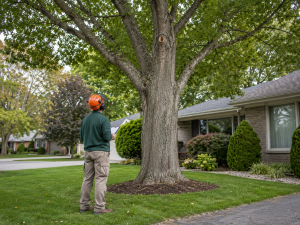
– For branches over 5 cm thick, high in the canopy, or near powerlines—Tyler’s certified arborists have the equipment and safety protocols.

4.Inspect Ontario Trees for Summer Heat & Wind Stress

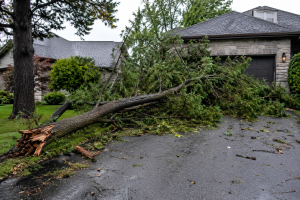
After any heat wave or high-wind event, walk your property looking for wilting or curled leaves, cracks in the trunk, or broken limbs. High winds of 60–70 km/h can snap branches and uproot shallow-rooted trees, creating hazards around your home canada.ca.

Steps that Home Owner Can Take:

    1. After any heat wave or storm, walk your property looking for:

      • Wilted or curled leaves

      • Cracks or splits in bark

      • Hanging or broken limbs

    2. Mark any issues with flagging tape.

    3. For minor cracks, wrap with arborist tape; for loose limbs, support with a temporary stake or rope

When to Call Tyler:

– If you find trunk splits >2 cm wide, large hanging limbs, or signs of uprooting—these present safety hazards best handled by professionals.

Inspect-Ontario-Trees-Tyler's-Tree-Services

5. Summer Fertilizing: Feed Your Ontario Trees’ Roots

A balanced, slow-release fertilizer in early summer replenishes nutrients lost to leaching. Apply a granular formula designed for trees—avoid quick-release products that burn roots. Follow label rates precisely to promote steady, healthy growth aaatrees.net.

Steps that Home Owner Can Take:

  1. In early June, broadcast a balanced, slow-release granular fertilizer (e.g. 10-10-10) over the drip zone.

  2. Lightly rake it into the top 2 cm of soil, avoiding direct contact with roots.

  3. Water in immediately to activate nutrients.

When to Call Tyler:

– If foliage remains pale or growth stunted after 4–6 weeks—Tyler can perform a soil test and recommend targeted treatments (biochar, root injections, etc.).

Summer-Fertilizing-For-Ontario-Trees-Tyler's-Trees

Tree Care Services Near You!

Finding Expert arborists

Curious about tree trimming, stump grinding, or professional tree removal? Explore our website to learn more about how Tyler’s Tree Services can help keep your property safe and beautiful. Whether you need expert advice or a service quote, we’ve got you covered!

8 Years+ Of Expertise

With nearly a decade of experience, we handle everything from precise trimming to safe removals, ensuring top-quality care.

WSIB Certified

Fully insured and WSIB certified, we follow strict safety standards to protect your property and our crew on every job.

Satisfaction Guaranteed

We’re committed to expert service and clean results, ensuring you’re fully satisfied with every tree we trim or remove.

Fully Insured

We are insured with $5M coverage ($2M per occurrence), ensuring a worry-free experience on every job you hire us for.

What to Do When a Tree Is Leaning Toward Your House

A leaning tree can become a serious safety risk when the movement is new, roots are exposed, soil is lifting, or the trunk is cracked. This guide explains how Ontario homeowners can recognize urgent warning signs, what conditions may wait for a scheduled assessment, and when to contact Tyler’s Tree...

Read More

Does Home Insurance Cover Fallen Tree Removal in Ontario?

Home insurance coverage for fallen tree removal in Ontario depends on the policy, the cause of damage, and whether the tree damaged insured property. This guide explains the common coverage distinction, why documentation matters, when cleanup cannot wait, and how Tyler’s Tree Services can provide safe fallen-tree removal and an...

Read More

Can You Remove a Tree From Your Own Property in Ontario?

Removing a tree from your own property in Ontario is not always as simple as ownership. Municipal rules, boundary trees, conservation areas, utility conflicts, and construction plans can all affect the next step. This guide explains what homeowners should confirm before removal and when to ask Tyler’s Tree Services for...

Read More

Why Are the Needles on My Pine Tree Turning Brown?

Brown needles on a pine tree can be normal seasonal shedding, but they can also point to stress, disease, drought, root damage, winter injury, or beetle activity. This guide explains how Ontario homeowners can read where the browning starts, what symptoms matter most, and when monitoring should stop so the...

Read More

How Much Does Tree Removal Cost in Ontario?

Tree removal cost in Ontario depends on more than tree height. This guide explains the main factors that affect pricing, why an on-site assessment is needed, how emergency conditions can change the cost, and when homeowners in Barrie, Orillia, and Simcoe County should request a tree removal estimate.

Read More

What Is an Arborist Report and When Do You Need One?

An arborist report provides written documentation about a tree’s condition, location, risk factors, and recommended next steps. This guide explains when homeowners may need an arborist report, how it differs from a basic estimate, and why reports are often used for permits, construction planning, neighbour concerns, tree-risk issues, and property...

Read More

Pine Beetles in Ontario: Signs Your Tree Is Under Attack

Pine beetle damage can weaken a tree before the problem is obvious. This guide explains the visible signs Ontario homeowners can inspect safely from the ground, how beetle damage affects pine trees, when removal may become a safety concern, and why an assessment should come before treatment claims.

Read More

How to Tell if a Tree Is Dead: Warning Signs Homeowners Should Know

A dead tree can become a safety risk around homes, driveways, fences, and walkways. This guide explains the clearest warning signs homeowners should watch for, how to inspect a tree from the ground, when a tree may still be stressed instead of dead, and when professional assessment or removal is...

Read More

When to Prune Apple Trees in Ontario

This guide explains the best pruning season, what branches to remove, and how proper pruning improves airflow, tree structure, and fruit production for healthier apple trees long term.

Read More

What Fruit Trees Grow in Ontario

Many fruit trees grow in Ontario when matched to the right site and climate. This guide covers reliable options like apple, pear, plum, and others. It also explains why sunlight, airflow, pruning, and tree health matter for long-term fruit production.

Read More
sumac spreading near fence Ontario

How To Get Rid of Sumac

Sumac can spread quickly across Ontario properties. Learn how to identify, control, and safely remove it, and know when professional removal is the right step for your yard.

Read More
sumac tree Ontario

Sumac Tree in Canada

Sumac trees are common across Ontario. Learn how to identify safe vs poisonous sumac by leaves, berries, and growth patterns with this simple guide for homeowners.

Read More

Sugar Maple Tree in Ontario

Sugar Maple Trees in Ontario Barrie Simcoe County: identification, growth, and care tips to manage structure, prevent damage, and maintain long-term property value.

Read More