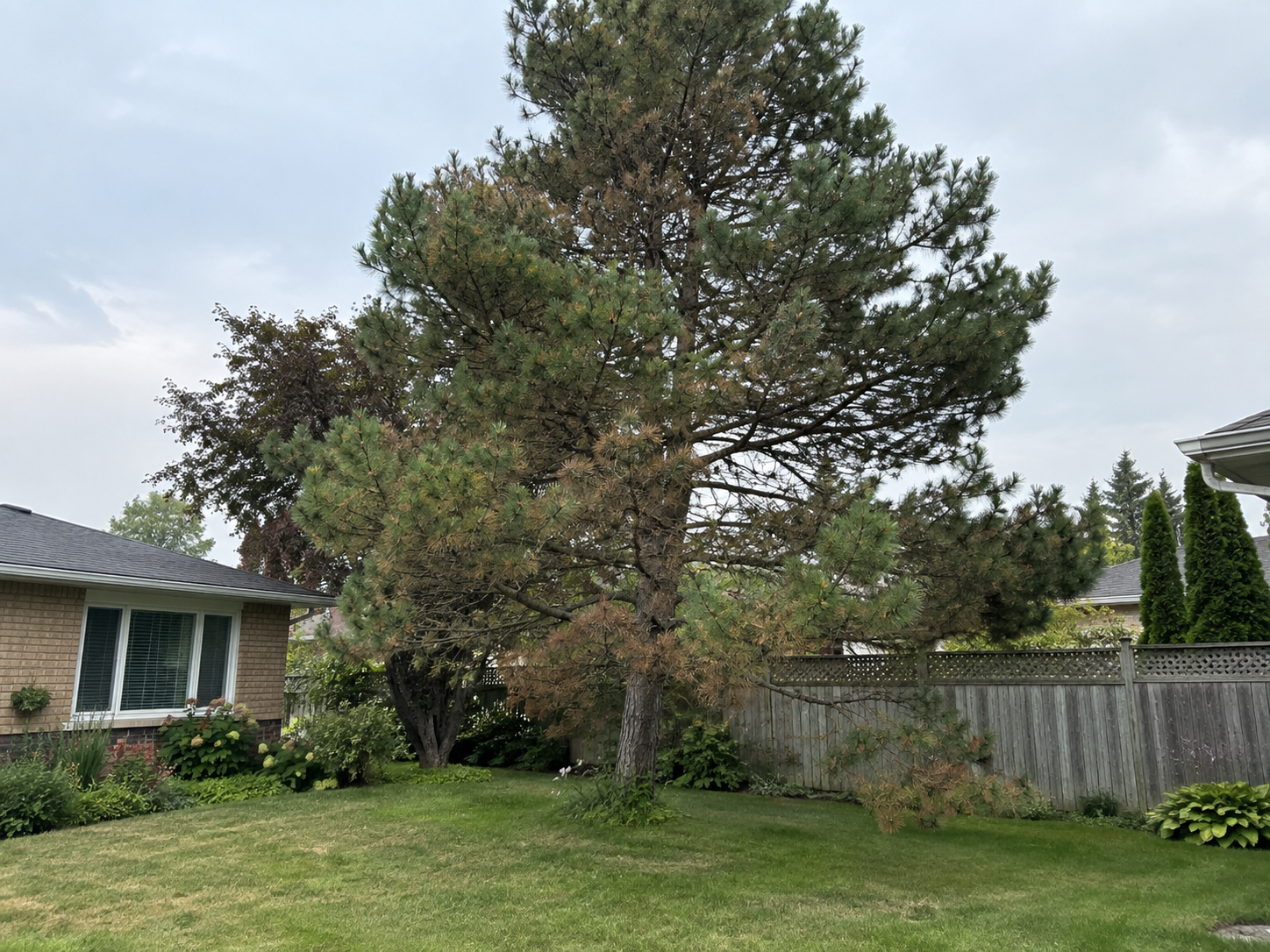
A pine tree can sometimes recover from beetle damage, but recovery depends on the pest involved, how early the issue is caught, how much of the tree has been affected, and whether the tree was healthy before the damage started. A lightly stressed pine with limited activity is a very different situation from a pine with brown needles, loose bark, trunk decay, and a thinning canopy.
Ontario homeowners should avoid guessing based on one symptom. Beetle damage can look similar to drought stress, disease, winter injury, root damage, or poor site conditions, so the tree needs to be assessed before anyone can say whether monitoring, treatment guidance, pruning, or removal is the safer next step.
Not every insect problem affects a pine tree the same way. Some pests feed on needles or shoots. Others attack under the bark and interfere with the tree’s ability to move water and nutrients.
Damage under the bark is often more serious because the tree’s internal transport system can be compromised before the full canopy shows symptoms. By the time needles fade or bark begins to loosen, the tree may already be under heavy stress.
The species of pine also matters. Some trees handle stress better than others, and a strong pine growing in good soil with enough water may respond differently than a tree already weakened by drought, compaction, poor drainage, or construction damage.
Do not judge recovery by one branch. Look at the full tree, especially the upper canopy, trunk, base, and the amount of healthy green growth still present.
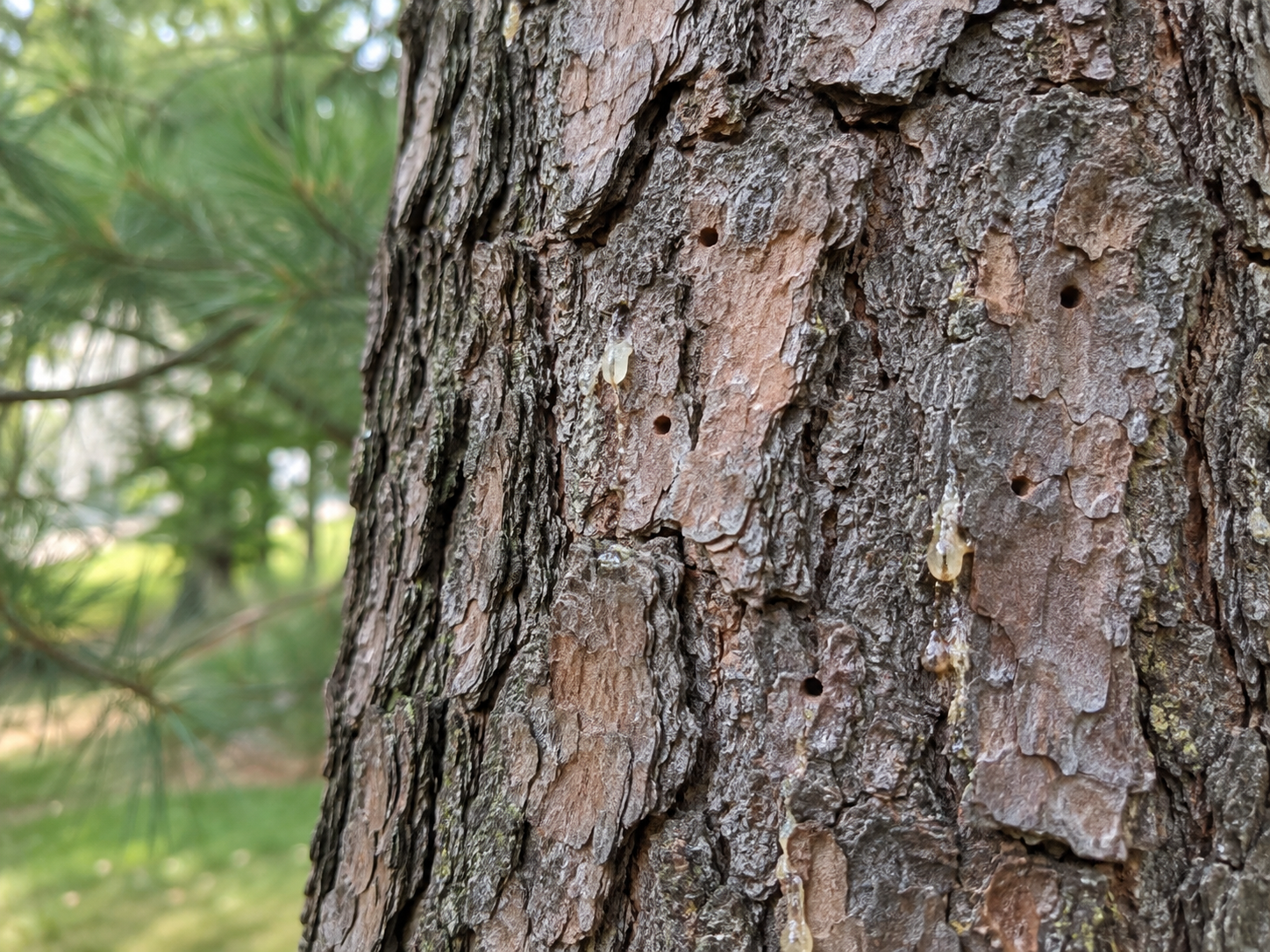
A pine with minor browning, small areas of thinning, or early bark symptoms may still have options, depending on what is causing the issue. Early concern does not automatically mean the tree is lost.
The first step is identifying whether beetles are truly involved. Browning needles alone do not confirm beetle damage. Ontario pines can also turn brown because of dry summers, winter burn, compacted soil, salt exposure, root disturbance, fungal pressure, or drainage issues.
When symptoms are caught early, the next step may involve monitoring, improving tree care, reducing site stress, or getting specialized pest guidance when appropriate. We do not recommend pesticides or treatment claims without verified pest identification and applicable professional direction.
For homeowners still trying to confirm what they are seeing, our guide on pine beetles in Ontario explains the visible signs that can be inspected safely from the ground.
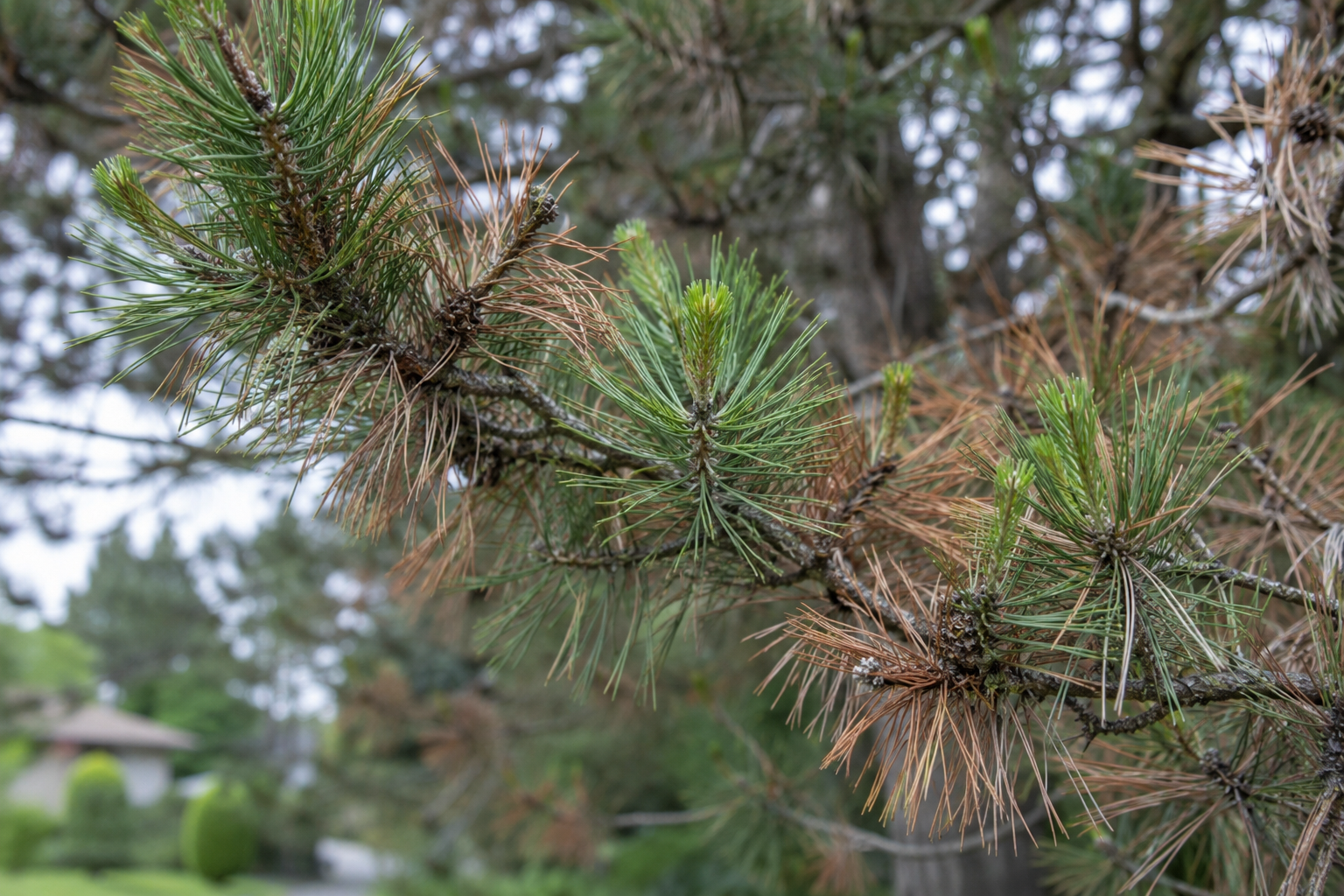
Recovery becomes less likely when beetle damage has spread through a large part of the tree. Heavy canopy browning, dead branches, loose bark, trunk weakness, and sawdust-like material around the base can all point to a more advanced problem.
A pine that has lost a major portion of its canopy may not have enough healthy growth left to support recovery. Once the tree is no longer moving water properly, the decline can continue even if the first stressor is no longer active.
Standing does not always mean stable. Dead or drying pine limbs can become brittle, and a weakening trunk may create removal challenges later. The risk increases when the tree is close to a house, driveway, fence, garage, shed, or area where people walk or park.
In Simcoe County, stressed pines can decline quickly after a dry summer followed by winter exposure. A tree that looked weak in fall may show more obvious symptoms the next spring.
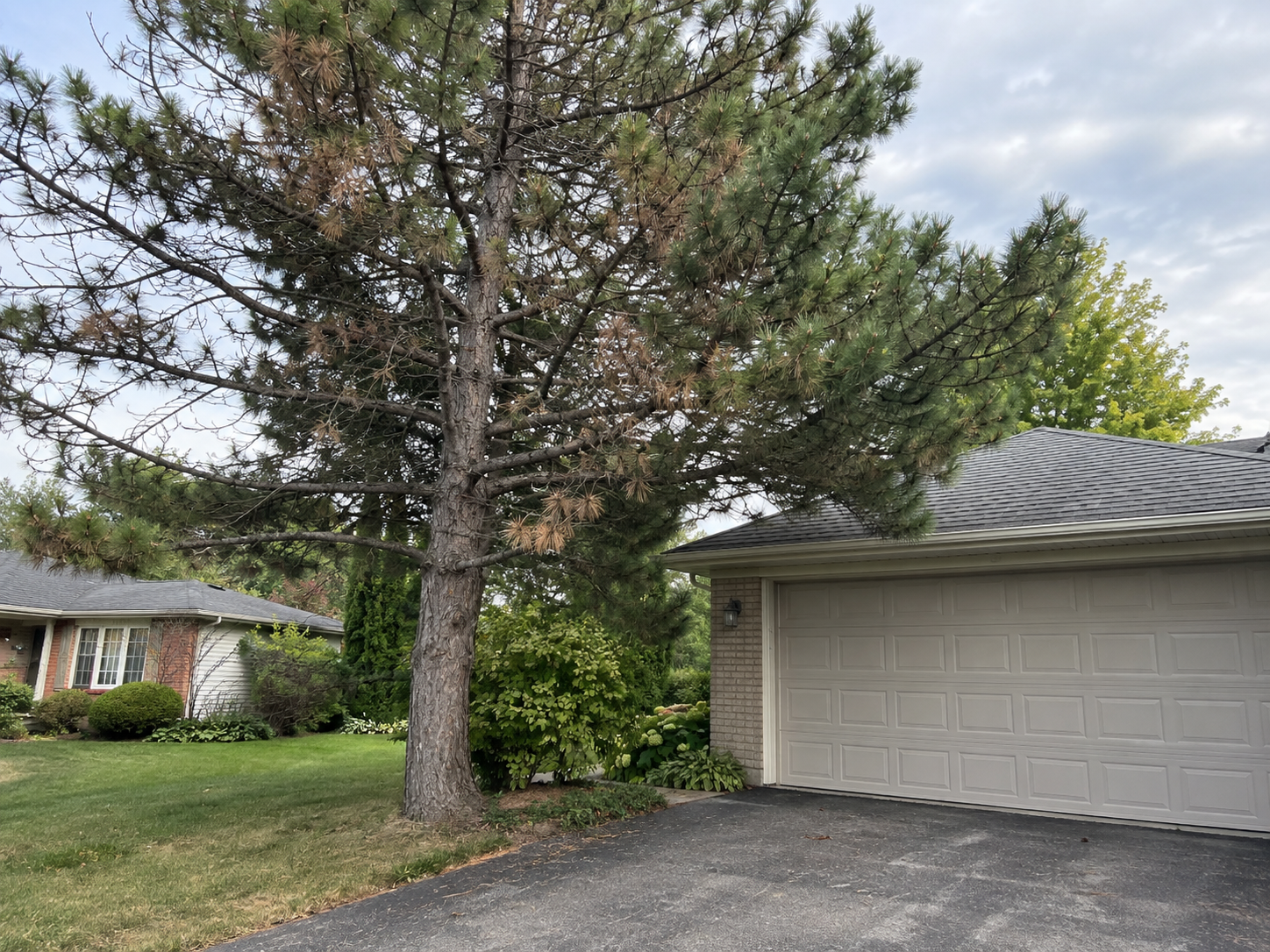
A healthy pine has a better chance of tolerating stress than one already struggling. Site conditions play a major role in whether recovery is realistic.
Poor drainage can suffocate roots. Compacted soil can limit oxygen and water movement. Construction, trenching, driveway work, grade changes, and repeated traffic over the root zone can all reduce the tree’s ability to respond to insect pressure.
Care also matters. Mulch, watering during dry periods, avoiding trunk damage, and protecting roots can help reduce stress. Those steps do not guarantee recovery from beetle damage, but they can support pine health when the tree still has enough live tissue to respond.
Our article on pine tree care covers practical maintenance habits that can help homeowners reduce avoidable stress around pines.
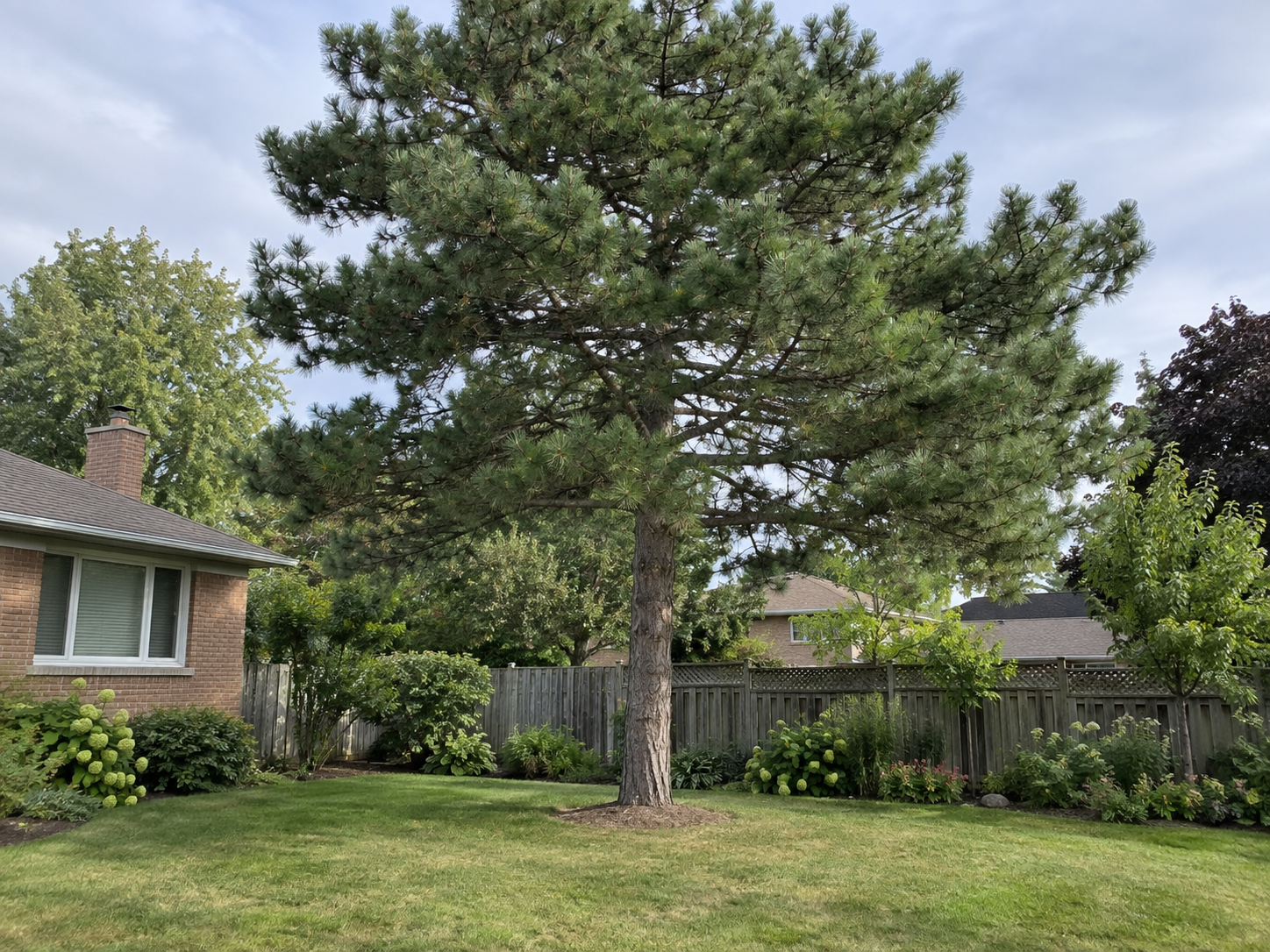
A damaged pine needs faster attention when the concern moves from health to structural safety and tree risk. Health problems are about whether the tree can recover. Structural problems are about whether the tree can remain safely standing.
Warning signs include rapid browning across the canopy, large dead limbs, loose bark, cracks in the trunk, fungal growth near the base, heavy resin with bark damage, sudden leaning, exposed roots, or soil lifting around the root plate. A pine showing several of these signs should not be left to “wait and see” for another season.
Location changes the urgency. A declining pine in a low-use wooded area may be monitored differently than a damaged pine beside a home, driveway, deck, fence, shed, pool, or neighbouring property.
Pine decline is rarely simple from a distance. A tree can be affected by insects and disease at the same time, or beetles may move into a tree that was already weakened by another issue.
This is why homeowners should be careful with quick conclusions. Needle browning, dieback, resin, bark damage, and thinning can come from several causes. The right next step depends on the actual combination of symptoms.
A site inspection helps separate surface signs from deeper risk. It also helps determine whether the pine is still a good candidate for monitoring or whether the structure has become too compromised.
Homeowners comparing symptoms across different trees may find our guide on tree diseases useful when looking at browning, dieback, bark changes, and canopy decline.
A damaged pine should not be removed based on fear alone. It also should not be ignored when there are clear signs of decline. The right decision comes from looking at the tree, the site, and the risk together.
During an assessment, we look at the canopy, trunk, bark, root area, lean, nearby structures, access, and the extent of visible damage. We also consider whether the tree is changing quickly or whether symptoms appear limited.
Sometimes the recommendation may be monitoring or care adjustments. Sometimes the safer recommendation is removal because the pine is too far gone or positioned where failure would create property risk. Without seeing the tree in context, any answer is only a guess.
Take clear photos before calling. Include the full tree, the trunk, the base, and any bark holes, resin, sawdust-like material, or brown canopy sections.
Book an assessment when the pine is browning quickly, thinning at the top, showing bark holes, leaking resin, shedding bark, leaning, or dropping dead limbs. Also book one if the tree is close to anything valuable or frequently used.
Waiting may be reasonable when symptoms are light, slow, and limited to older inner needles. Waiting becomes risky when several warning signs appear together or when the tree is near a structure.
Book an assessment before a damaged pine becomes a larger property risk. Send photos and property details, then request an assessment so we can review the tree, explain what we see, and recommend the safest next step.
Curious about tree trimming, stump grinding, or professional tree removal? Explore our website to learn more about how Tyler’s Tree Services can help keep your property safe and beautiful. Whether you need expert advice or a service quote, we’ve got you covered!

With nearly a decade of experience, we handle everything from precise trimming to safe removals, ensuring top-quality care.

Fully insured and WSIB certified, we follow strict safety standards to protect your property and our crew on every job.

We’re committed to expert service and clean results, ensuring you’re fully satisfied with every tree we trim or remove.

We are insured with $5M coverage ($2M per occurrence), ensuring a worry-free experience on every job you hire us for.
The information in this article was compiled from reputable public sources and interpreted by an expert copywriter for general educational purposes. While Tyler’s Tree Services makes every effort to provide accurate and up-to-date guidance on tree care and safety in Barrie & Simcoe County. Conditions can vary by property, tree species, and season. This content is not a substitute for a professional arborist’s inspection or advice. Tyler’s Tree Services and its authors are not responsible for any actions taken based on this article. For personalized tree care recommendations or safety concerns, we strongly recommend consulting a certified arborist
