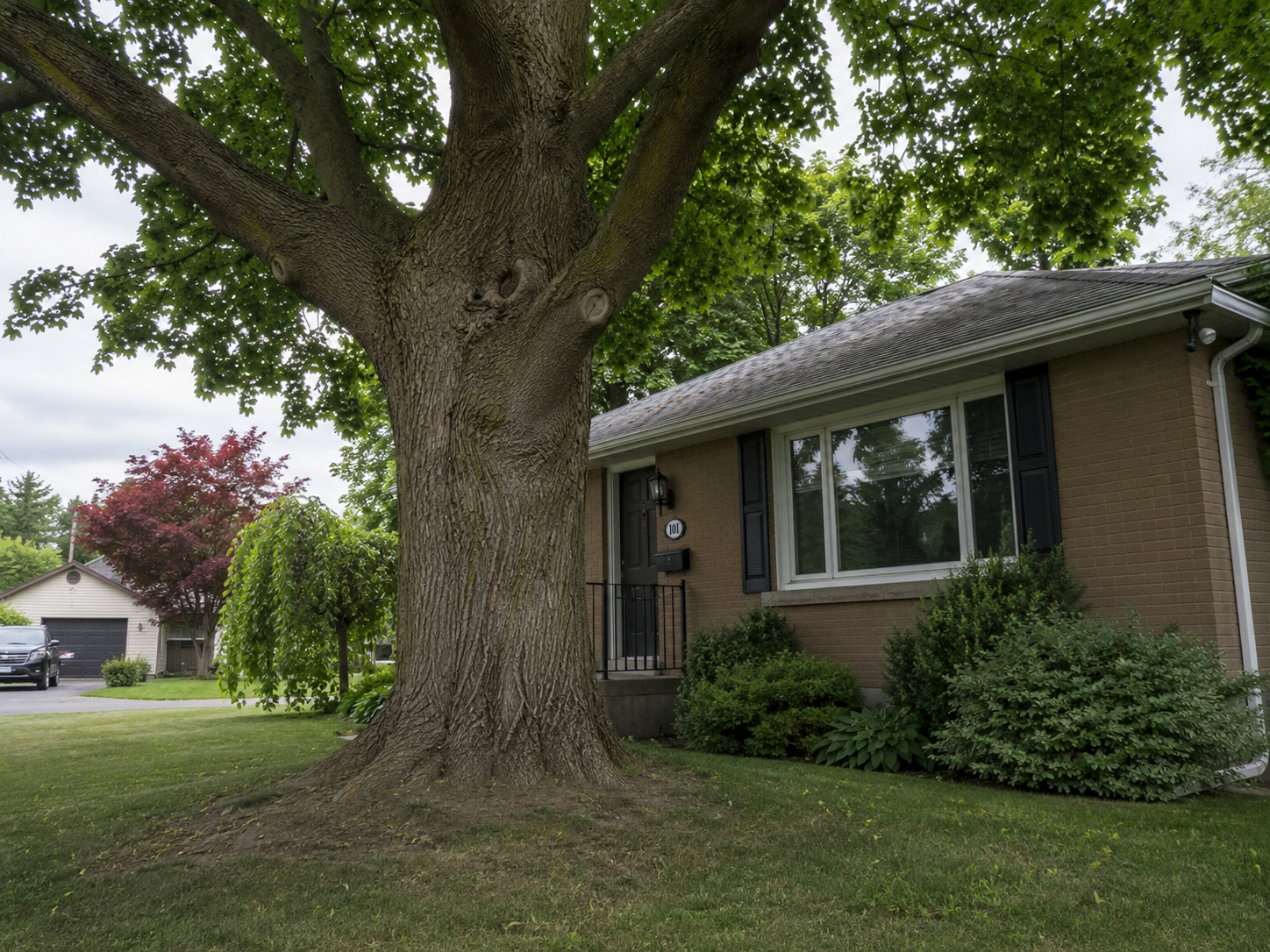
Tree removal cost in Ontario depends on the size of the tree, the condition of the wood, the access around the property, and the level of risk involved. A small tree in an open yard is very different from a large declining tree beside a house, fence, garage, or hydro line.
We do not believe in publishing rigid prices that cannot apply to every property. The right estimate comes from seeing the tree, understanding the site, and knowing what equipment and cleanup will be required.
Tree removal is not priced by height alone. Two trees can look similar from the road but require completely different removal plans once access, condition, and surrounding structures are considered.
A healthy tree in an open backyard may be easier to remove than a smaller dead tree leaning over a shed. A tree beside a driveway may allow easier equipment access, while a tree behind a fence or between homes may need to be removed in smaller sections by climbing and rigging.
In Barrie and surrounding Simcoe County communities, we often see properties where trees are close to homes, garages, fences, decks, septic areas, gardens, or narrow side yards. Those details affect how the work is planned and how long the removal takes.
A photo can help start the conversation, but it cannot replace an on-site assessment. Distance, slope, access, and overhead hazards are hard to judge accurately from a picture.
Tree size has a major impact on removal cost because it affects labour, equipment, disposal, and risk. Taller trees and wider trees usually require more cutting, more rigging, more time, and more cleanup.
Height matters, but trunk diameter matters too. A tall tree with a narrow trunk may be simpler than a shorter tree with a large, heavy stem. Wide canopies can also add work because branches need to be controlled safely before the main trunk comes down.
For large trees, the removal plan often needs to be staged carefully. Crews may remove limbs first, reduce weight from the canopy, and then bring the trunk down in sections. That process protects nearby structures and gives the crew more control.
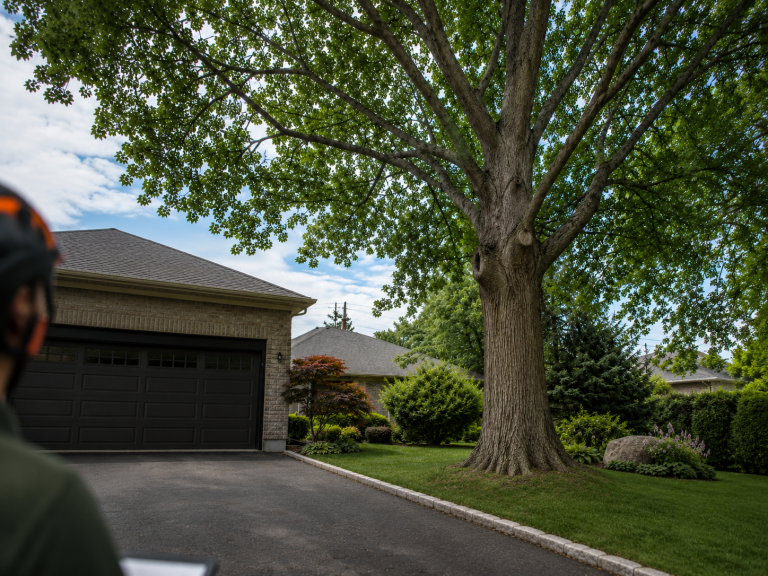
A healthy tree and a dead tree do not behave the same during removal. Dead, cracked, hollow, or storm-damaged wood can be unpredictable, which can change the equipment and process needed to complete the work safely.
A tree with decay may not be safe to climb. A tree with broken limbs may need special rigging. A tree with a split trunk may need extra care to prevent sudden movement while sections are being removed.
Sometimes homeowners assume a dead tree should cost less because the tree is no longer alive. In many cases, the opposite can happen. Dead wood can become brittle, unstable, and more hazardous to work around, especially when the tree is close to a home or used area.
For Barrie homeowners comparing removal options, our tree removal services are built around assessing the tree and the property before recommending the safest approach.
If a tree looks dead, do not wait too long for removal. Dead trees usually become more brittle over time, which can make the job harder and increase safety concerns.
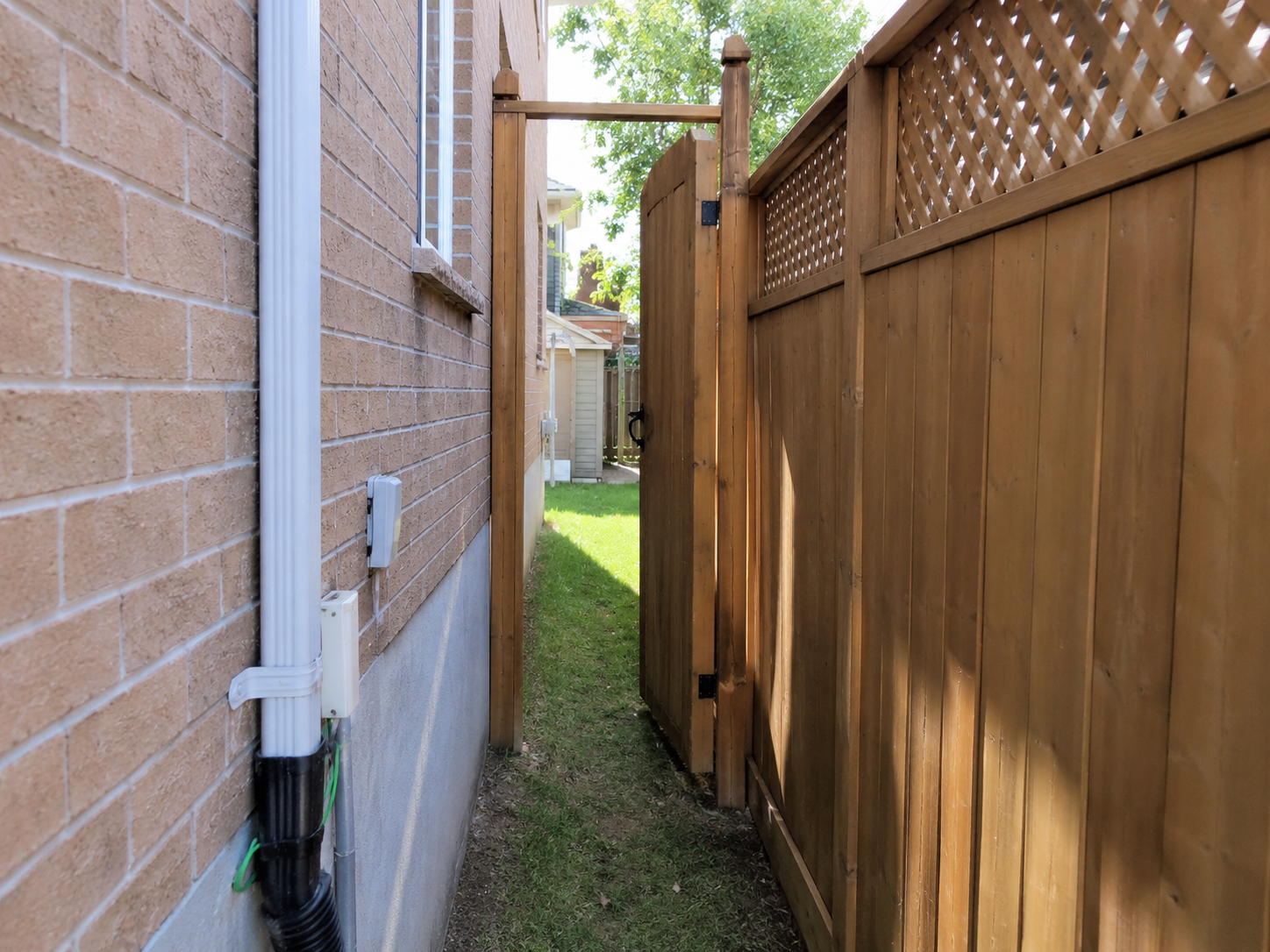
Access is one of the biggest reasons tree removal cost can change from one property to another. A tree in an open front yard is easier to reach than a tree tucked behind a house, surrounded by fencing, or located down a narrow side yard.
Good access can allow better equipment positioning, easier debris removal, and a faster workflow. Poor access may require more manual labour, smaller cuts, and extra time moving wood and branches out of the yard.
Ontario properties vary a lot. Some homes have wide driveways and open lots. Others have tight urban spaces, waterfront access challenges, backyard gates, garden beds, or limited room for equipment. The same tree can take longer to remove when everything must be carried out by hand.
Tree removal near structures requires more planning. Branches over a roof, limbs above a deck, trunks close to fences, and trees beside garages cannot be treated like open-field removals.
The crew needs to control how each section moves. That may involve ropes, rigging, careful lowering, or different cutting techniques. The goal is to remove the tree without damaging the property around it.
In Simcoe County, mature trees are often close to older homes, sheds, pools, patios, and laneways. A removal that looks simple from one angle can become more complex once the fall zone is limited.
In tighter Barrie neighbourhoods, backyard access and nearby structures often affect the estimate as much as the tree itself. A safe removal plan has to account for the whole property.
Some tree removals can be completed with climbing, saws, ropes, and ground support. Others may require additional equipment depending on tree size, access, and risk.
Equipment can make a removal safer and more efficient, but only when the property allows it. Limited access, soft ground, steep slopes, narrow gates, or overhead obstacles can change what equipment can be used.
A proper estimate looks at both the tree and the worksite. The question is not only what equipment would be helpful. The question is what equipment can be used safely without causing damage to the property.
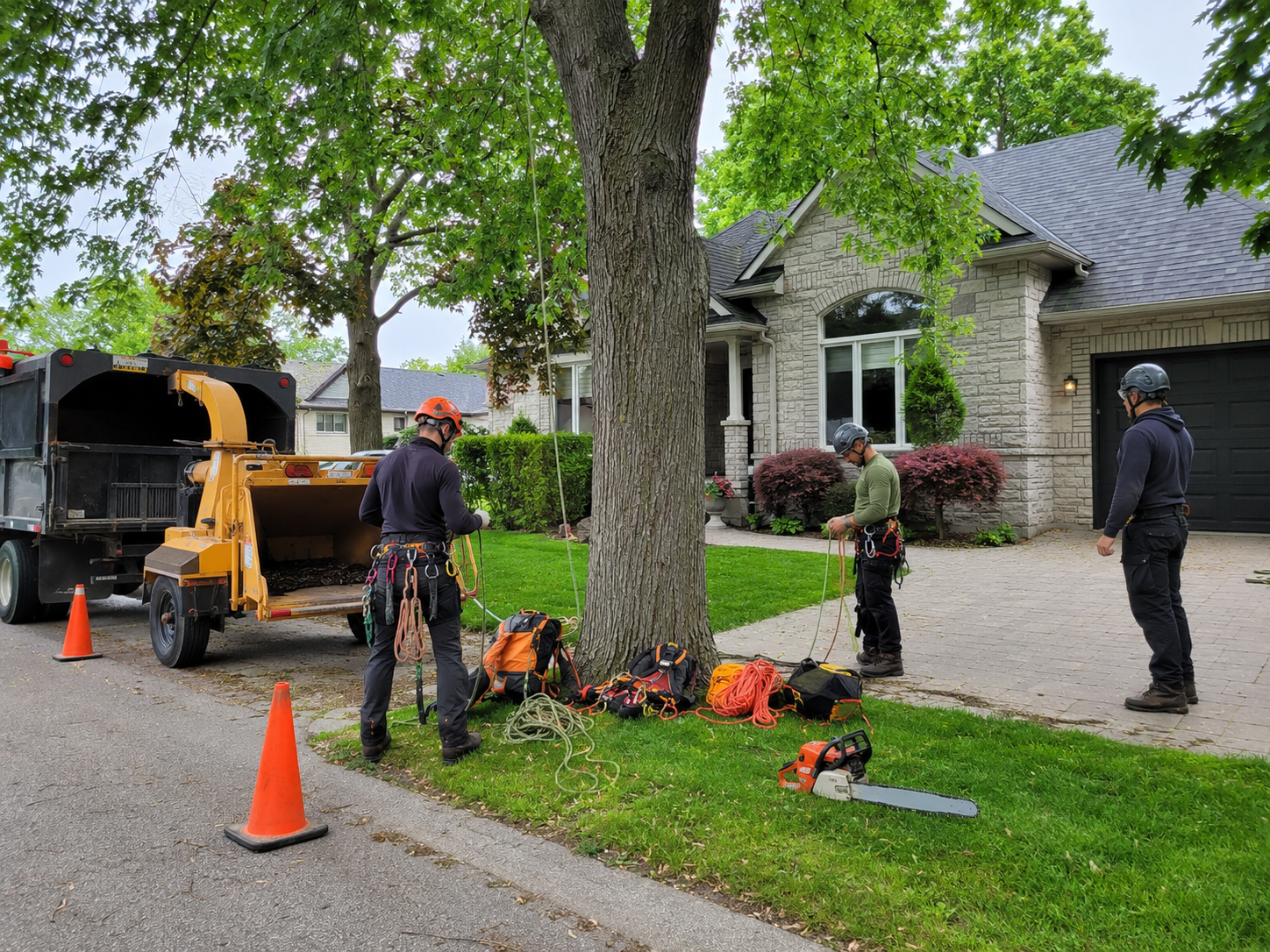
Cleanup can also affect the final cost. Some homeowners want all brush, limbs, and wood removed from the property. Others may want logs left behind for firewood or stacked in a specific area.
The more material that needs to be processed, chipped, hauled, or disposed of, the more time and labour the job requires. A large tree can produce far more debris than homeowners expect, especially when the canopy is wide.
Clear expectations matter before work begins. We want homeowners to know what is included in the estimate, what will be removed, and what will be left on-site if requested.
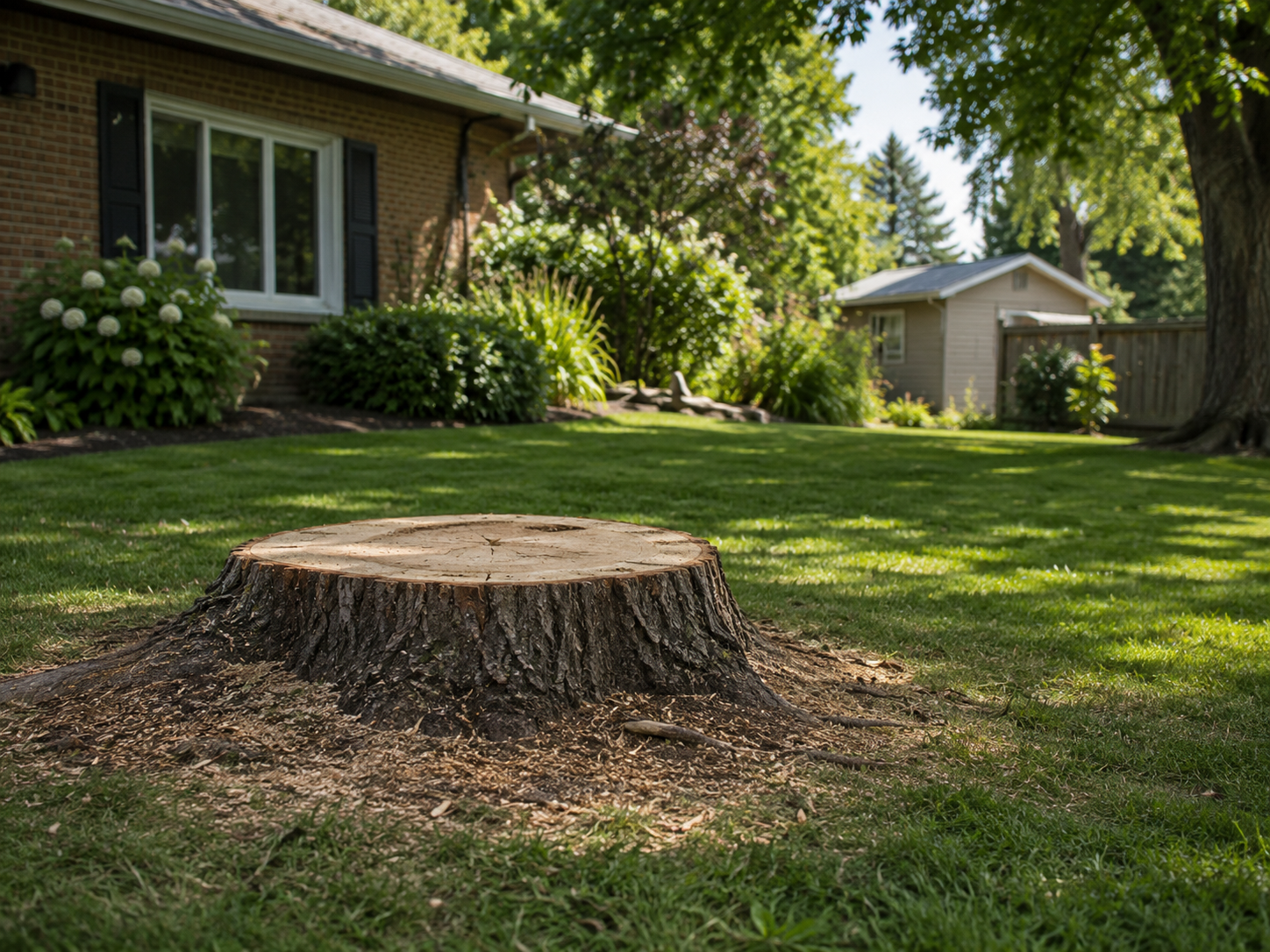
Tree removal and stump grinding are often connected, but they are not the same job. Removing the tree takes care of the trunk, branches, and canopy. Stump grinding deals with the remaining stump below or near ground level.
Some homeowners leave the stump if it is out of the way. Others prefer grinding because the stump is in a lawn, garden, walkway, or future planting area.
In Barrie and nearby areas, our stump grinding services can be added when the remaining stump would interfere with the yard, create a tripping hazard, or make future landscaping harder.
Emergency tree removal can cost more because the risk, timing, and working conditions are different. A storm-damaged tree leaning on a structure, blocking a driveway, or hanging over a high-use area may require faster scheduling and extra safety planning.
After storms in Ontario, crews may also be dealing with wet ground, broken limbs under tension, split trunks, and unstable canopies. Those conditions can slow the work down and increase the level of care required.
Emergency pricing is not about taking advantage of urgency. It reflects the reality of risk, timing, access, and the difficulty of working around storm damage safely.
An on-site assessment protects the homeowner and the crew. It gives us a chance to see the full tree, the landing zones, the access route, nearby structures, overhead hazards, soil conditions, and cleanup requirements.
Without seeing the property, a price can only be a rough conversation. A proper estimate needs enough detail to reflect the actual work, not a guess based on tree height alone.
This is also where we can explain the safest removal plan. If the tree can be removed in a simple way, the estimate should reflect that. If rigging, limited access, or structural risk is involved, that should be clear before work begins.
Homeowners looking for local service context can review our page for tree removal in Orillia before requesting an assessment.
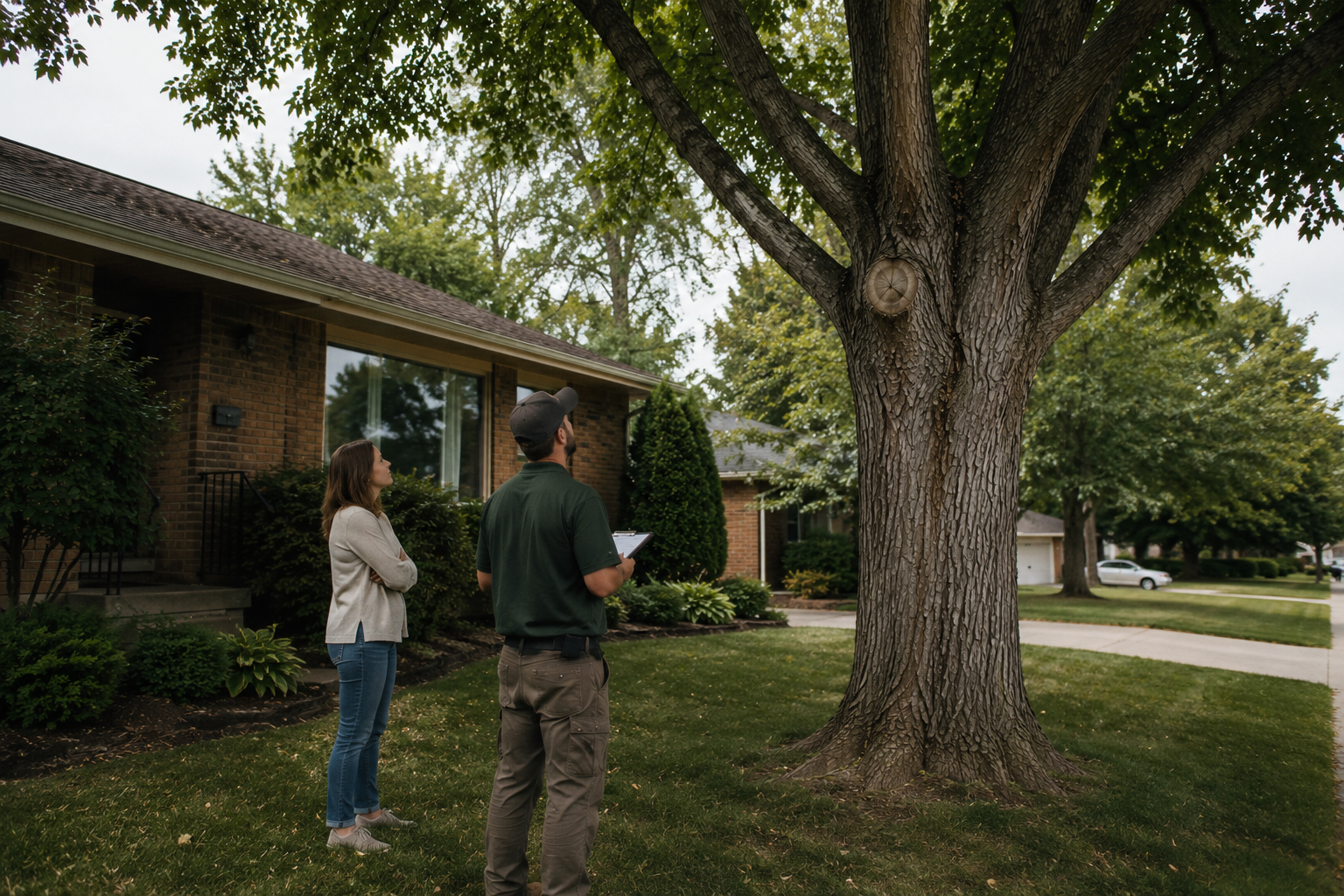
The best way to understand tree removal cost in Ontario is to have the tree assessed in person. We look at the size, condition, access, nearby structures, cleanup needs, stump grinding options, and any safety concerns before providing a clear estimate.
If a tree is dead, leaning, storm-damaged, too close to a structure, or becoming a concern on the property, the next step is simple. Send the details and request a free estimate so we can assess the tree and recommend the safest removal plan.
Curious about tree trimming, stump grinding, or professional tree removal? Explore our website to learn more about how Tyler’s Tree Services can help keep your property safe and beautiful. Whether you need expert advice or a service quote, we’ve got you covered!

With nearly a decade of experience, we handle everything from precise trimming to safe removals, ensuring top-quality care.

Fully insured and WSIB certified, we follow strict safety standards to protect your property and our crew on every job.

We’re committed to expert service and clean results, ensuring you’re fully satisfied with every tree we trim or remove.

We are insured with $5M coverage ($2M per occurrence), ensuring a worry-free experience on every job you hire us for.
The information in this article was compiled from reputable public sources and interpreted by an expert copywriter for general educational purposes. While Tyler’s Tree Services makes every effort to provide accurate and up-to-date guidance on tree care and safety in Barrie & Simcoe County. Conditions can vary by property, tree species, and season. This content is not a substitute for a professional arborist’s inspection or advice. Tyler’s Tree Services and its authors are not responsible for any actions taken based on this article. For personalized tree care recommendations or safety concerns, we strongly recommend consulting a certified arborist
