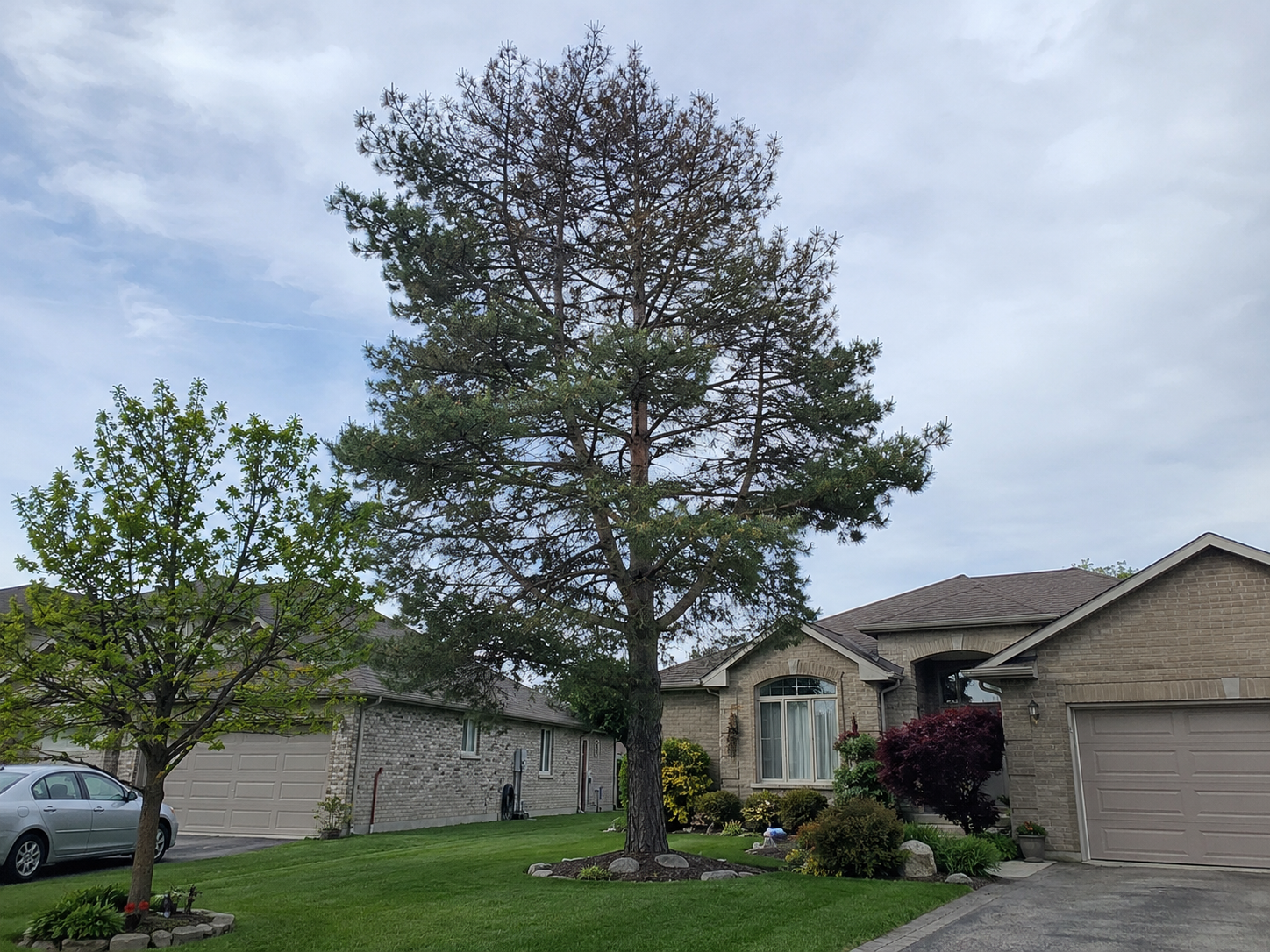
Pine beetle damage can move quietly through a tree before the problem becomes obvious from the ground. By the time a pine shows thinning needles, loose bark, or heavy resin, the tree may already be under serious stress.
Ontario homeowners do not need to diagnose the exact beetle species on their own. The more important first step is spotting visible warning signs safely, understanding when a pine is weakening, and getting the tree assessed before it becomes a removal risk.
Pine beetle damage is often easier to miss than storm damage or a broken limb. The tree may still look mostly standing and green while activity is happening under the bark.
From the ground, homeowners should look for changes in needle colour, thinning sections of the canopy, small holes in the bark, loose bark plates, sawdust-like material, and unusual resin on the trunk. One sign on its own does not always confirm beetle activity, but several signs together deserve attention.
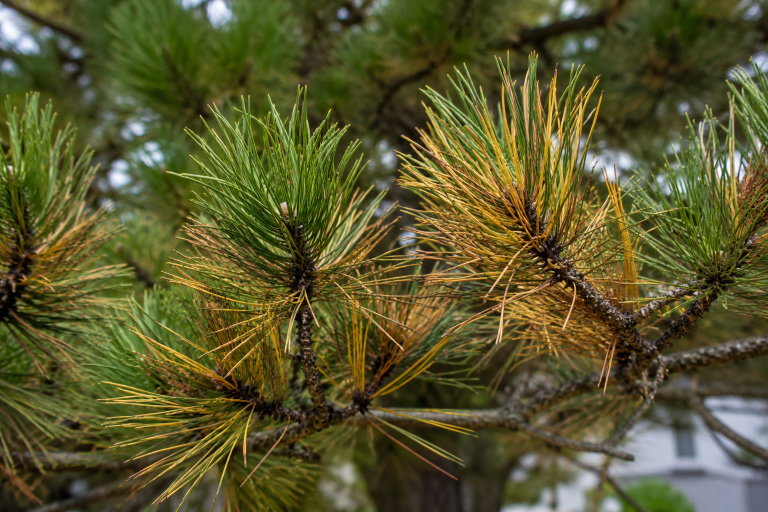
Needles are usually the first thing people notice. A pine that begins fading from deep green to yellow, then reddish-brown, may be declining. In some cases, colour change appears in the upper canopy first. In others, one side of the tree starts to thin before the rest follows.
Stand back and compare the pine to nearby evergreens. A stressed pine often looks duller, thinner, or more uneven than healthy trees around it.
Needle colour can tell a lot about a pine’s condition. Healthy pine needles should look full for the species and season. When needles fade, thin out, or drop heavily outside normal patterns, the tree may be under pressure from insects, disease, drought, root stress, or a combination of issues.
Pine beetle activity can interrupt the tree’s ability to move water and nutrients. As that stress builds, sections of the canopy may lose colour or density. A pine that looks sparse at the top or has large patches of browning needles should not be ignored.
Ontario weather can also complicate diagnosis. Drought stress, winter burn, road salt, poor drainage, and compacted soil can make a pine look unhealthy. That is why identification should stay separate from treatment claims. A visual inspection can show concern, but it does not prove that every affected pine can be saved.
Homeowners comparing pine symptoms with broader tree decline issues may find our guide on common tree diseases useful when looking at leaf, needle, bark, and canopy problems across the property.
In Simcoe County, dry summers followed by harsh winters can make weak pines decline faster. A pine that enters winter stressed may show bigger symptoms the following spring.
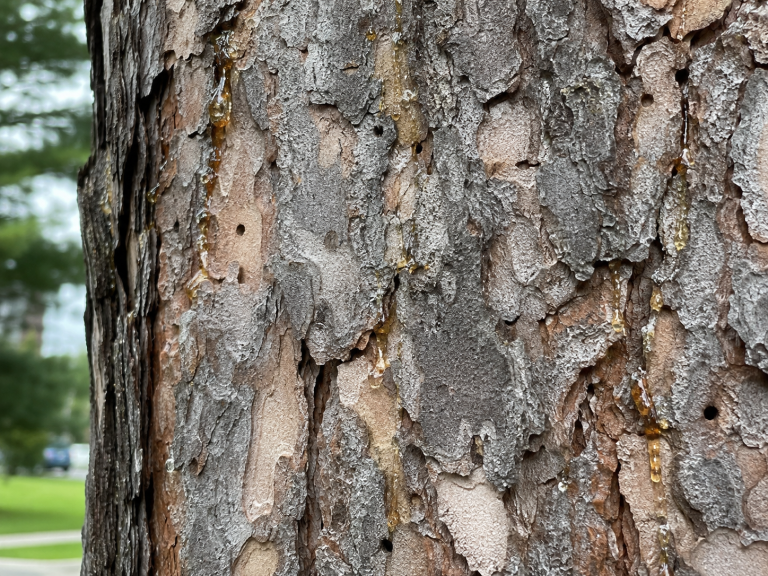
The trunk and larger limbs can show important clues. Small round or oval holes in the bark may point to insect activity. Resin, sometimes called pitch, can appear where the tree is trying to defend itself.
Resin alone does not automatically mean a pine beetle problem. Pine trees naturally produce resin when injured. The concern grows when resin appears with fading needles, bark damage, sawdust-like material, or a thinning canopy.
Some affected pines develop pitch tubes, which are small resin masses on the bark. They may look pale, amber, or reddish depending on the tree and the condition of the resin. Homeowners should inspect these signs from the ground instead of cutting into the bark or climbing the tree.
Sawdust-like material around the trunk can be another warning sign. It may collect in bark cracks, at the base of the tree, or on nearby roots.
This material can come from beetle activity under the bark. It can also come from other insects or decay-related problems, so it should be treated as a clue rather than a final answer.
A pine with sawdust-like material, loose bark, and canopy thinning needs a closer look. Once the inner systems of the tree are damaged, the tree may lose strength even before it looks fully dead.
Do not brush away sawdust before taking photos. Clear photos of the trunk, bark, base, and canopy can help us understand what is happening before we arrive.
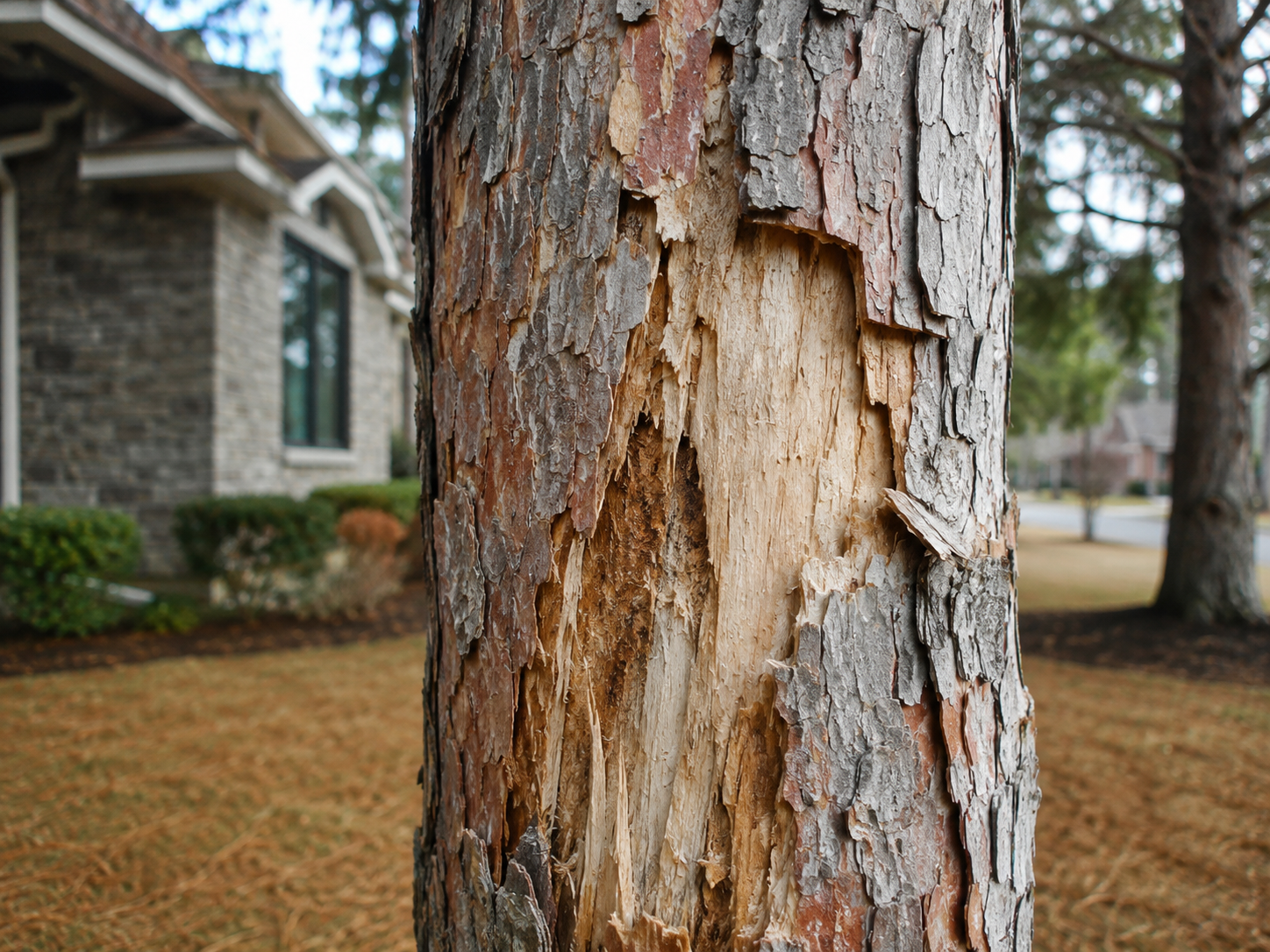
Loose bark is a serious sign when it appears with canopy decline. Bark protects the living layers of the tree. When bark begins separating, cracking, or falling away in sections, the tree may already have internal damage.
A small bark wound can happen from yard equipment, animals, weather, or old branch failure. Larger bark loss is more concerning, especially when the exposed wood underneath looks dry, stained, soft, or tunneled.
A pine can sometimes remain standing after major decline, but standing does not mean stable. As the tree dries out, branches may become brittle and the trunk may become harder to work with safely.
For homeowners trying to protect existing pines before major decline sets in, our guide on how to care for pine trees in Canada explains practical care habits that can reduce stress and support healthier growth.
Pine beetles and similar bark-boring insects can damage the layers that move water and nutrients through the tree. When those pathways are disrupted, the canopy begins to decline because the tree cannot support itself properly.
Damage under the bark can also invite secondary problems. A stressed pine may become more vulnerable to decay, branch failure, and further insect activity. Once decline spreads through the trunk or upper canopy, pruning alone may not solve the issue.
This is where timing matters. A pine caught early may still have options depending on the cause, severity, and overall condition. A pine with major canopy loss, bark separation, and trunk weakness may already be moving into risk territory.
A pine becomes a removal risk when the structure is no longer dependable. Severe canopy browning, large dead branches, trunk damage, loose bark, fungal growth, sudden leaning, or heavy decay near the base can all change the conversation from health care to safety.
Location matters just as much as condition. A declining pine at the edge of a wooded area is different from one beside a house, driveway, deck, fence, garage, or neighbour’s property.
Dead and dying pines can also become more dangerous to remove over time. Dry limbs may snap with less warning, and brittle trunks can limit safe climbing options. If the tree is already close to a structure, waiting can make the work more difficult.
In Barrie and nearby areas, our professional tree removal service is the right next step when a pine is too damaged, unstable, or risky to preserve.
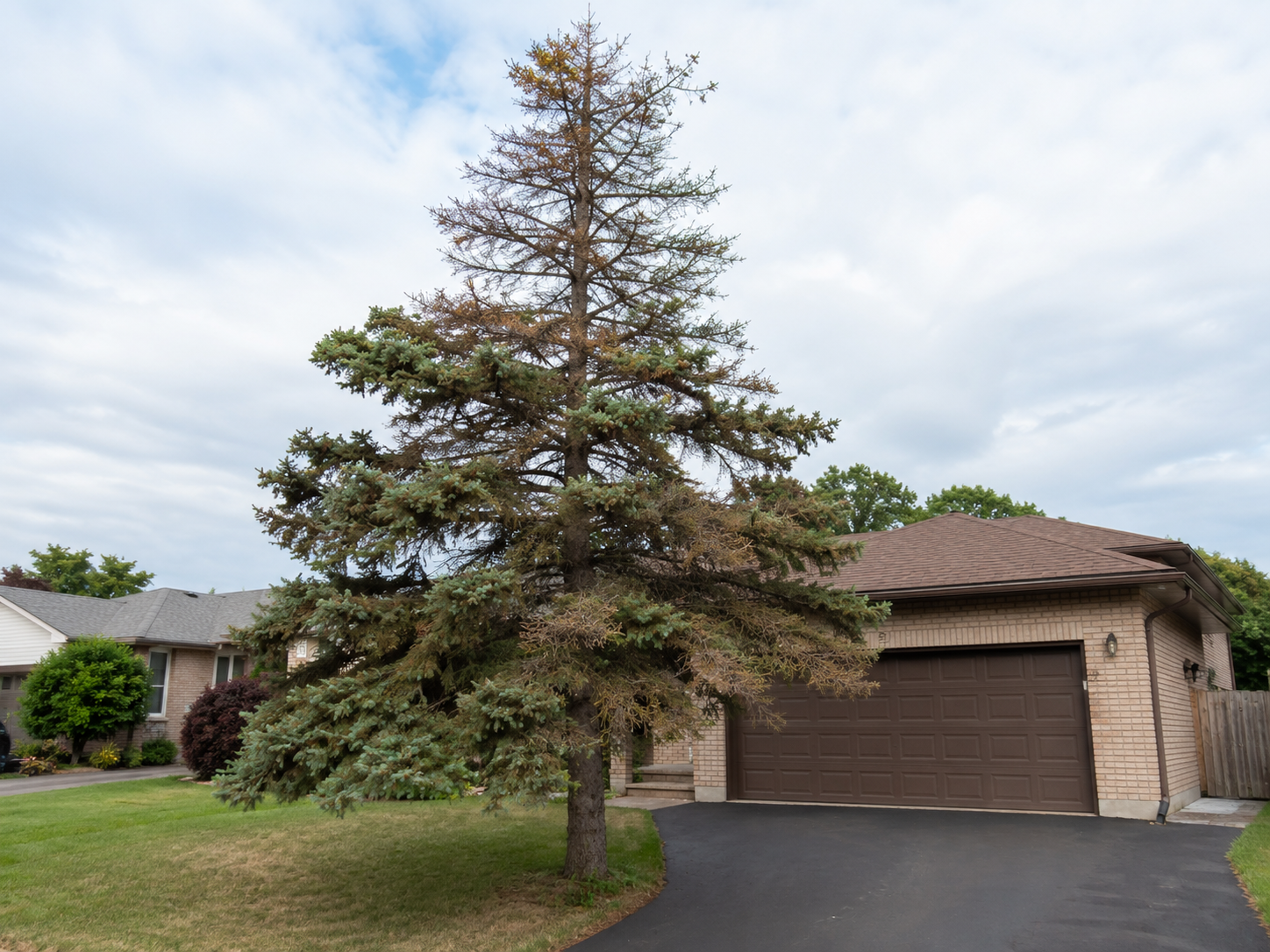
It is easy to assume every browning pine has beetles, but that can lead to the wrong decision. Pine decline can come from insects, disease, drought, root damage, poor planting location, construction damage, soil compaction, drainage problems, or winter injury.
Treatment depends on what is actually causing the decline. Some trees may benefit from care changes, pruning, monitoring, or pest management advice. Others may be too far gone by the time symptoms appear.
No honest assessment should promise that every affected pine can be saved. The goal is to understand the condition of the tree first, then decide whether preservation, monitoring, or removal is the safer path.
For homeowners in Orillia with mature pines near cottages, driveways, and older residential lots, tree risk can change quickly once decline reaches the trunk. Our Tree Removal Orillia page gives local context when removal becomes part of the decision.
In Midland and other Simcoe County communities, wind exposure and narrow access can make declining pine removals more complex. Our Tree Removal Midland page outlines service support for homeowners dealing with unsafe trees.
A ground-level inspection can tell you enough to know whether help is needed. Do not climb the tree, peel bark away, cut into the trunk, or stand under dead limbs to get a closer look.
Safe inspection points include:
Take photos from several angles if the tree is safe to approach. Include the full tree, the base, the trunk, close-ups of bark symptoms, and any branches that look dead or discoloured.
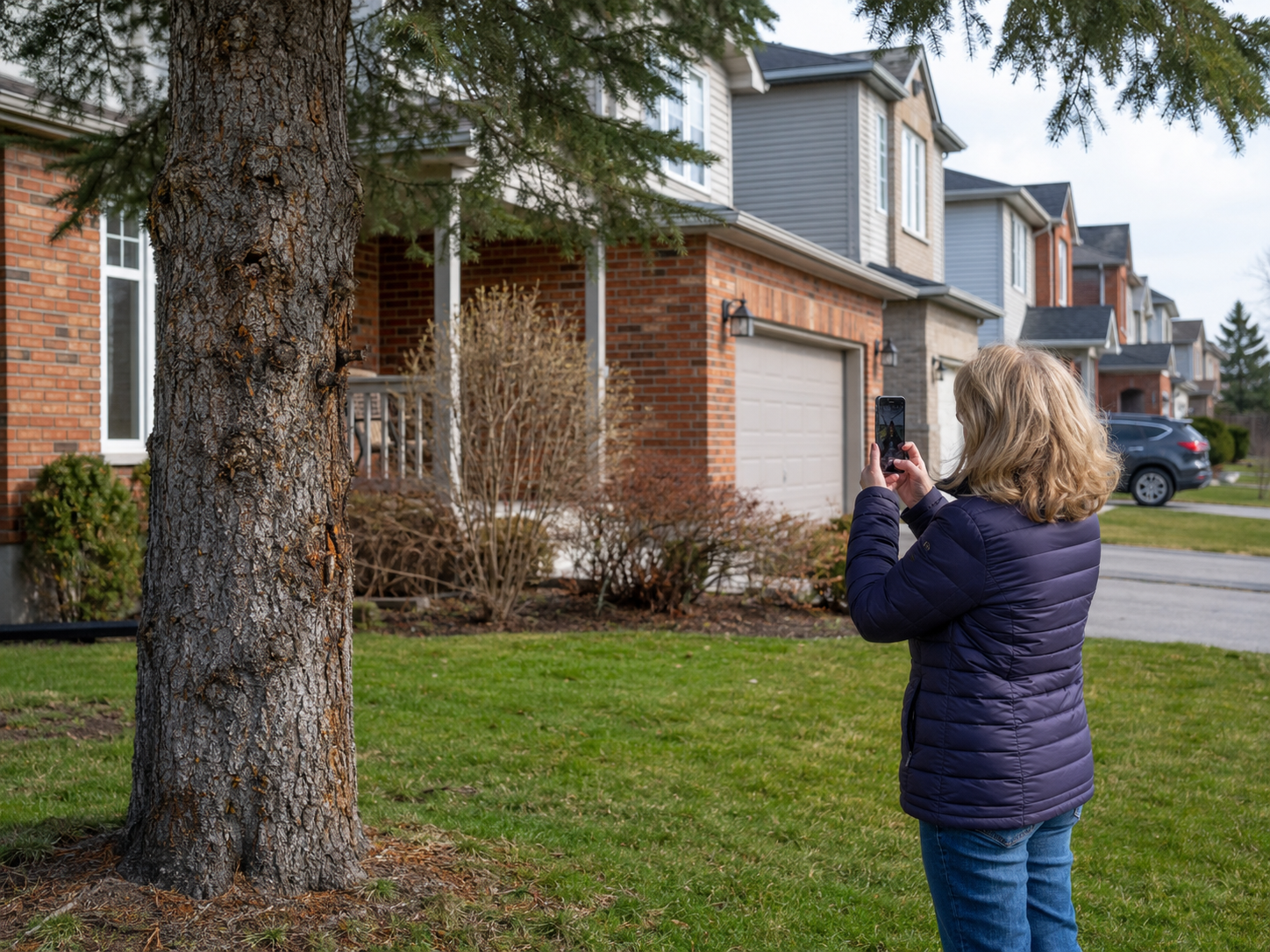
If a pine tree is thinning, browning, leaking resin, shedding bark, or showing signs of insect activity, the next step is an assessment. The goal is to understand what is happening before the tree becomes harder to manage.
We can inspect the visible symptoms, look at the surrounding site conditions, and explain whether the pine should be monitored, pruned, treated through the right channel, or removed for safety.
Use original Tyler photos where available when documenting the tree, especially clear images of the canopy, bark, and base. If the pine is near a structure, driveway, fence, or high-use area, do not wait for the next storm to make the decision.
To have the tree looked at properly, send the details and request an assessment so we can review the pine and recommend the safest next step.
Curious about tree trimming, stump grinding, or professional tree removal? Explore our website to learn more about how Tyler’s Tree Services can help keep your property safe and beautiful. Whether you need expert advice or a service quote, we’ve got you covered!

With nearly a decade of experience, we handle everything from precise trimming to safe removals, ensuring top-quality care.

Fully insured and WSIB certified, we follow strict safety standards to protect your property and our crew on every job.

We’re committed to expert service and clean results, ensuring you’re fully satisfied with every tree we trim or remove.

We are insured with $5M coverage ($2M per occurrence), ensuring a worry-free experience on every job you hire us for.
The information in this article was compiled from reputable public sources and interpreted by an expert copywriter for general educational purposes. While Tyler’s Tree Services makes every effort to provide accurate and up-to-date guidance on tree care and safety in Barrie & Simcoe County. Conditions can vary by property, tree species, and season. This content is not a substitute for a professional arborist’s inspection or advice. Tyler’s Tree Services and its authors are not responsible for any actions taken based on this article. For personalized tree care recommendations or safety concerns, we strongly recommend consulting a certified arborist
