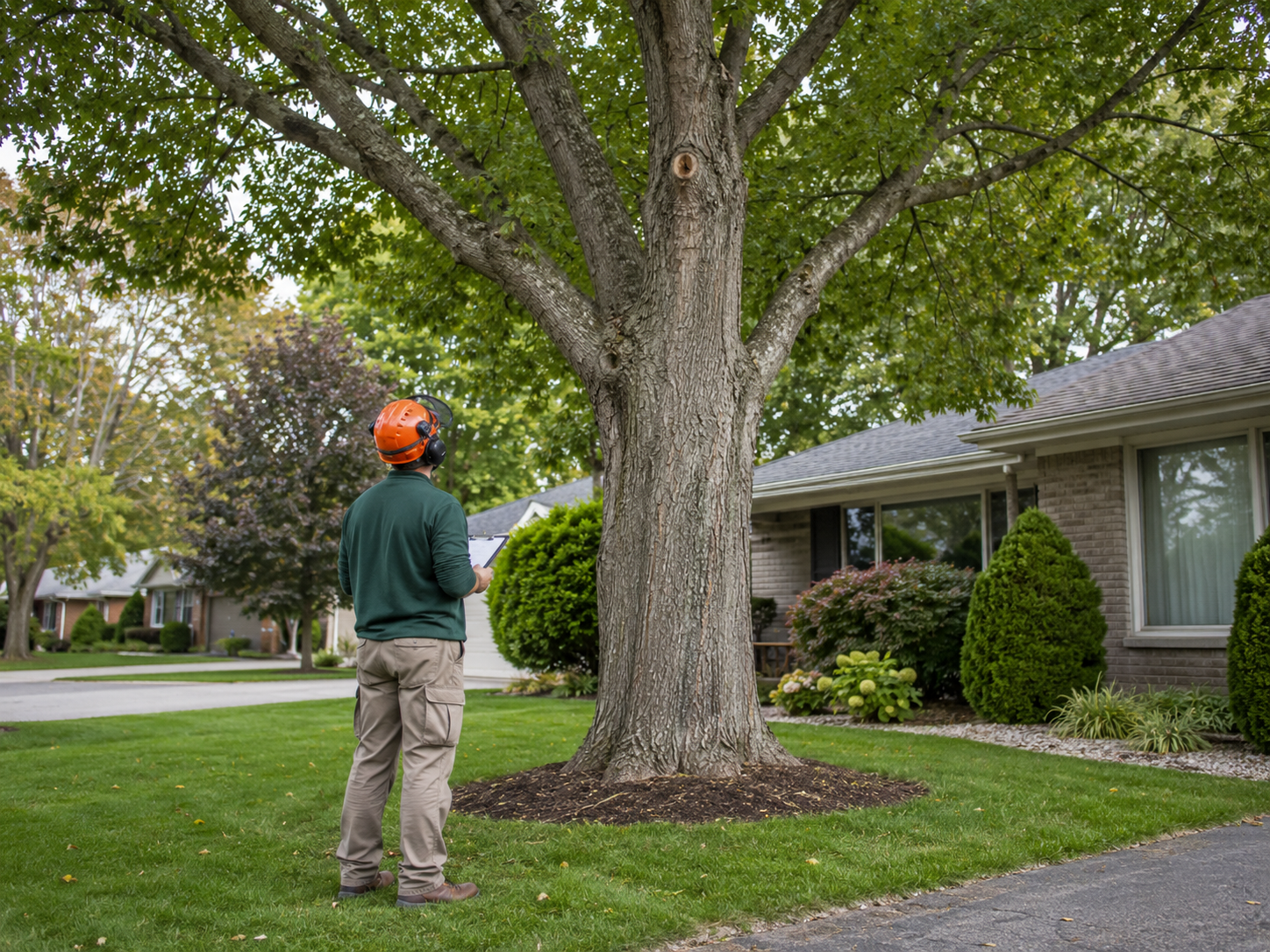
An arborist report is a written assessment that documents the condition, location, risk, and recommended next steps for a tree. Homeowners often need one when a tree decision involves permits, construction, neighbour concerns, safety risk, or formal property planning.
A basic tree estimate may explain what work is needed and what it may cost. An arborist report goes further by putting tree observations, site details, and professional recommendations into a written document.
An arborist report is a formal tree assessment prepared after reviewing the tree and the surrounding site. It gives written context for the tree’s condition, structure, location, and possible impact on the property.
The report may include the tree species, size, visible defects, health concerns, risk factors, and recommended actions. Depending on the situation, it may also include photos, notes about nearby structures, and comments about construction or site disturbance.
For homeowners in Barrie, an arborist report is often used when a tree issue needs more than a quick opinion. It creates a written record that can be shared with a municipality, builder, neighbour, insurance contact, or property owner.
Our arborist reports service is built for situations where homeowners need clear documentation before making a tree-related decision.
The content of an arborist report depends on the reason for the assessment. A report for a permit may look different from a report for a declining tree near a driveway.
Most arborist reports include key details such as:
A good report should be practical. The goal is not to fill pages with technical language. The goal is to explain what is happening with the tree, why it matters, and what action should be considered.
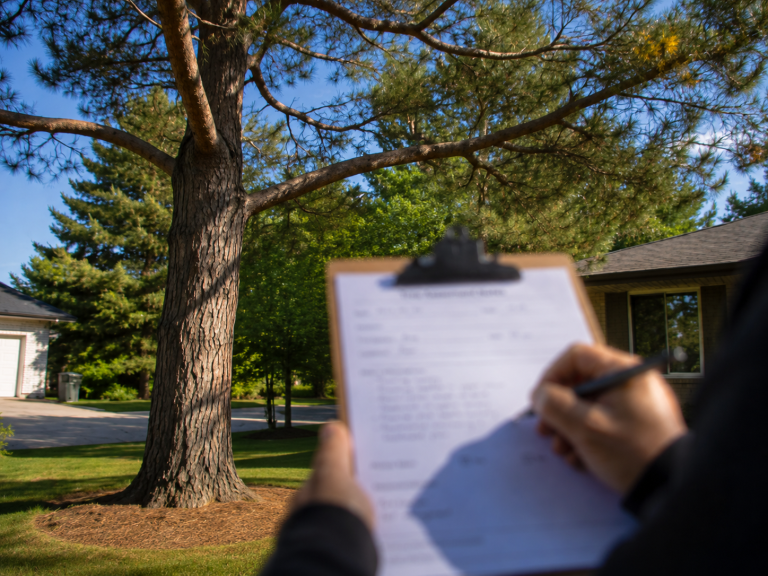
An arborist report does not guarantee that a tree will survive, that a municipality will approve a permit, or that a neighbour will agree with the recommendation. It also cannot predict every future weather event, branch failure, or change in site conditions.
Trees are living structures. Their condition can change after storms, construction activity, root disturbance, drought, decay, or new damage. A report reflects the tree and property conditions at the time of assessment.
This matters because some homeowners expect a report to act like a final promise. It is better to think of it as professional documentation that supports a decision. It can explain risk, condition, and options, but it cannot control future outcomes.
If a report is being used for a municipal process, ask what the town or city requires before booking. Requirements can vary by location and situation.
Some tree work may require documentation before a decision is made. This is especially common when a tree is protected by local rules, affected by construction, or part of a site plan.
In these cases, the arborist report helps explain the tree’s condition and why a certain action is being recommended. It may support removal, preservation, pruning, or further review, depending on the tree and the property.
Municipal requirements can vary across Ontario. Barrie, Orillia, Innisfil, Collingwood, and other Simcoe County communities may handle tree-related documentation differently based on the project, property type, and local rules.
For homeowners trying to understand how tree rules can intersect with building work, our article on Barrie tree bylaw and construction gives helpful context before planning a project.
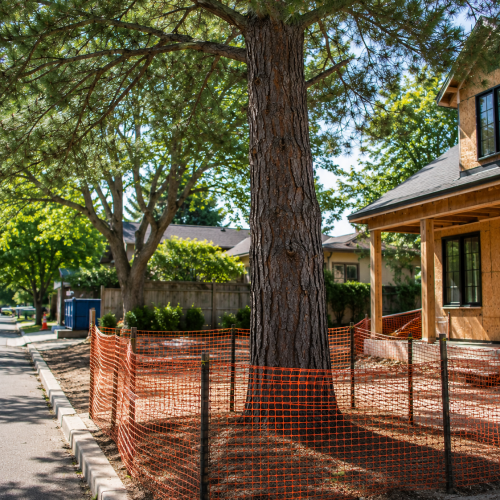
Construction can affect trees even when the trunk is not touched. Root disturbance, soil compaction, grading changes, excavation, driveway work, trenching, and equipment traffic can all put stress on a tree.
An arborist report can document the existing condition of a tree before work begins. It can also identify areas where the tree may need protection, monitoring, or removal before construction creates a bigger problem.
For property planning, a written report can help homeowners decide which trees are worth preserving and which trees may limit future use of the yard. This is useful before adding a garage, widening a driveway, building a deck, installing a pool, or changing drainage around the property.
Plan the tree assessment before machinery arrives. Once roots are cut or soil is compacted, the options may become more limited.
Tree concerns between neighbours can become emotional quickly. Branches over property lines, roots near fences, leaning trunks, storm-damaged limbs, and suspected safety risks can all create tension.
A written arborist report helps bring the conversation back to facts. It documents what was observed, what the concern is, and what next step may be reasonable.
The report does not settle every disagreement. It can, however, provide a clearer basis for discussion, especially when both properties may be affected by the same tree.
Homeowners should avoid making aggressive cuts just because a neighbour is frustrated. Poor pruning can damage the tree, create liability concerns, and sometimes make the situation worse.
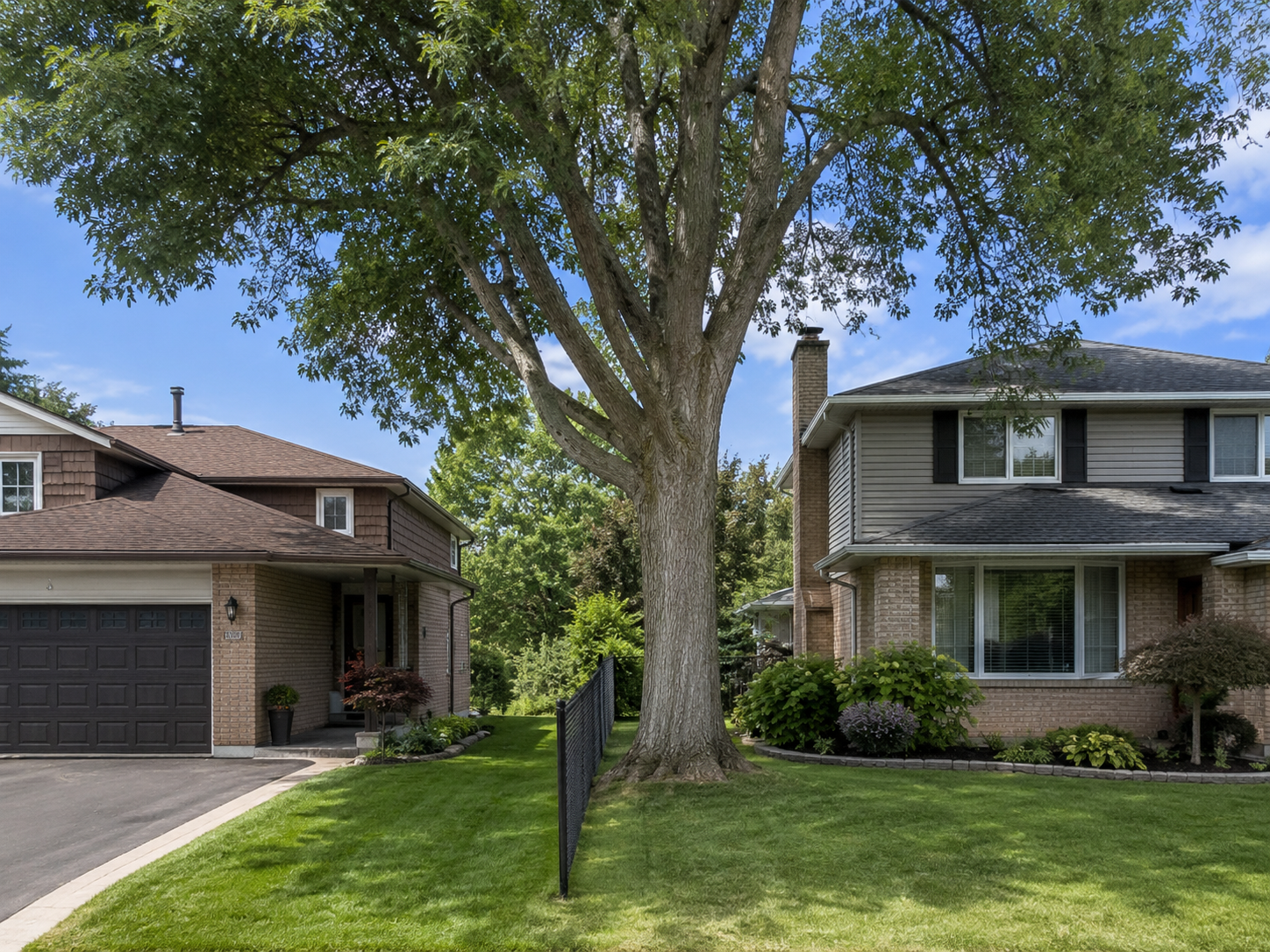
A tree that is dead, leaning, cracked, hollow, or dropping large limbs may need more than a casual look. When safety is part of the concern, a written assessment can help document risk and guide the next decision.
Risk concerns often involve trees near homes, garages, driveways, fences, playgrounds, pools, sidewalks, or parked vehicles. The tree’s location matters because a weak tree in a low-use area carries a different concern than a weak tree over a roof.
Sometimes the recommendation may be pruning or monitoring. Other times, removal is the safer option. For Barrie properties where a tree has moved beyond care and into safety concern, our tree removal services can support the next step after the assessment.
After heavy wind, wet snow, or ice, look for new cracks, hanging branches, raised soil, or a sudden lean. Those changes should be assessed quickly.
A tree estimate explains the proposed work and expected cost. It is usually focused on action, such as pruning, removal, stump grinding, or cleanup.
An arborist report explains the tree’s condition and the reason behind the recommendation. It is written for documentation, planning, or decision support.
Both can be useful, but they are not the same. If a homeowner only needs a price for a straightforward removal, an estimate may be enough. If the decision needs to be shared with a municipality, builder, neighbour, insurance contact, or property file, a written arborist report is usually more appropriate.
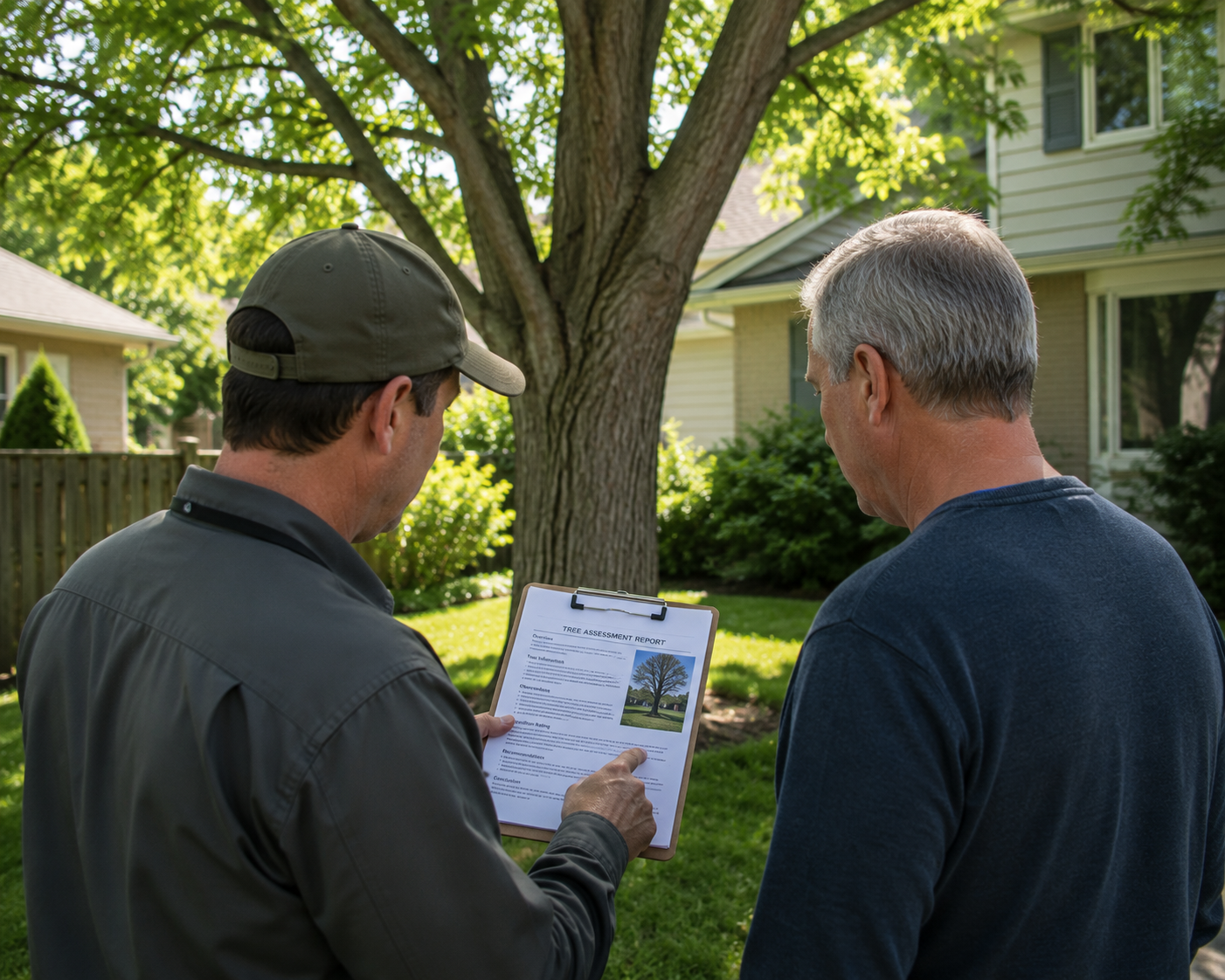
An arborist report is worth considering when the tree decision needs documentation, not just pricing. That usually means there is a permit question, construction project, neighbour concern, safety issue, or long-term property decision involved.
The best time to request one is before the situation becomes urgent. If a tree is already damaged, leaning, or interfering with a project timeline, the report can still help, but the options may be narrower.
We can assess the tree, explain what the report can include, and help determine whether a written report or a basic estimate is the right fit. If the tree issue involves documentation, planning, or risk, request a quote and send the details so we can guide the next step.
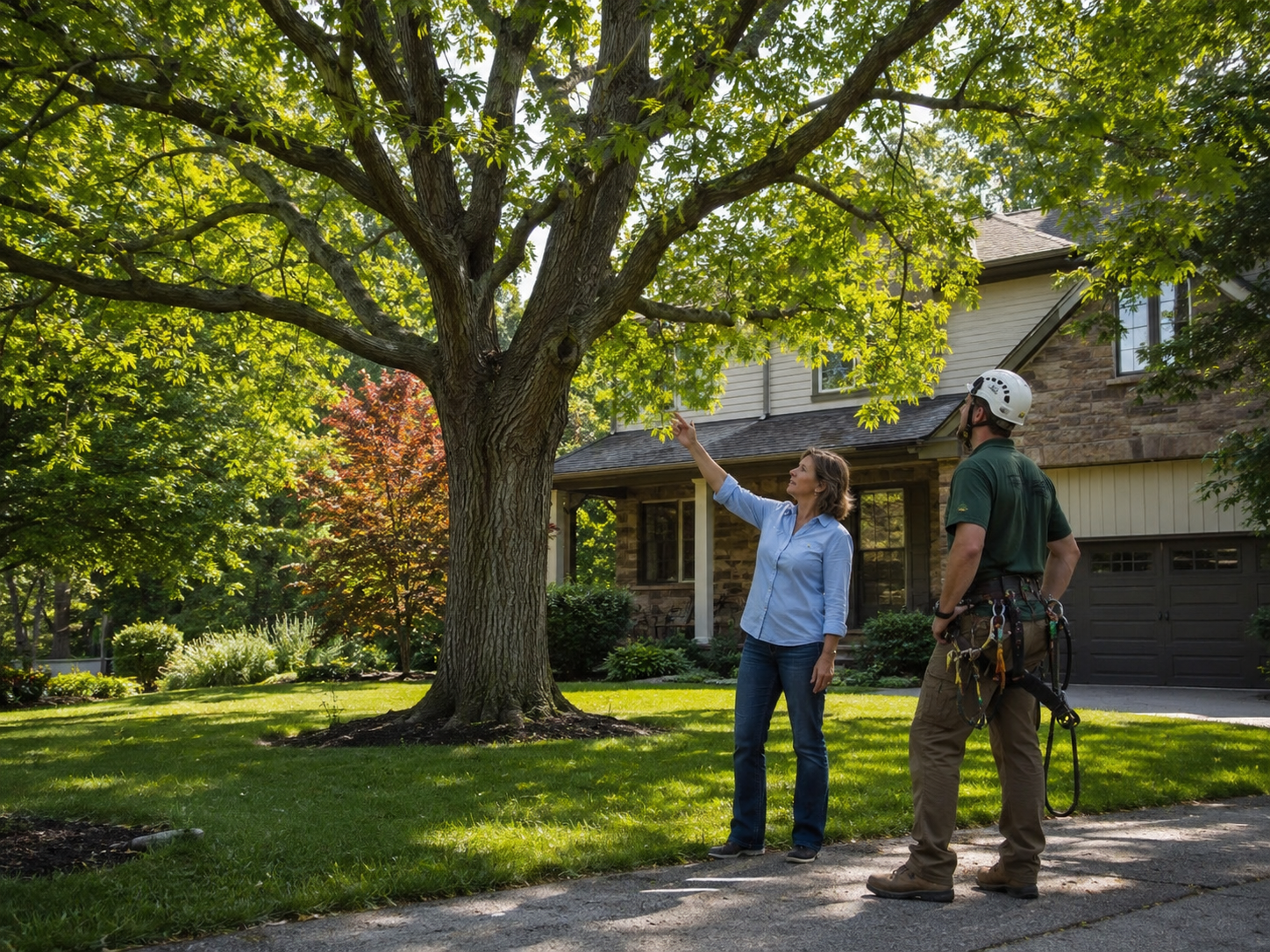
Curious about tree trimming, stump grinding, or professional tree removal? Explore our website to learn more about how Tyler’s Tree Services can help keep your property safe and beautiful. Whether you need expert advice or a service quote, we’ve got you covered!

With nearly a decade of experience, we handle everything from precise trimming to safe removals, ensuring top-quality care.

Fully insured and WSIB certified, we follow strict safety standards to protect your property and our crew on every job.

We’re committed to expert service and clean results, ensuring you’re fully satisfied with every tree we trim or remove.

We are insured with $5M coverage ($2M per occurrence), ensuring a worry-free experience on every job you hire us for.
The information in this article was compiled from reputable public sources and interpreted by an expert copywriter for general educational purposes. While Tyler’s Tree Services makes every effort to provide accurate and up-to-date guidance on tree care and safety in Barrie & Simcoe County. Conditions can vary by property, tree species, and season. This content is not a substitute for a professional arborist’s inspection or advice. Tyler’s Tree Services and its authors are not responsible for any actions taken based on this article. For personalized tree care recommendations or safety concerns, we strongly recommend consulting a certified arborist
