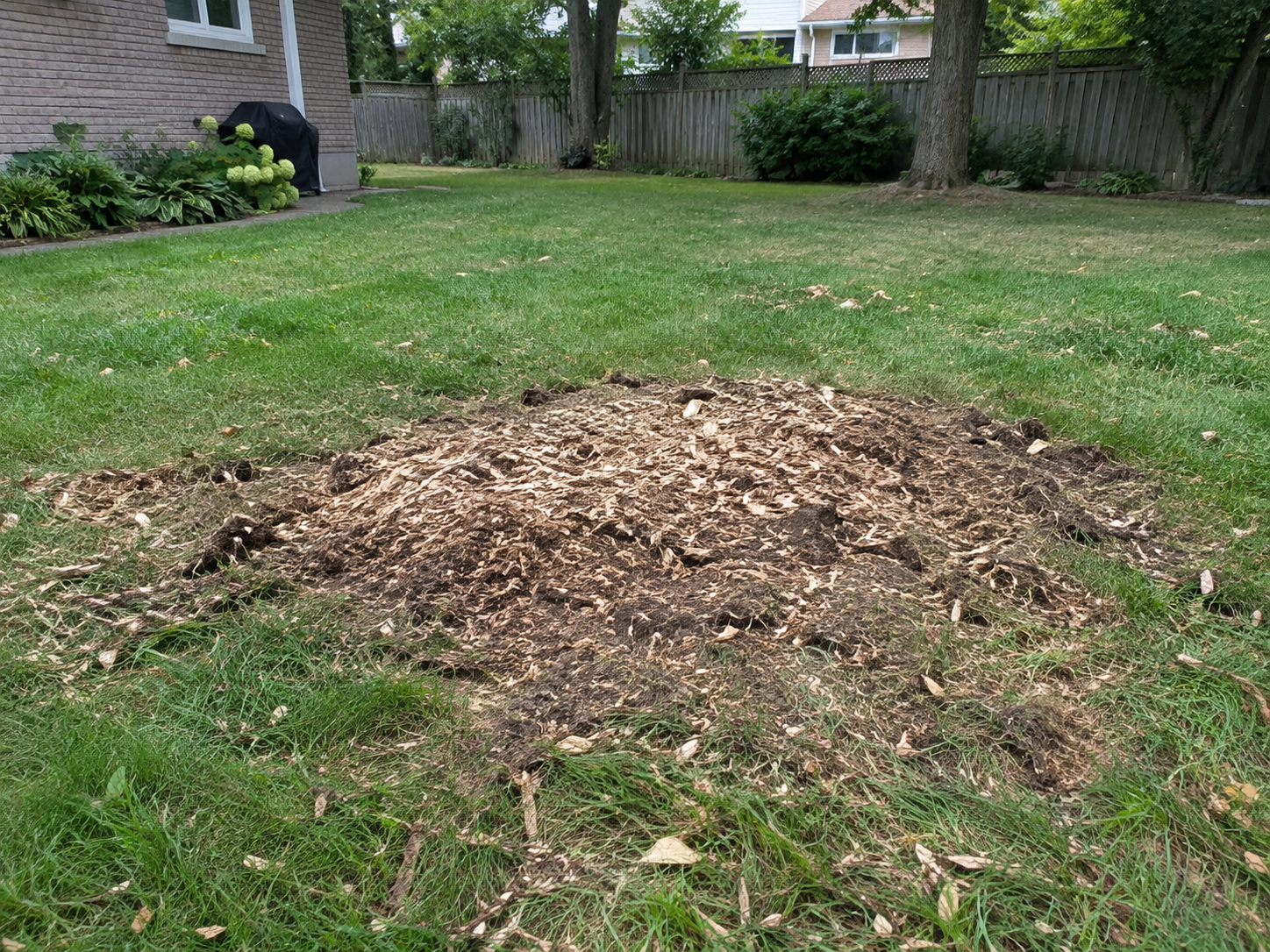
Stump grinding removes the visible stump and the upper portion of the root crown, but it does not remove every root underground. Most roots remain in the soil and slowly break down over time.
For many homeowners, that is completely fine. If the goal is to remove the tripping hazard, clean up the lawn, or prepare the area for grass or basic landscaping, stump grinding is often the practical option. If the area will be used for construction, deep planting, grading, or hardscaping, the remaining roots may need closer consideration.
Stump grinding uses a machine to grind the stump down into wood chips. The work usually focuses on the visible stump and the main flare where the trunk meets the roots.
The grinder does not chase every root across the yard. Large surface roots close to the stump may be reduced if they are in the work area, but the deeper and farther-reaching roots usually remain underground.
That difference matters. Stump grinding makes the surface usable again, but it is not the same as full stump and root excavation. The tree is gone, the stump is reduced, and the yard looks cleaner, but the root system below the soil still needs time to decay.
For homeowners in Barrie who want the stump removed from the lawn, garden, or walkway area, our stump grinding services can help clear the visible stump and explain what to expect from the remaining roots.
Before booking stump grinding, decide what you want to do with the area afterward. Grass, garden beds, patios, sheds, and replanting all have different requirements.
Roots left underground usually decay naturally. The timeline depends on the tree species, root size, soil moisture, drainage, and how much root material remains.
Smaller roots can break down faster. Large structural roots may take years to fully decompose. During that time, the soil above the old root system may slowly settle as the wood breaks down.
This does not usually create a major issue for basic lawn repair. It can matter more when homeowners plan to install interlock, pour concrete, build a structure, or plant a new tree in the same location. Roots that are still present can affect grading, compaction, and how the ground behaves over time.
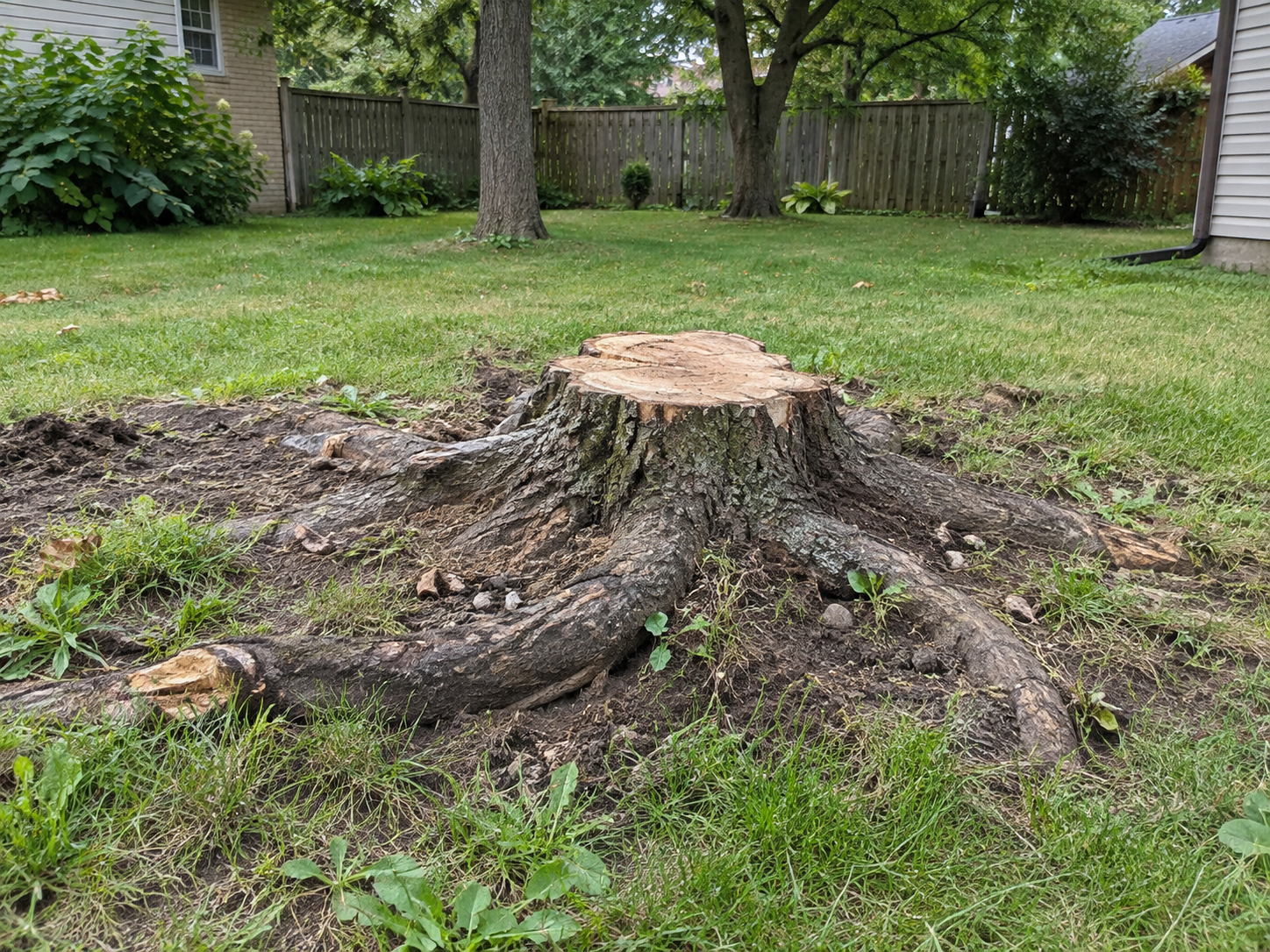
In many cases, roots stop actively growing once the tree has been removed and the stump has been ground down. Without the canopy feeding the root system, most remaining roots begin to decline.
Some tree species may try to send up sprouts from leftover root material. This is more common with certain aggressive or suckering trees. New shoots can appear around the old stump area, along nearby roots, or in the lawn.
Sprouting does not mean the stump grinding failed. It means some living root tissue may still be trying to push growth. Depending on the tree and the amount of remaining energy in the roots, sprouts may need to be cut back or managed as they appear.
In Ontario yards, moisture and warm weather can encourage sprouts after removal on certain species. Keep an eye on the area through the first full growing season.
Settling can happen after stump grinding because the old root system and buried wood chips change over time. As organic material breaks down, the soil can sink slightly.
This is most noticeable when a large stump was ground and the area was filled right away. Wood chips may look level at first, but they do not behave exactly like soil. They decompose, compress, and leave space behind.
For a lawn, this usually means the area may need extra topsoil later. For hardscaping or construction, settling is more important because patios, walkways, slabs, and small structures need a stable base.
Do not rush permanent hardscaping directly over a fresh stump-grinding area without planning for remaining roots, chip material, and future settling.
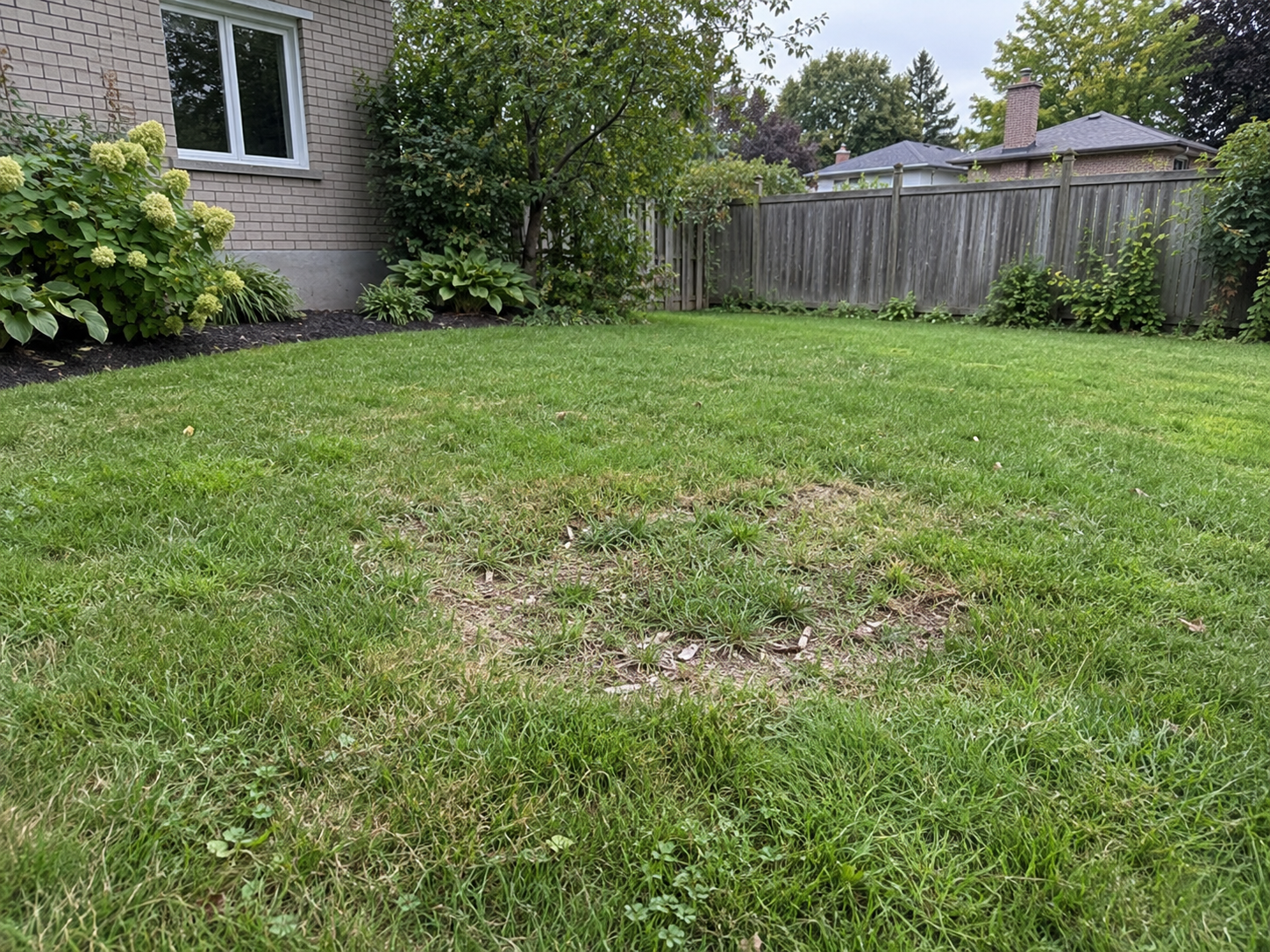
Stump grinding is often enough when the homeowner wants to repair the lawn or create a shallow garden bed. Once the stump is ground, the chips can be managed, and the area can be cleaned up with topsoil and seed.
A new garden bed may need more preparation. Fresh wood chips mixed into the soil can affect how the area drains and how plants establish. Removing excess chips and adding quality soil gives the space a better start.
Planting a new tree in the exact same spot is usually not ideal right away. Remaining roots, old wood, soil disturbance, and limited planting space can make establishment harder. A nearby location with better soil preparation is often a better choice.
Homeowners comparing grinding with more complete removal can review our article on stump grinding vs. removal in Barrie for a clearer look at the difference between the two approaches.
Stump grinding near driveways, patios, retaining walls, fences, sheds, utility lines, irrigation, or buried services needs careful planning. The grinder can only work where there is safe access and enough room to operate.
Roots may extend beneath hard surfaces or near underground utilities. Grinding the stump does not remove roots under a driveway or patio. It also should not be treated as a way to solve every underground conflict.
Before work begins, homeowners should mention any known underground services, irrigation lines, lighting wires, drainage pipes, or recent utility work. If the stump is close to hardscape, the grinding depth and approach may need to be adjusted.
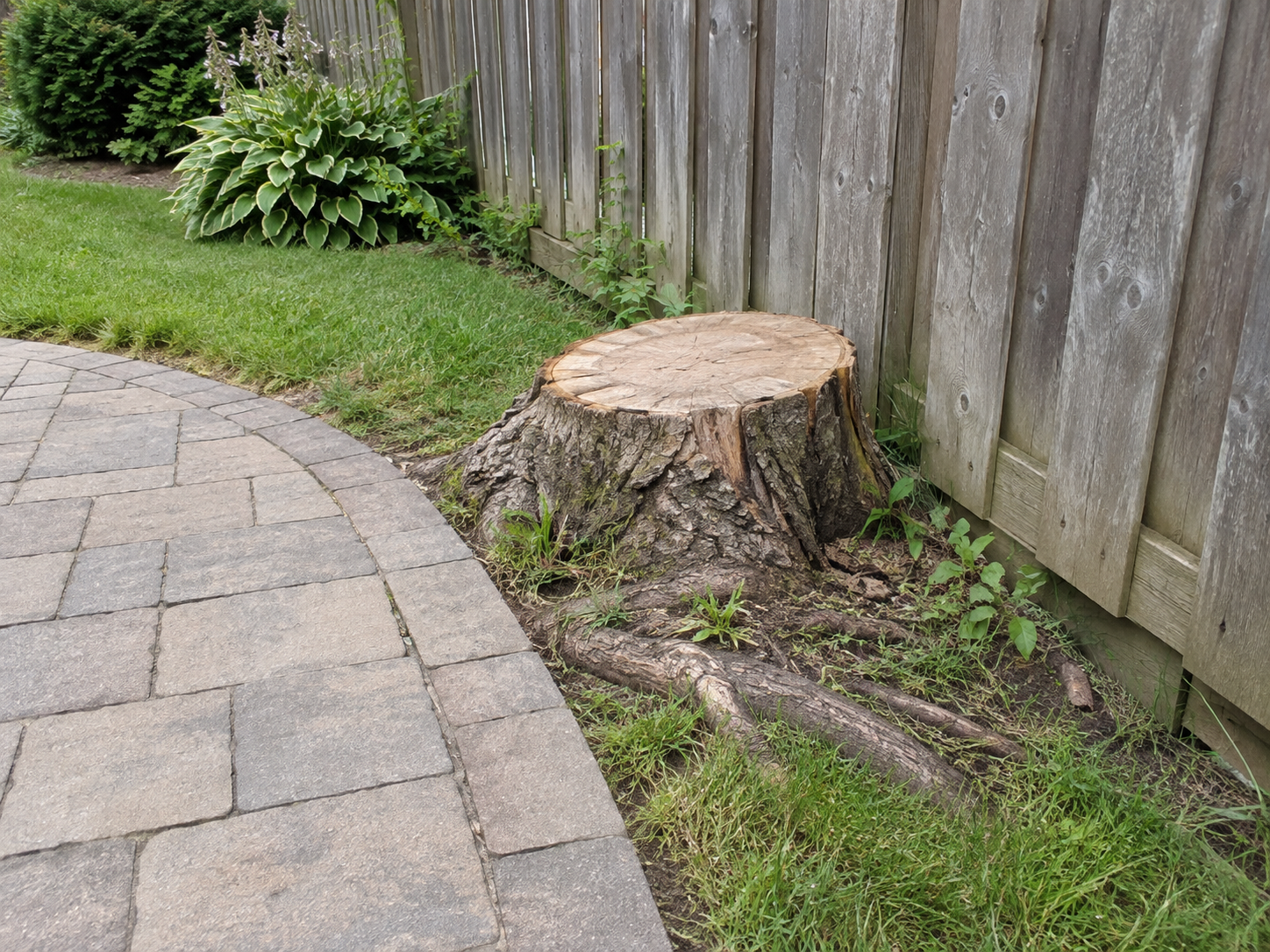
Stump grinding is practical for many residential situations, but full excavation may be needed when the root mass must be physically removed. This is more common when construction, major grading, foundation work, utility work, or a new structure is planned for the same area.
Excavation is more disruptive than grinding. It can disturb more soil, require heavier equipment, and affect nearby landscaping. It may also be limited by access, underground utilities, drainage, and structures close to the stump.
A homeowner planning a shed, driveway extension, retaining wall, pool, or building addition should explain that before choosing stump grinding. The future use of the space matters as much as the stump itself.
If the area needs to carry weight later, treat the stump area as part of the construction plan, not just a cleanup task.
Tree removal and stump grinding are connected, but they are separate parts of the job. Removing the tree takes care of the trunk, canopy, limbs, and immediate hazard. Grinding deals with what remains at ground level.
Some homeowners arrange stump grinding right after removal. Others wait until they know what they want to do with the space. Both approaches can work, depending on the property and the plan.
In Barrie and surrounding Simcoe County communities, our tree removal services can be planned with stump grinding when a tree is being removed and the homeowner wants a cleaner finish afterward.
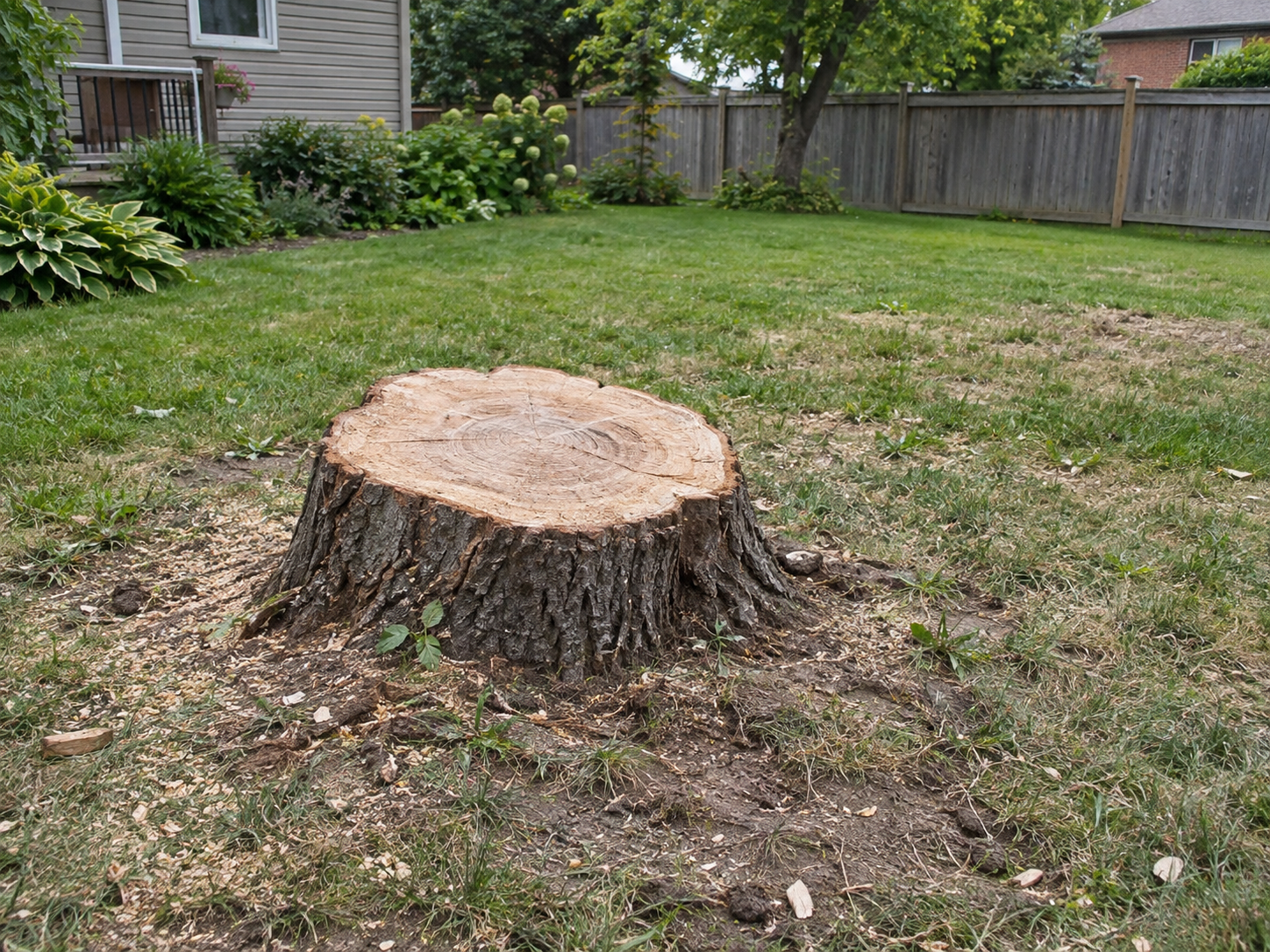
A better estimate starts with better information. Let us know where the stump is located, how wide it is, whether there is clear access, and what is nearby.
It also helps to explain what you plan to do with the area afterward. A simple lawn repair is different from a future patio or construction project. That information helps set the right expectation for grinding depth, cleanup, remaining roots, and possible settling.
Request a stump-grinding estimate and explain what you plan to do with the area afterward. Send the details and request a stump-grinding estimate so we can assess the stump, access, and best next step for the space.
Curious about tree trimming, stump grinding, or professional tree removal? Explore our website to learn more about how Tyler’s Tree Services can help keep your property safe and beautiful. Whether you need expert advice or a service quote, we’ve got you covered!

With nearly a decade of experience, we handle everything from precise trimming to safe removals, ensuring top-quality care.

Fully insured and WSIB certified, we follow strict safety standards to protect your property and our crew on every job.

We’re committed to expert service and clean results, ensuring you’re fully satisfied with every tree we trim or remove.

We are insured with $5M coverage ($2M per occurrence), ensuring a worry-free experience on every job you hire us for.
The information in this article was compiled from reputable public sources and interpreted by an expert copywriter for general educational purposes. While Tyler’s Tree Services makes every effort to provide accurate and up-to-date guidance on tree care and safety in Barrie & Simcoe County. Conditions can vary by property, tree species, and season. This content is not a substitute for a professional arborist’s inspection or advice. Tyler’s Tree Services and its authors are not responsible for any actions taken based on this article. For personalized tree care recommendations or safety concerns, we strongly recommend consulting a certified arborist
