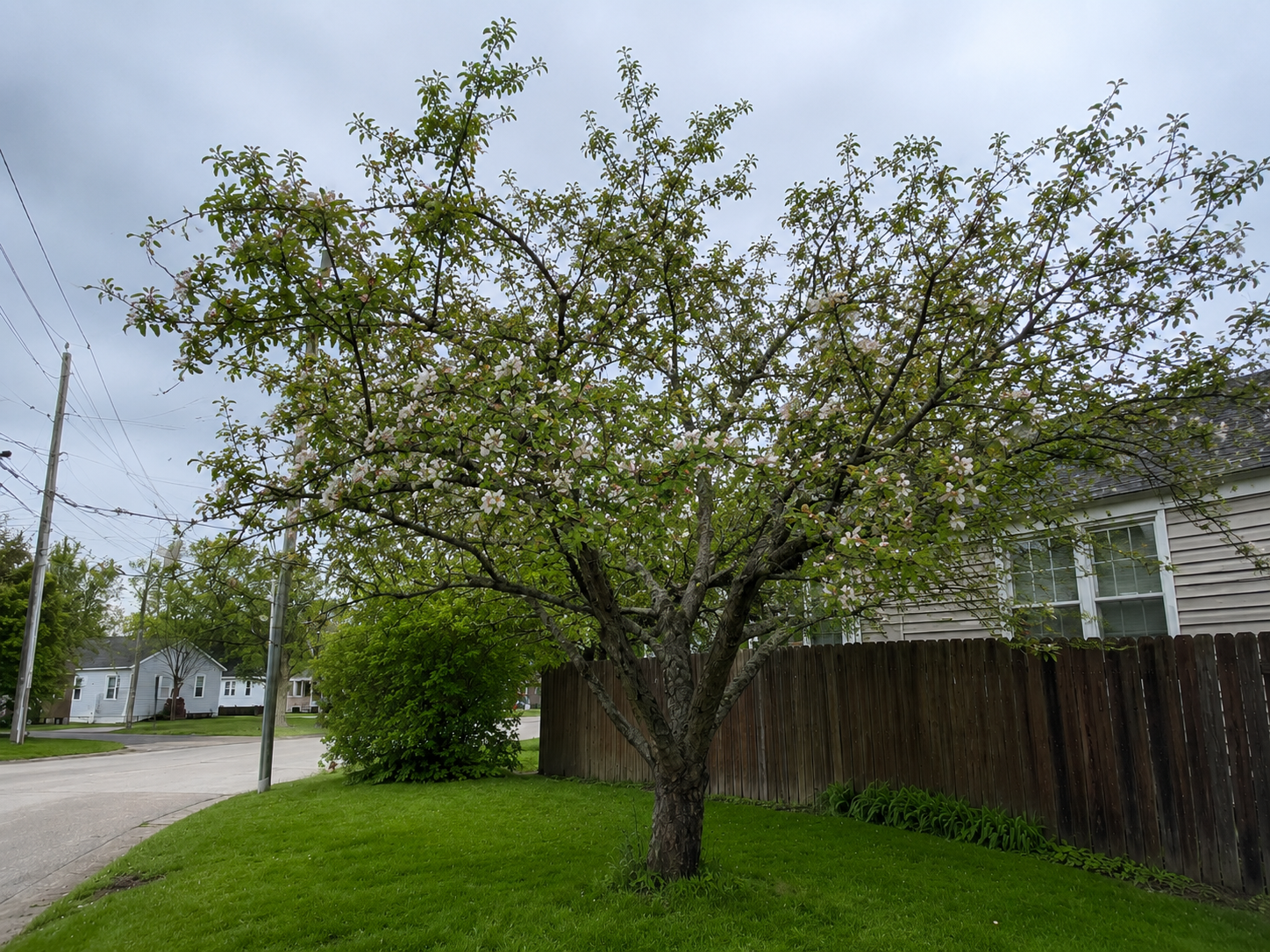
Apple trees in Ontario are usually best pruned in late winter or very early spring, before active growth begins. For most homeowners, that means February through May depending on the weather, the tree’s condition, and how quickly spring arrives in your area.
Pruning at the right time helps shape the tree, improve airflow, manage fruit production, and reduce the risk of weak or crowded branches becoming a problem later in the season.
The best time to prune apple trees in Ontario is during the dormant season, usually late winter into early spring. This is when the tree is not actively producing leaves, flowers, or fruit.
For many properties in Barrie, Simcoe County, and nearby areas, the ideal window often lands between late February and March. In milder years, some work can begin earlier.
Dormant pruning is preferred because the tree structure is easier to see. Without leaves in the way, we can identify crossing branches, damaged limbs, weak unions, water sprouts, and dense sections of the canopy more clearly.
Late winter pruning also gives the tree a better recovery window. As spring growth starts, the tree can begin sealing pruning cuts and pushing energy into healthier structure.
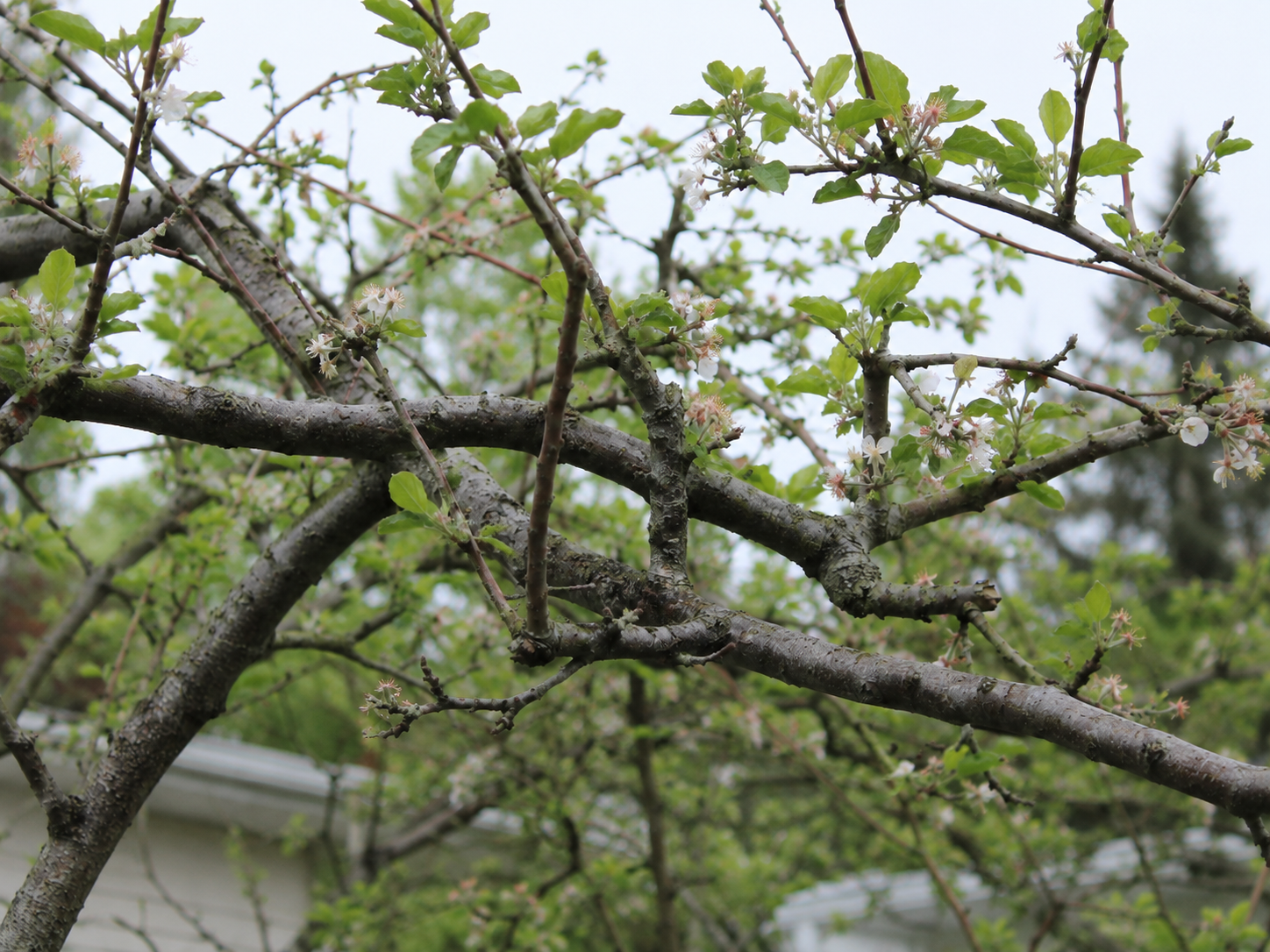
Apple trees respond strongly to pruning. When pruning is done while the tree is dormant, the tree can direct spring energy into better branch structure instead of supporting weak, crowded, or damaged growth.
Early spring pruning can help with:
Airflow matters because dense apple trees can hold moisture inside the canopy. That can create better conditions for fungal issues and pest pressure, especially during humid Ontario summers.
Homeowners trying to separate pruning issues from possible disease symptoms may also find our guide on Common Tree Diseases in Ontario helpful when assessing leaf spots, dieback, decay, or unusual growth.
Fall is usually not the right time for major apple tree pruning in Ontario. Once trees start preparing for winter, large pruning cuts can create unnecessary stress.
Pruning too late in the season can also stimulate tender growth. That growth may not have enough time to harden before freezing temperatures arrive, making it more vulnerable to winter injury.
Light cleanup can still make sense if there are broken, dead, or hazardous branches. Full structural pruning should usually wait until late winter.
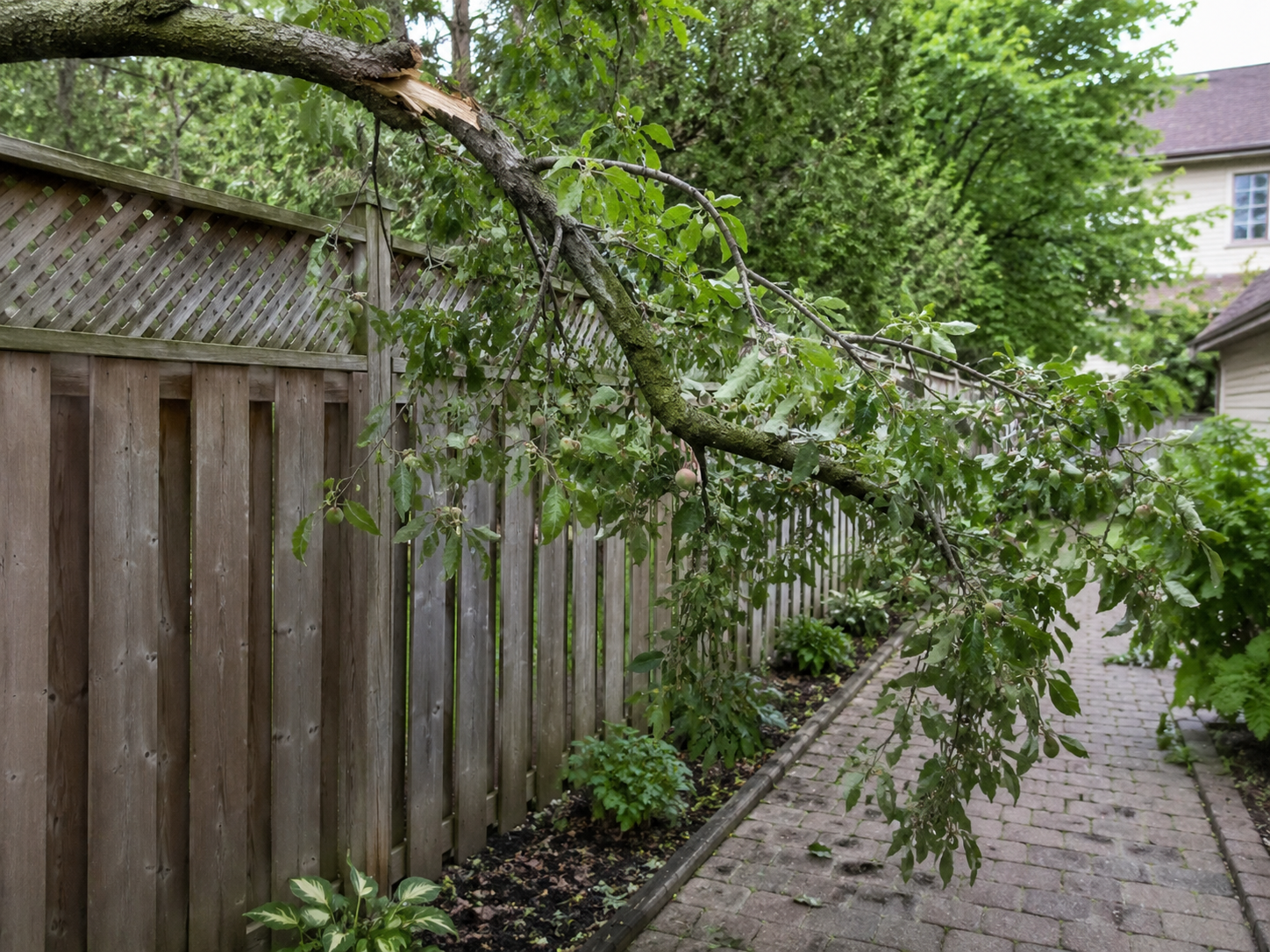
If a limb is cracked, hanging, or creating a safety concern, removal should not wait just because the timing is not perfect. Safety comes first around homes, driveways, fences, sheds, and walkways.
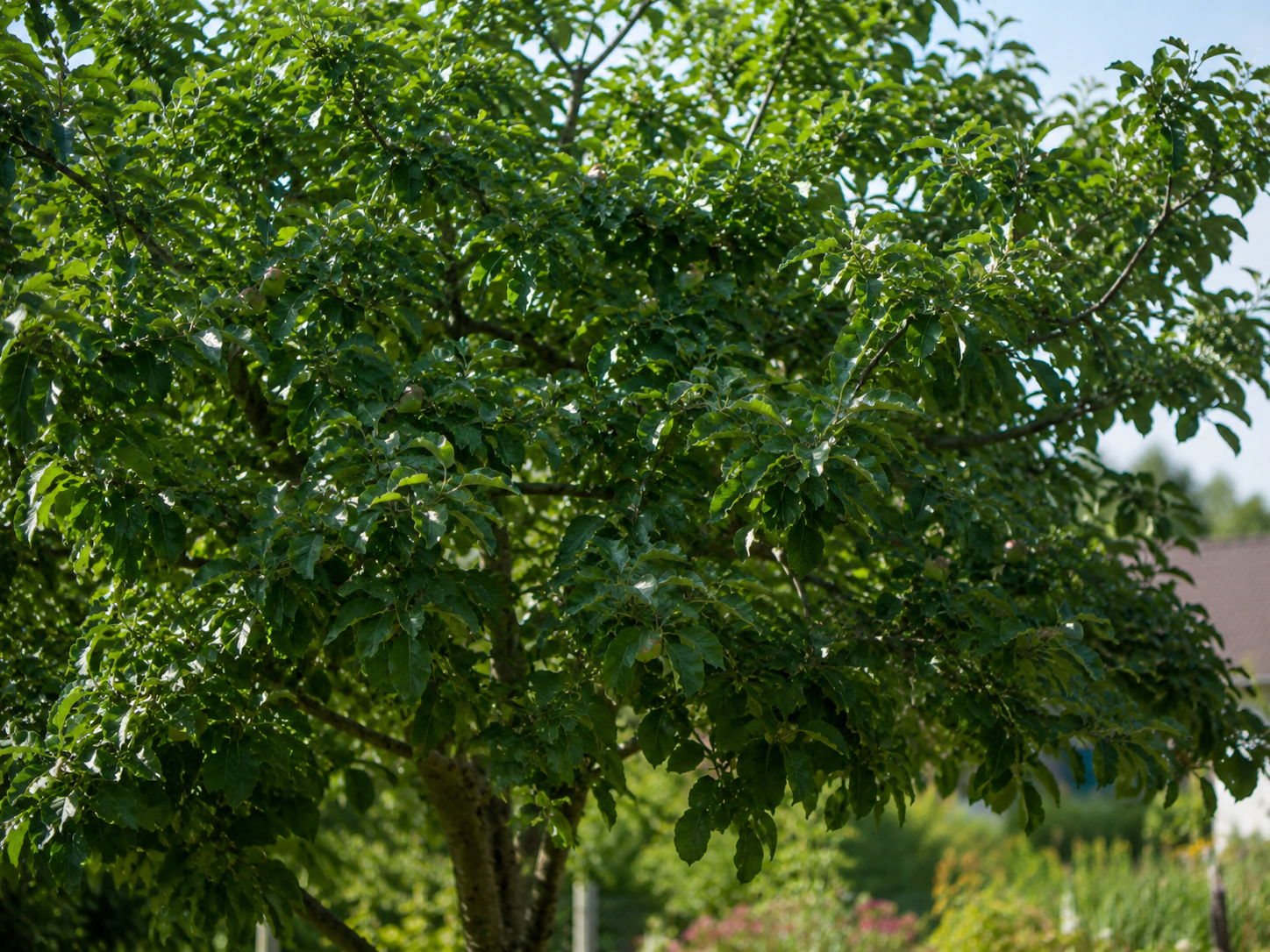
Apple trees can be lightly pruned in summer, but summer pruning serves a different purpose. It is usually used to manage vigorous shoots, improve light exposure, and reduce excessive leafy growth.
Summer pruning should be careful and limited. Removing too much leaf surface during the growing season can reduce the tree’s ability to feed itself.
Summer pruning may make sense when:
For broader seasonal care, our article on Essential Summer Tree Care Tips for Ontario Homeowners explains how summer heat, watering, and stress can affect trees across the property.
Apple tree pruning is not about randomly cutting branches back. The goal is to improve structure while keeping enough healthy growth to support fruiting.
Common branches to remove include:
A healthy apple tree should have an open structure where air and light can move through the canopy. That does not mean stripping the tree bare. Over-pruning can shock the tree and reduce fruit production.
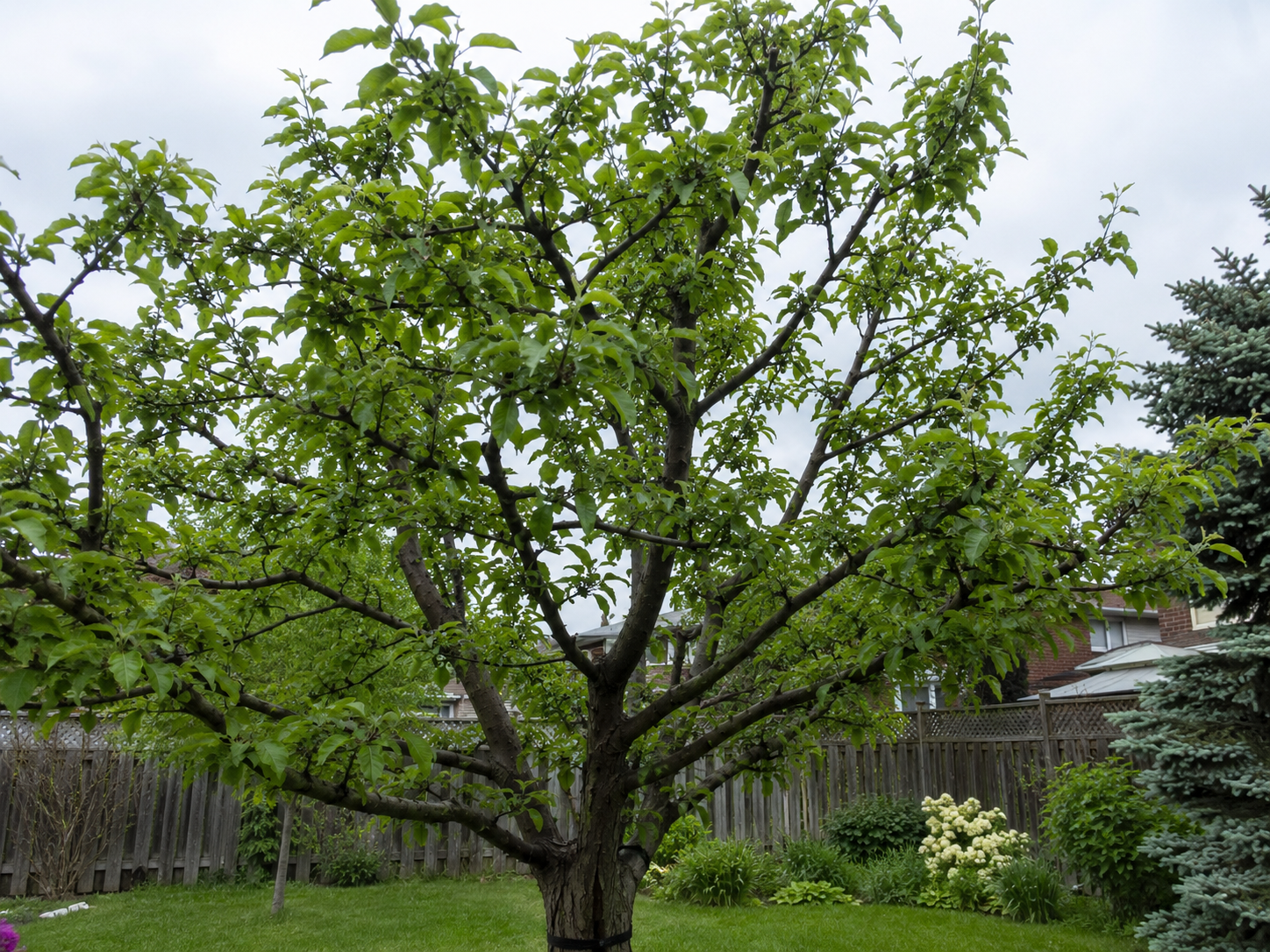
Avoid removing too much of the tree in one year. For mature apple trees, heavy correction is often better spread across more than one season. This helps protect the tree from unnecessary stress.
Young apple trees need training. Mature apple trees need maintenance.
In the first few years, pruning is mostly about building a strong framework. Good early pruning helps create stable scaffold branches and a shape that can support future fruit.
Mature apple trees usually need selective pruning to remove deadwood, reduce crowding, and control height. Older trees may also need restoration pruning if they have been neglected for several years.
Neglected apple trees should be handled carefully. Cutting too much at once can cause a flush of weak shoots and reduce fruiting. A staged plan often gives better results.
For homeowners in Barrie with dense canopies or mature trees that need professional spacing, our Tree Thinning service can help improve airflow and light while keeping the tree’s structure in mind.
Apple trees need sunlight to produce healthy fruit. When the canopy becomes too thick, fruit can become smaller, less colourful, or more prone to disease pressure.
Proper pruning helps balance vegetative growth and fruiting wood. Too much leafy growth can mean fewer apples. Too much fruiting pressure on weak branches can lead to breakage.
Fruit production improves when the tree has:
Apple trees should not be pruned only for appearance. Shape matters, but fruiting structure matters more.
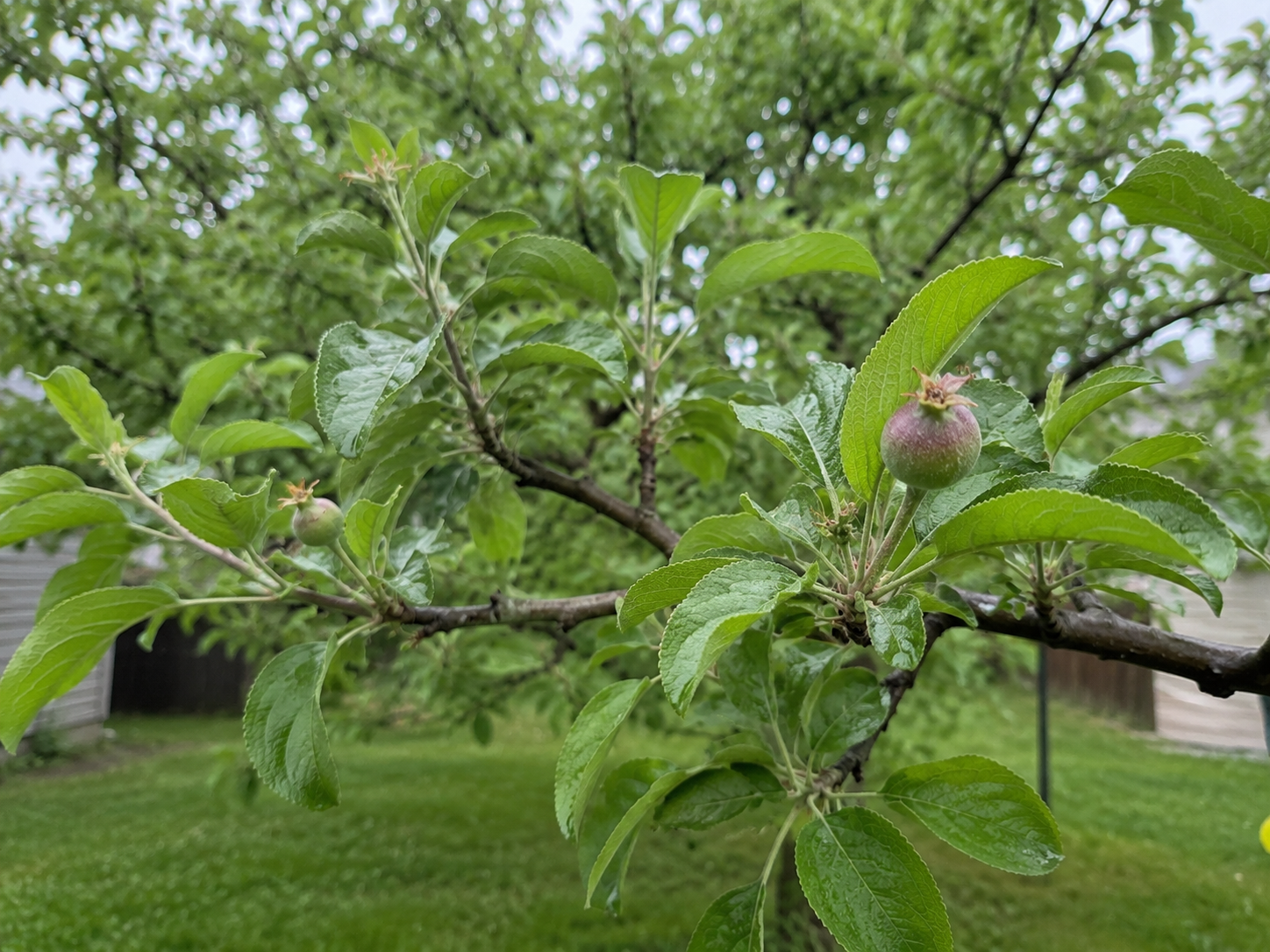
Timing matters, but tree condition matters too. Avoid pruning during extreme cold snaps, heavy rain, or when the tree is under obvious stress.
Pruning during deep cold can make branches more brittle. Fresh cuts may also be slower to respond if temperatures remain severe.
Avoid major pruning when the tree is dealing with serious drought stress, major storm damage, or active disease symptoms that have not been assessed. In those situations, the first step is understanding the issue before making large cuts.
If the tree has large dead sections, fungal growth, trunk damage, or major cracks, pruning may not be enough. Removal, reduction, or a safety assessment may be the better next step.
Apple trees planted close to structures often need more careful pruning. Branches can rub against siding, hang over fences, block walkways, or interfere with vehicles.
In Barrie yards, we often see older fruit trees growing close to garages, sheds, and property lines. In those cases, pruning has to balance clearance with tree health.
If branches need to be shortened without damaging the overall structure, our Reduction Pruning Service [HYPERLINK HERE] can help manage size and clearance without simply topping the tree.
Around Simcoe County, properties in towns like Collingwood and Innisfil often have older fruit trees that have been part of the landscape for decades. When trees become unsafe or decline beyond practical pruning, our Tree Removal Collingwood and Tree Removal Innisfil pages provide local service context for homeowners in those areas.
For most apple trees in Ontario, late winter to early spring is the best pruning window. Aim for the dormant season before buds fully open, and avoid heavy pruning in fall.
Focus on structure, airflow, sunlight, and safe branch spacing. Pruning should help the tree grow stronger and produce better fruit, not just make the canopy look smaller.
When the tree is mature, damaged, or close to structures, professional pruning can prevent costly mistakes and help protect the long-term health of the tree.
Curious about tree trimming, stump grinding, or professional tree removal? Explore our website to learn more about how Tyler’s Tree Services can help keep your property safe and beautiful. Whether you need expert advice or a service quote, we’ve got you covered!

With nearly a decade of experience, we handle everything from precise trimming to safe removals, ensuring top-quality care.

Fully insured and WSIB certified, we follow strict safety standards to protect your property and our crew on every job.

We’re committed to expert service and clean results, ensuring you’re fully satisfied with every tree we trim or remove.

We are insured with $5M coverage ($2M per occurrence), ensuring a worry-free experience on every job you hire us for.
The information in this article was compiled from reputable public sources and interpreted by an expert copywriter for general educational purposes. While Tyler’s Tree Services makes every effort to provide accurate and up-to-date guidance on tree care and safety in Barrie & Simcoe County. Conditions can vary by property, tree species, and season. This content is not a substitute for a professional arborist’s inspection or advice. Tyler’s Tree Services and its authors are not responsible for any actions taken based on this article. For personalized tree care recommendations or safety concerns, we strongly recommend consulting a certified arborist
