Fallen Tree Removal: Who Should You Call First?

When a tree falls during a storm, the first call is not always the tree service. The right sequence depends on whether people are safe, whether emergency services are needed, whether utility lines are involved, and whether insured property was damaged.

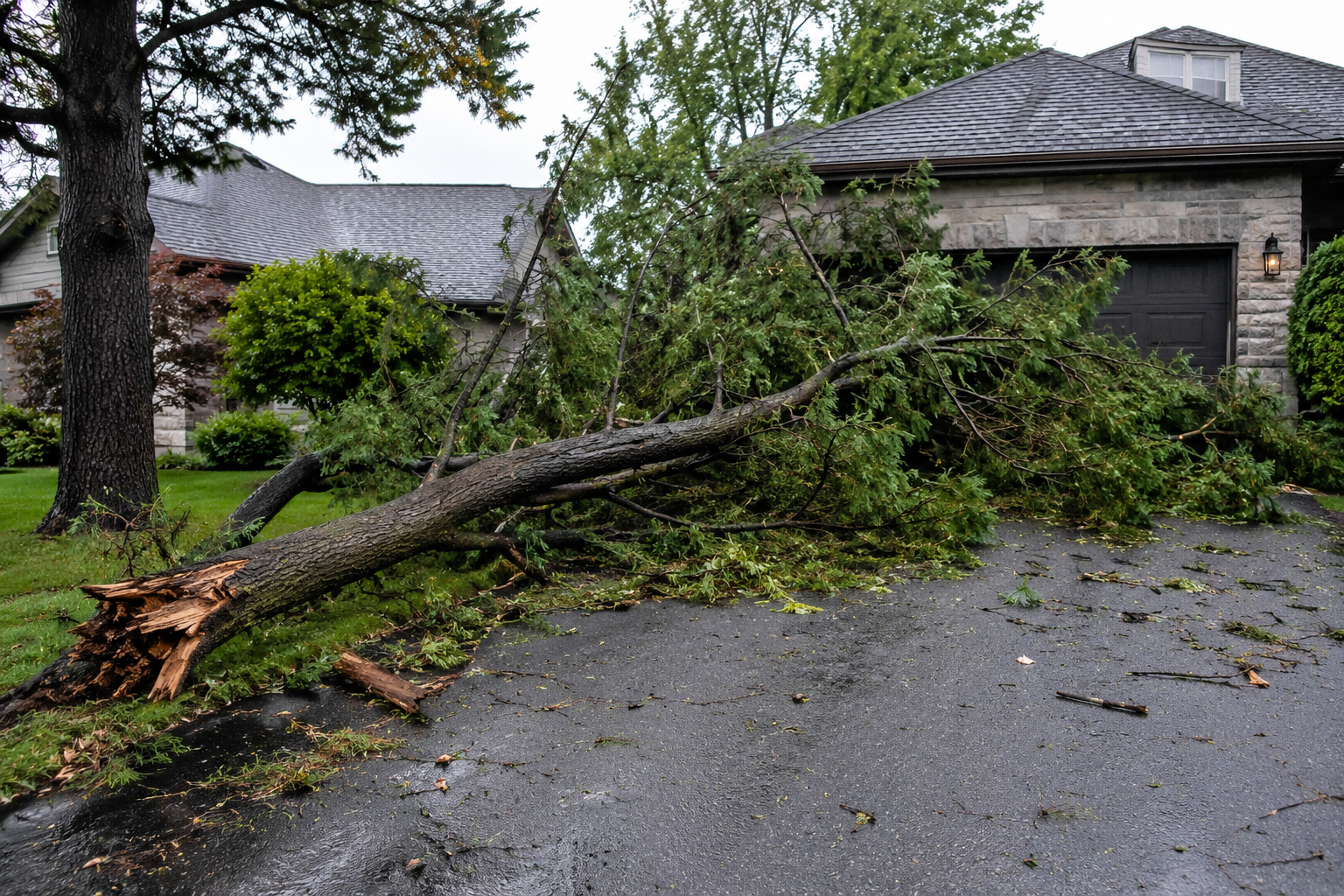
A fallen tree can still move after it hits the ground. Broken limbs may be under tension, trunks can roll, and hanging branches can drop without warning, so the safest first step is distance.

Start With Personal Safety

Emergency services may need to be contacted first if the fallen tree has injured someone, trapped someone, started a fire risk, damaged a live electrical service, blocked emergency access, or created an immediate public hazard.

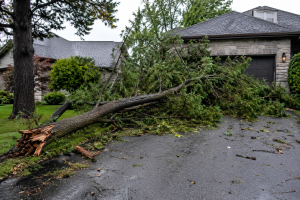
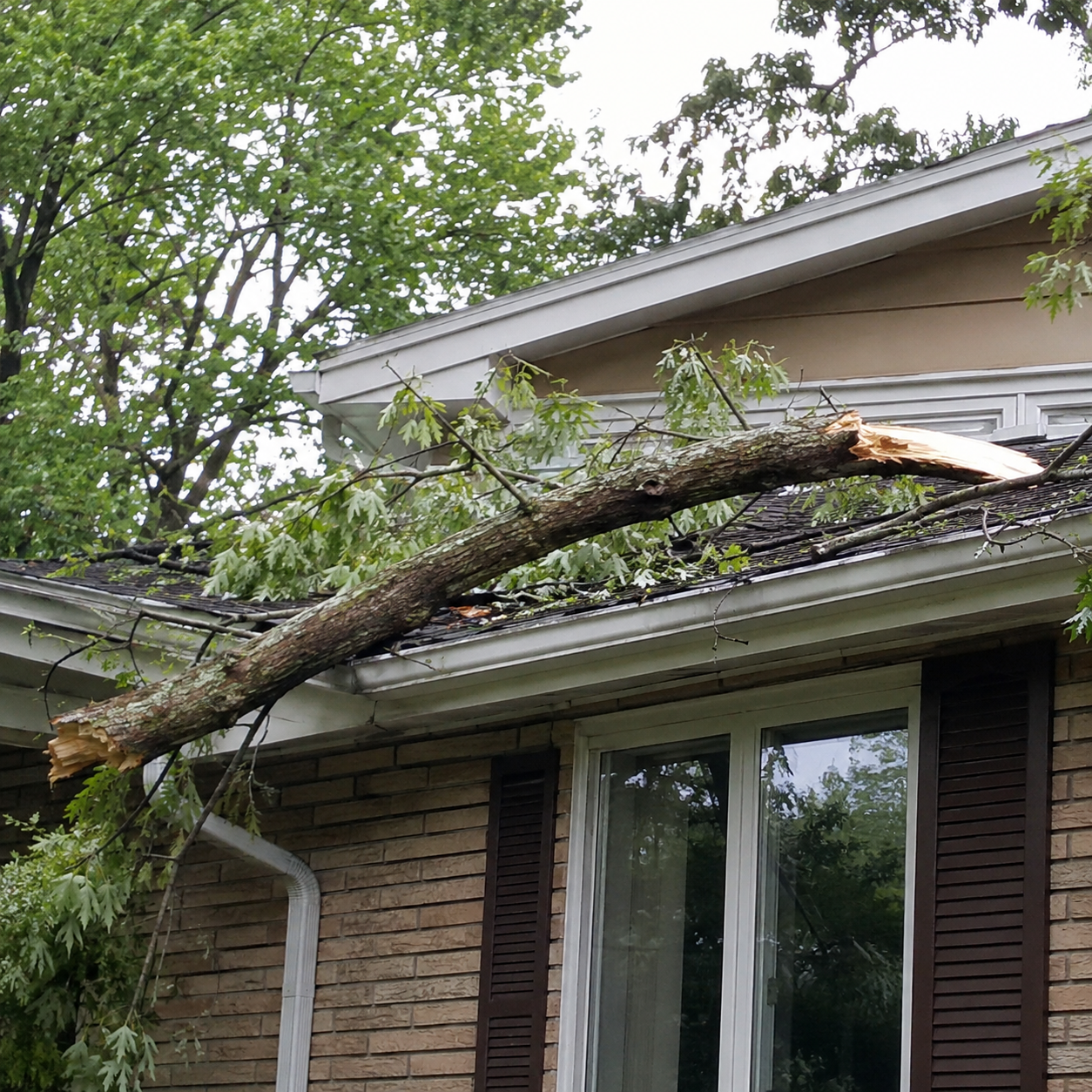
A tree on a roof, across a road, against a home, or pressing into a garage can create urgent conditions. If there is any immediate danger to people, call the proper emergency number before arranging cleanup.

This is also true when the tree has damaged gas equipment, electrical equipment, or a structure that may no longer be safe to enter. A removal crew can help once the immediate emergency is controlled, but life safety comes first.

Little Tip:

If you can hear cracking, see movement, or notice branches hanging overhead, stay back. A tree does not need to be fully on the ground to be dangerous.

Call Emergency Services When People or Structures Are at Immediate Risk

Emergency services may need to be contacted first if the fallen tree has injured someone, trapped someone, started a fire risk, damaged a live electrical service, blocked emergency access, or created an immediate public hazard.

A tree on a roof, across a road, against a home, or pressing into a garage can create urgent conditions. If there is any immediate danger to people, call the proper emergency number before arranging cleanup.

This is also true when the tree has damaged gas equipment, electrical equipment, or a structure that may no longer be safe to enter. A removal crew can help once the immediate emergency is controlled, but life safety comes first.

Contact the Utility Provider if Lines Are Involved

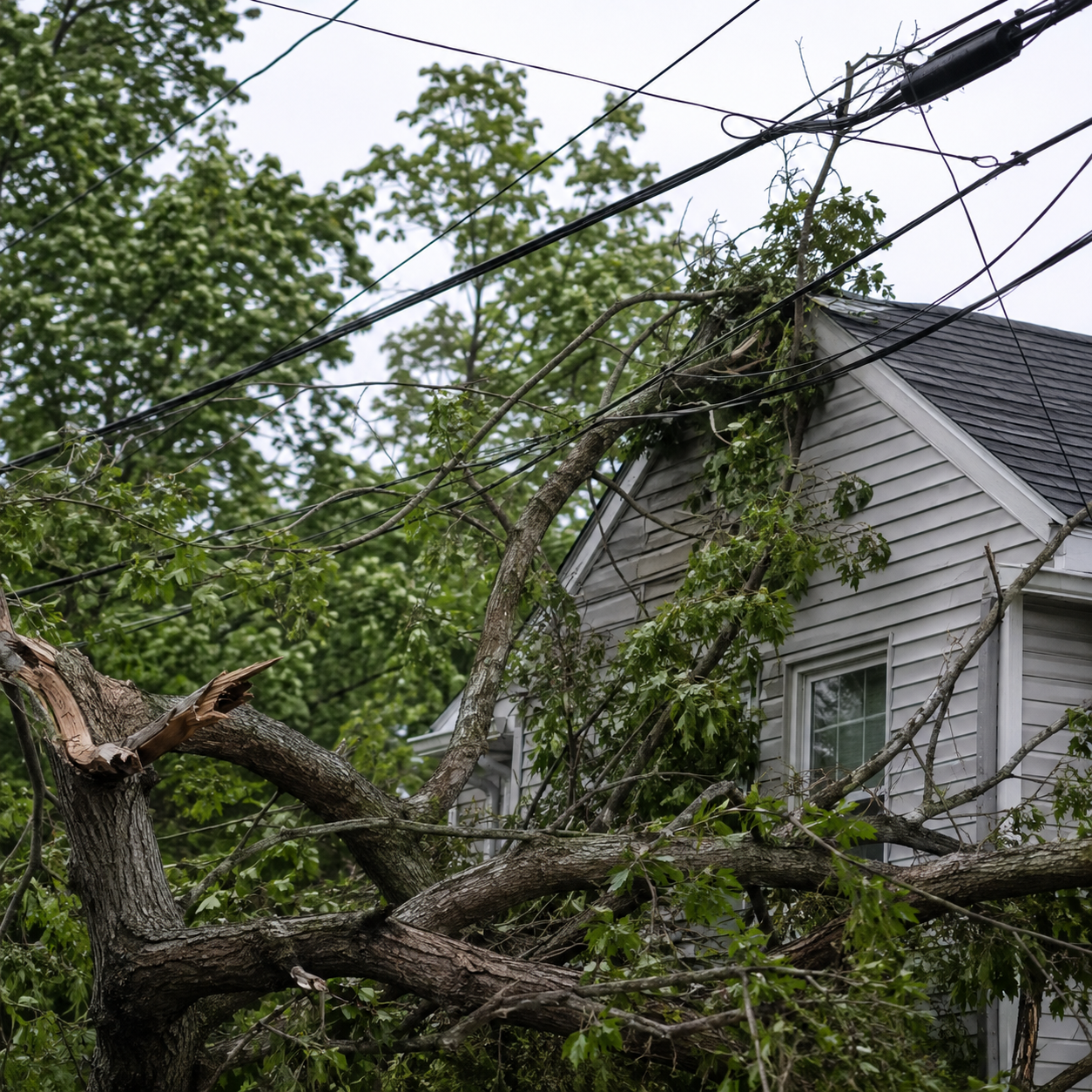
If a tree or branch is touching, pulling, leaning on, or tangled near overhead wires, stay away and contact the utility provider. Do not approach the tree, the wires, the pole, or anything touching them.

Downed or damaged power lines can energize the ground, fences, branches, vehicles, and wet surfaces. A branch on a line may also be holding tension that changes when the utility responds.

In Ontario storms, it is common for branches to break near service lines, communication lines, and roadside hydro corridors. Homeowners should not try to decide which line is safe. Treat every wire as dangerous until the proper utility confirms otherwise.

Our guide on trees near powerlines explains why tree and wire situations require extra caution before any tree work begins.

Local Tip:

After heavy wind or ice in Simcoe County, check from a safe distance only. Wet ground, broken branches, and wires are a bad combination.

Call Your Insurer Before Non-Emergency Cleanup When Practical

If the fallen tree damaged a house, garage, fence, shed, vehicle, or other insured property, contact your insurer when it is practical and safe to do so. The insurer may want photos, a claim number, an estimate, or specific documentation before cleanup starts.

This does not mean cleanup should wait when the tree creates an active hazard. If the tree is unsafe, blocking access, or causing ongoing damage, safety needs to be addressed. Still, photos from a safe distance can help document what happened before the scene changes.

Useful information includes the date of the storm, what the tree hit, whether access is blocked, visible damage, and whether wires or unstable limbs are involved. Keep copies of estimates, invoices, and any communication related to the removal.

Call a Qualified Tree Service Once Immediate Hazards Are Controlled

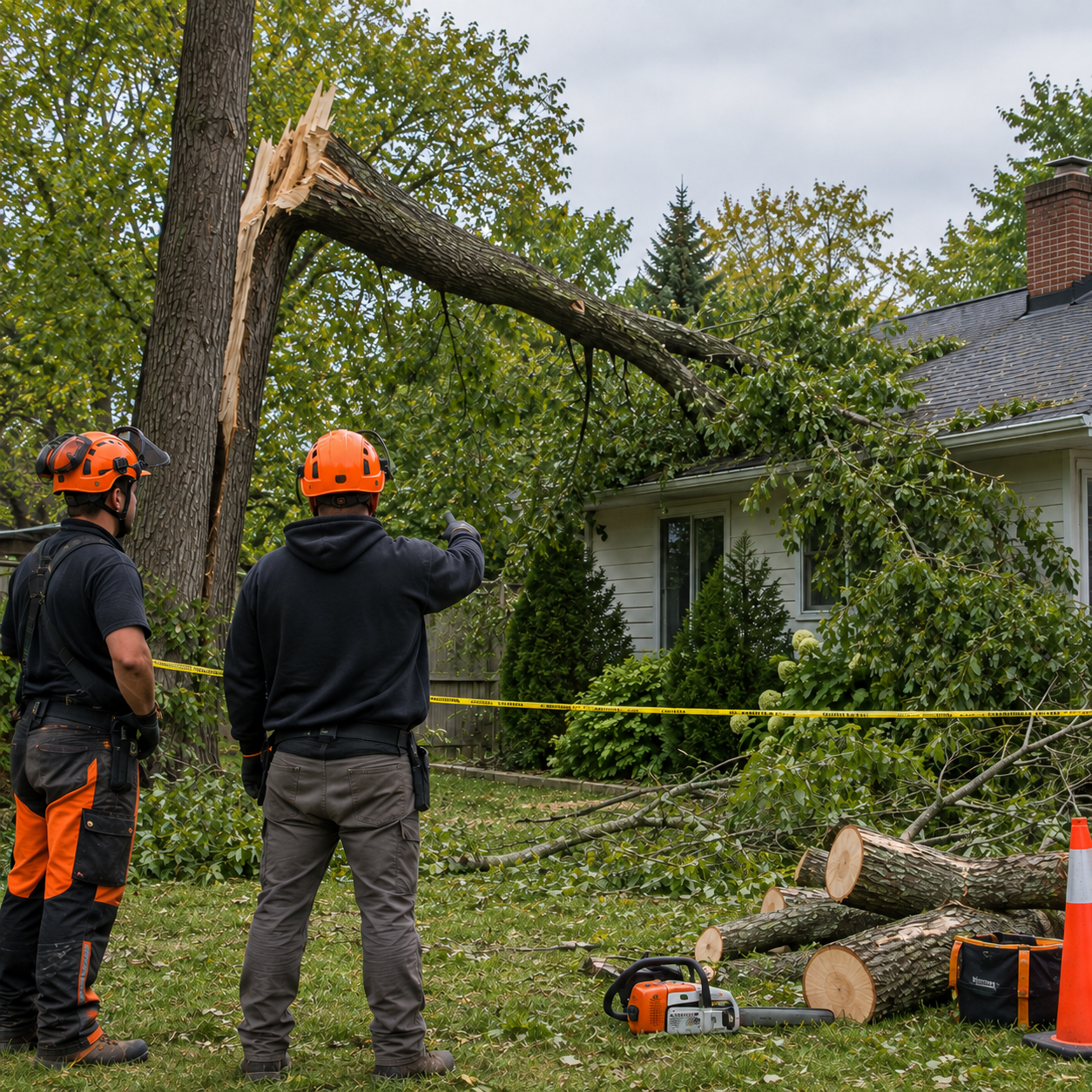
Once people are safe, emergency issues are handled, and utility hazards are controlled, a qualified tree service can assess the removal. Fallen tree removal is not just cutting wood into smaller pieces. The crew has to read the pressure points, determine what may move, and plan how to remove sections without causing more damage.

A tree lying flat in an open yard is different from a tree suspended over a deck, resting on a fence, or caught in another tree. Hanging limbs and partial failures can be more dangerous than a fully fallen tree because weight may still be trapped overhead.

For Barrie homeowners dealing with active storm damage, our emergency tree removal in Barrie service is meant for situations where a tree has fallen, shifted, split, or created a serious property risk.

What to Tell Tyler When You Call

Clear information helps us understand the urgency and prepare the right response. Start with the location, including the town, street, and whether the tree is in the front yard, backyard, driveway, side yard, or near a structure.

Explain what happened and what the tree is touching. Mention the house, garage, fence, shed, vehicle, deck, pool, driveway, hydro lines, or another tree if any are involved. If access is limited by a narrow gate, steep slope, wet yard, parked vehicles, or blocked driveway, include that too.

Photos are helpful when they can be taken safely from a distance. Send wide photos of the whole tree, then closer photos of the trunk, break point, damage, and access route only if you can take them without standing under limbs or near wires.

Do Not Ignore Partial Failures and Hanging Limbs

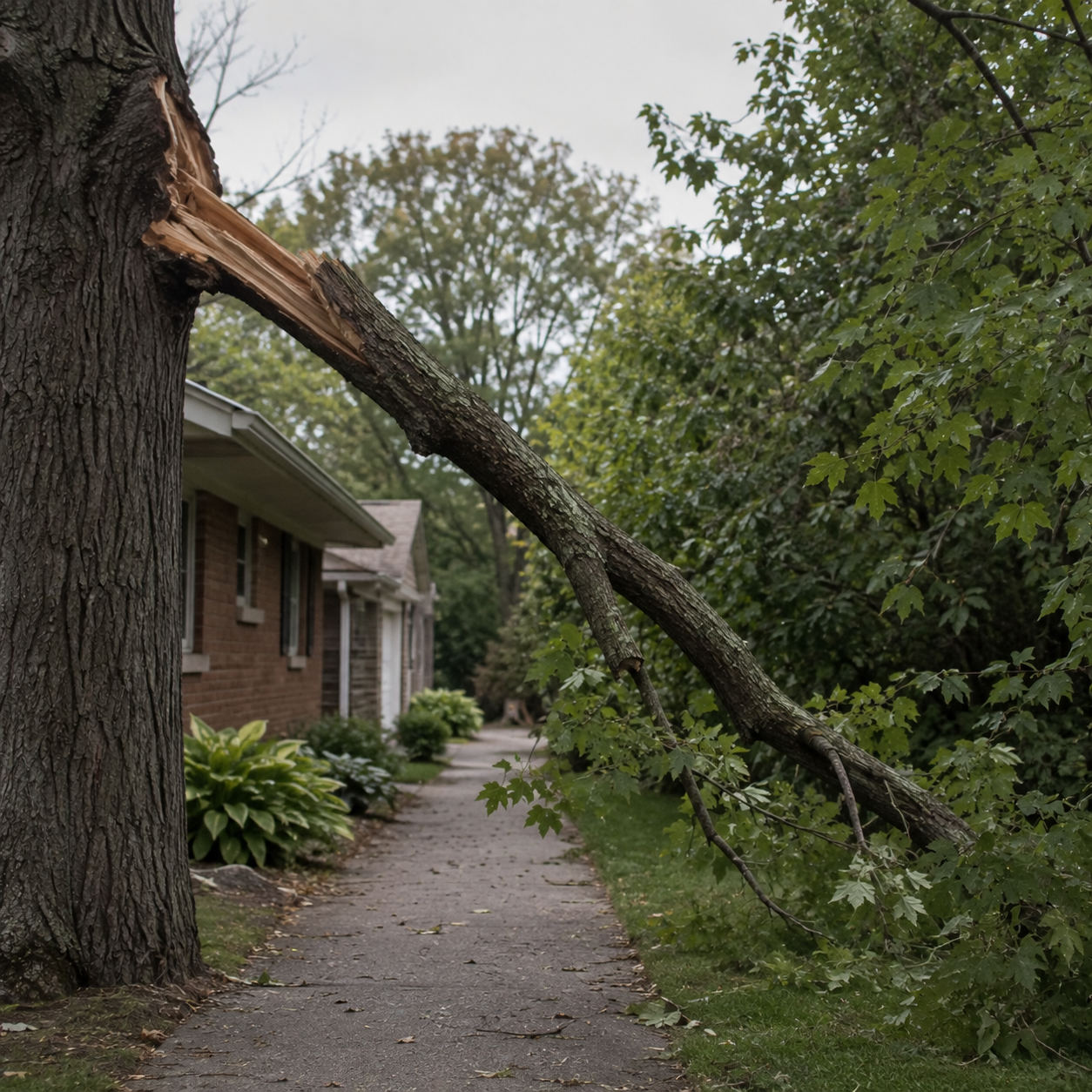
Not every storm-damaged tree falls all the way down. Some split at the trunk, crack at a main union, hang over a roof, or remain caught in nearby branches.

These partial failures are easy to underestimate because the tree may still look upright. The problem is that the damaged section can release later, especially during more wind, rain, or snow.

A hanging limb over a driveway, walkway, patio, or roof should be treated as a safety concern. If the tree is dead, cracked, or already weakened, the risk can increase quickly. Planned removal or controlled section work is often safer than waiting for the next weather event.

Our tree removal services can support planned removals, storm-damaged trees, and situations where a failed section needs to be handled before it causes more damage.

Request Help for Safe Fallen Tree Removal

The right first call depends on the hazard. Start with personal safety, call emergency services if people or structures are in immediate danger, contact the utility provider when lines are involved, speak with the insurer when non-emergency property damage needs documentation, then call a qualified tree service for removal.

Call Tyler’s Tree Services for safe removal once immediate emergency and utility hazards are controlled. Send the location, damage details, access notes, line concerns, and safe-distance photos, then request an estimate so we can assess the situation and plan the safest next step.

8 Years+ Of Expertise

With nearly a decade of experience, we handle everything from precise trimming to safe removals, ensuring top-quality care.

WSIB Certified

Fully insured and WSIB certified, we follow strict safety standards to protect your property and our crew on every job.

Satisfaction Guaranteed

We’re committed to expert service and clean results, ensuring you’re fully satisfied with every tree we trim or remove.

Fully Insured

We are insured with $5M coverage ($2M per occurrence), ensuring a worry-free experience on every job you hire us for.

Disclaimer

The information in this article was compiled from reputable public sources and interpreted by an expert copywriter for general educational purposes. While Tyler’s Tree Services makes every effort to provide accurate and up-to-date guidance on tree care and safety in Orillia, conditions can vary by property, tree species, and season. This content is not a substitute for a professional arborist’s inspection or advice. Tyler’s Tree Services and its authors are not responsible for any actions taken based on this article. For personalized tree care recommendations or safety concerns, we strongly recommend consulting a certified arborist

What Can You Plant After Stump Grinding?

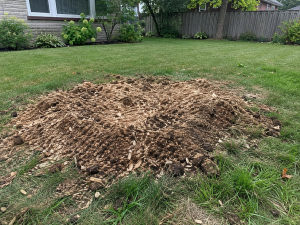
After stump grinding, homeowners can often repair the lawn, build a garden bed, or plan replacement planting, but the area needs proper preparation first. This guide explains why excess wood chips should be removed, how settling and drainage affect the site, and why a new tree should not usually be...

Read More
What Happens to Tree Roots After Stump Grinding?

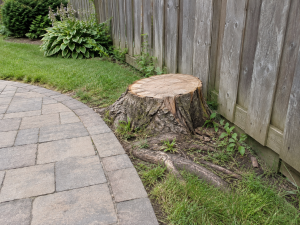
Stump grinding removes the visible stump and part of the root crown, but it does not remove every root underground. This guide explains what happens to remaining roots after grinding, how natural decay and settling work, when sprouts may appear, and when full excavation may be the better option for...

Read More

What to Do When a Tree Is Leaning Toward Your House

A leaning tree can become a serious safety risk when the movement is new, roots are exposed, soil is lifting, or the trunk is cracked. This guide explains how Ontario homeowners can recognize urgent warning signs, what conditions may wait for a scheduled assessment, and when to contact Tyler’s Tree...

Read More

Does Home Insurance Cover Fallen Tree Removal in Ontario?

Home insurance coverage for fallen tree removal in Ontario depends on the policy, the cause of damage, and whether the tree damaged insured property. This guide explains the common coverage distinction, why documentation matters, when cleanup cannot wait, and how Tyler’s Tree Services can provide safe fallen-tree removal and an...

Read More

Can You Remove a Tree From Your Own Property in Ontario?

Removing a tree from your own property in Ontario is not always as simple as ownership. Municipal rules, boundary trees, conservation areas, utility conflicts, and construction plans can all affect the next step. This guide explains what homeowners should confirm before removal and when to ask Tyler’s Tree Services for...

Read More

Why Are the Needles on My Pine Tree Turning Brown?

Brown needles on a pine tree can be normal seasonal shedding, but they can also point to stress, disease, drought, root damage, winter injury, or beetle activity. This guide explains how Ontario homeowners can read where the browning starts, what symptoms matter most, and when monitoring should stop so the...

Read More

How Much Does Tree Removal Cost in Ontario?

Tree removal cost in Ontario depends on more than tree height. This guide explains the main factors that affect pricing, why an on-site assessment is needed, how emergency conditions can change the cost, and when homeowners in Barrie, Orillia, and Simcoe County should request a tree removal estimate.

Read More

What Is an Arborist Report and When Do You Need One?

An arborist report provides written documentation about a tree’s condition, location, risk factors, and recommended next steps. This guide explains when homeowners may need an arborist report, how it differs from a basic estimate, and why reports are often used for permits, construction planning, neighbour concerns, tree-risk issues, and property...

Read More

Pine Beetles in Ontario: Signs Your Tree Is Under Attack

Pine beetle damage can weaken a tree before the problem is obvious. This guide explains the visible signs Ontario homeowners can inspect safely from the ground, how beetle damage affects pine trees, when removal may become a safety concern, and why an assessment should come before treatment claims.

Read More

How to Tell if a Tree Is Dead: Warning Signs Homeowners Should Know

A dead tree can become a safety risk around homes, driveways, fences, and walkways. This guide explains the clearest warning signs homeowners should watch for, how to inspect a tree from the ground, when a tree may still be stressed instead of dead, and when professional assessment or removal is...

Read More

When to Prune Apple Trees in Ontario

This guide explains the best pruning season, what branches to remove, and how proper pruning improves airflow, tree structure, and fruit production for healthier apple trees long term.

Read More

What Fruit Trees Grow in Ontario

Many fruit trees grow in Ontario when matched to the right site and climate. This guide covers reliable options like apple, pear, plum, and others. It also explains why sunlight, airflow, pruning, and tree health matter for long-term fruit production.

Read More
sumac spreading near fence Ontario

How To Get Rid of Sumac

Sumac can spread quickly across Ontario properties. Learn how to identify, control, and safely remove it, and know when professional removal is the right step for your yard.

Read More
sumac tree Ontario

Sumac Tree in Canada

Sumac trees are common across Ontario. Learn how to identify safe vs poisonous sumac by leaves, berries, and growth patterns with this simple guide for homeowners.

Read More

Sugar Maple Tree in Ontario

Sugar Maple Trees in Ontario Barrie Simcoe County: identification, growth, and care tips to manage structure, prevent damage, and maintain long-term property value.

Read More