
How to Get Rid of Maple Tree Bugs in Ontario
Maple tree bugs are a common concern for homeowners in Ontario, especially when leaves start curling, sticky residue appears, or branches look damaged. Identifying the exact pest is the first step, because each one behaves differently and requires a different response.
What Maple Tree Bug Damage Looks Like in Ontario
Most homeowners first notice the symptoms when the insects have already settled on their maple trees.
Common warning signs across Ontario properties include:
- Sticky residue (honeydew) on leaves, decks, or vehicles below the Maple tree
- Black, sooty coating forming on leaves
- Leaves curling, yellowing, or dropping early
- Chewed or missing foliage in late spring or early summer
- Small holes or sawdust-like material around the trunk
- New shoots wilting or snapping off unexpectedly
Ontario’s mature neighbourhood canopy creates ideal conditions for pests to spread between trees, especially during warm, humid summers.
Maple Aphids
One of the biggest surprises for homeowners is how early red maple seeds appear and fall.
Unlike sugar maples, red maple seeds (samaras) mature and drop in late spring. Often May or June in Ontario.
This creates very specific, practical issues:
- Seed litter in gutters, lawns, and driveways
- Rapid germination in garden beds and landscaping
- Small seedlings appearing across the property within weeks
- Ongoing cleanup earlier in the season than expected
Because seeds drop so early, many homeowners mistake them for debris rather than active reproduction.
Managing this cycle becomes part of regular property maintenance, especially in areas with multiple mature red maples.
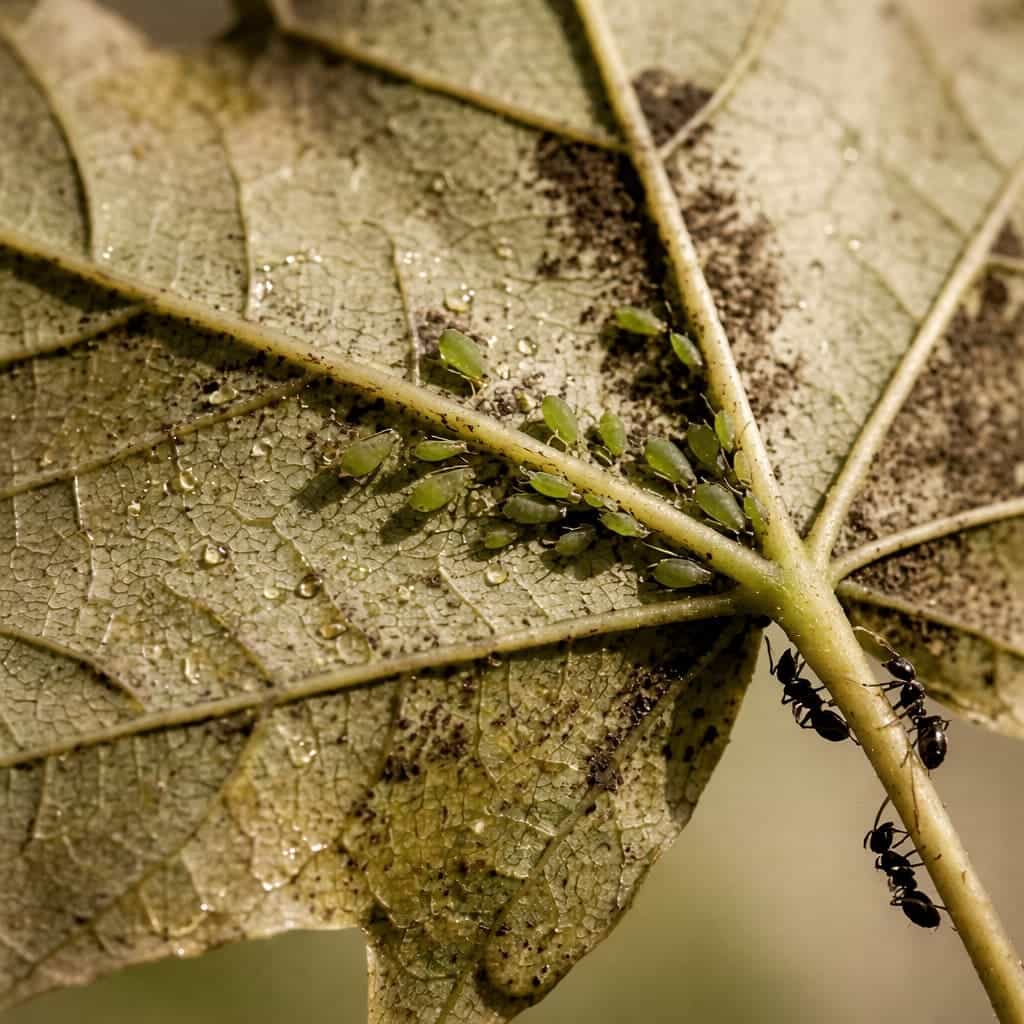
Little Tip:
Aphids stay hidden from above. Inspecting leaf undersides gives a clearer picture of how widespread the issue is.
Cottony Maple Scale
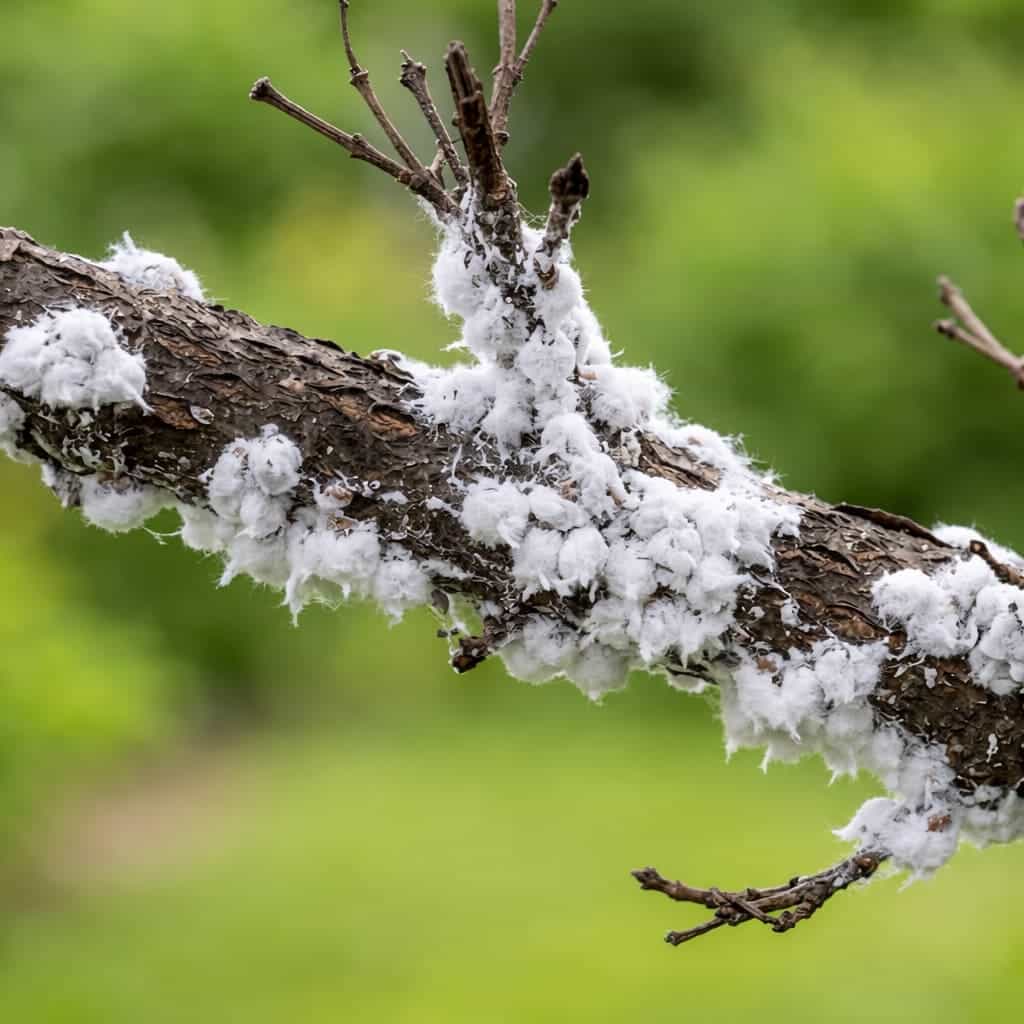
Cottony maple scale is frequently misidentified in Ontario.
Instead of looking like insects, they appear as white, cotton-like clusters attached to branches. Many homeowners assume this is a fungal issue.
What to look for:
- White, cottony sacs along small branches
- Sticky residue similar to aphids
- Gradual branch weakening or dieback
Damage develops slowly but can become serious if left untreated.
Timing is critical for control:
- Early spring: dormant oil can reduce overwintering populations
- Early summer: crawler stage is the most effective treatment window
Severe infestations may require assessment to determine how much structural stress has developed in the canopy. In these cases, we often evaluate overall tree condition through an Arborist Reports approach to guide next steps safely in Ontario.
Forest Tent Caterpillars
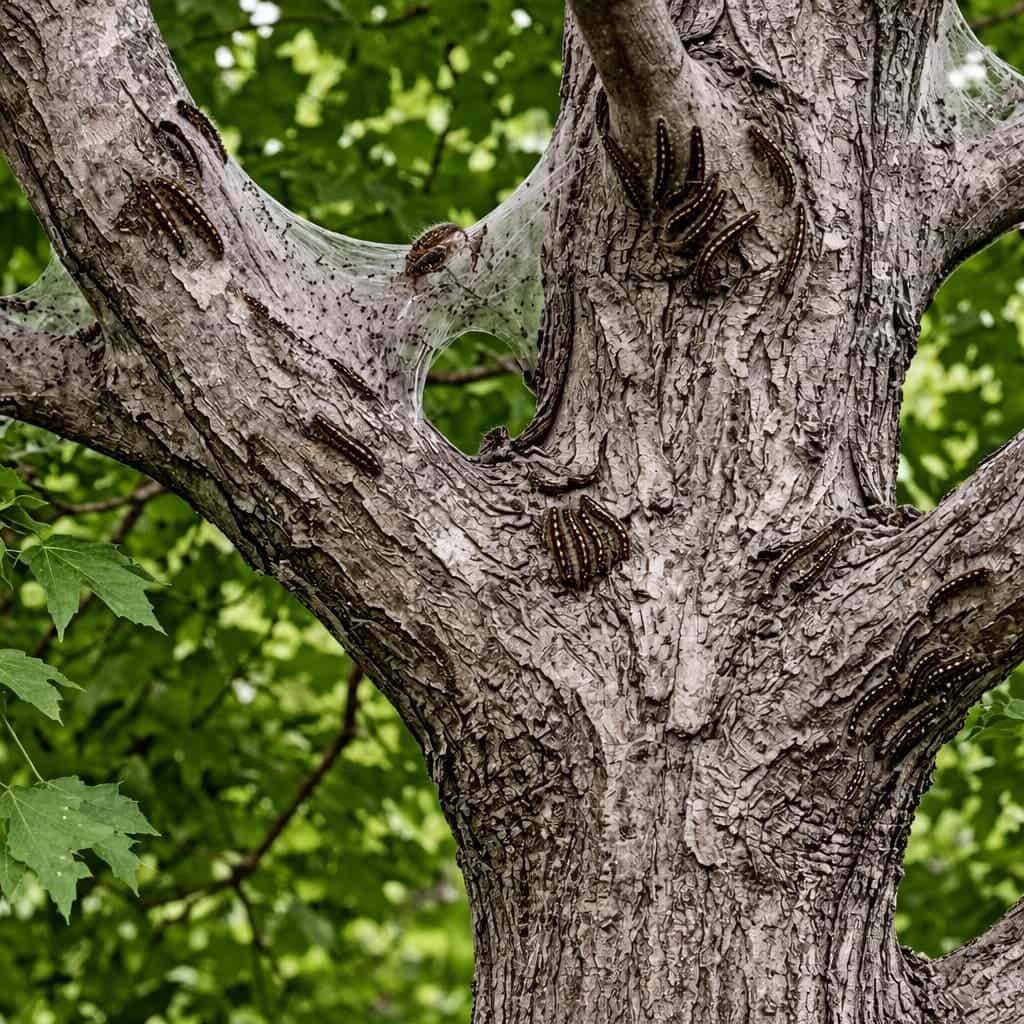
Forest tent caterpillars follow cycles in Ontario, and Barrie periodically sees large outbreaks.
During peak years, these caterpillars can strip a maple tree of leaves within weeks.
Signs of activity:
- Clusters of caterpillars on trunks and branches
- Rapid defoliation in late spring or early summer
- Silken mats on branches where caterpillars gather
A single season of defoliation usually doesn’t kill a healthy tree. Repeated years of heavy feeding, however, weaken the tree and make it more vulnerable to other stresses.
Control options:
- Remove egg masses during winter when visible on branches
- Apply Bt (Bacillus thuringiensis) early in the larval stage
- Monitor regrowth after defoliation
For seasonal context around how stress accumulates on trees in this region, we break this down further in Essential Summer Tree Care Tips for Ontario Homeowners.
Maple Shoot Borer
Maple shoot borers are easy to misdiagnose.
Damage often looks like wind or physical breakage, especially in Barrie where spring weather can be unpredictable.
What typically happens:
- New shoots suddenly wilt and fall off
- Leaves appear healthy but detach with short stem sections
- Damage is scattered rather than widespread
This pest targets young growth, not mature structure.
In most cases:
- No treatment is needed for established trees
- Fallen shoots can be collected and removed
- Tree health remains stable long term
Local Tip:
If shoot drop happens in late spring without strong wind events, insect activity is more likely than weather damage.
Asian Longhorned Beetle
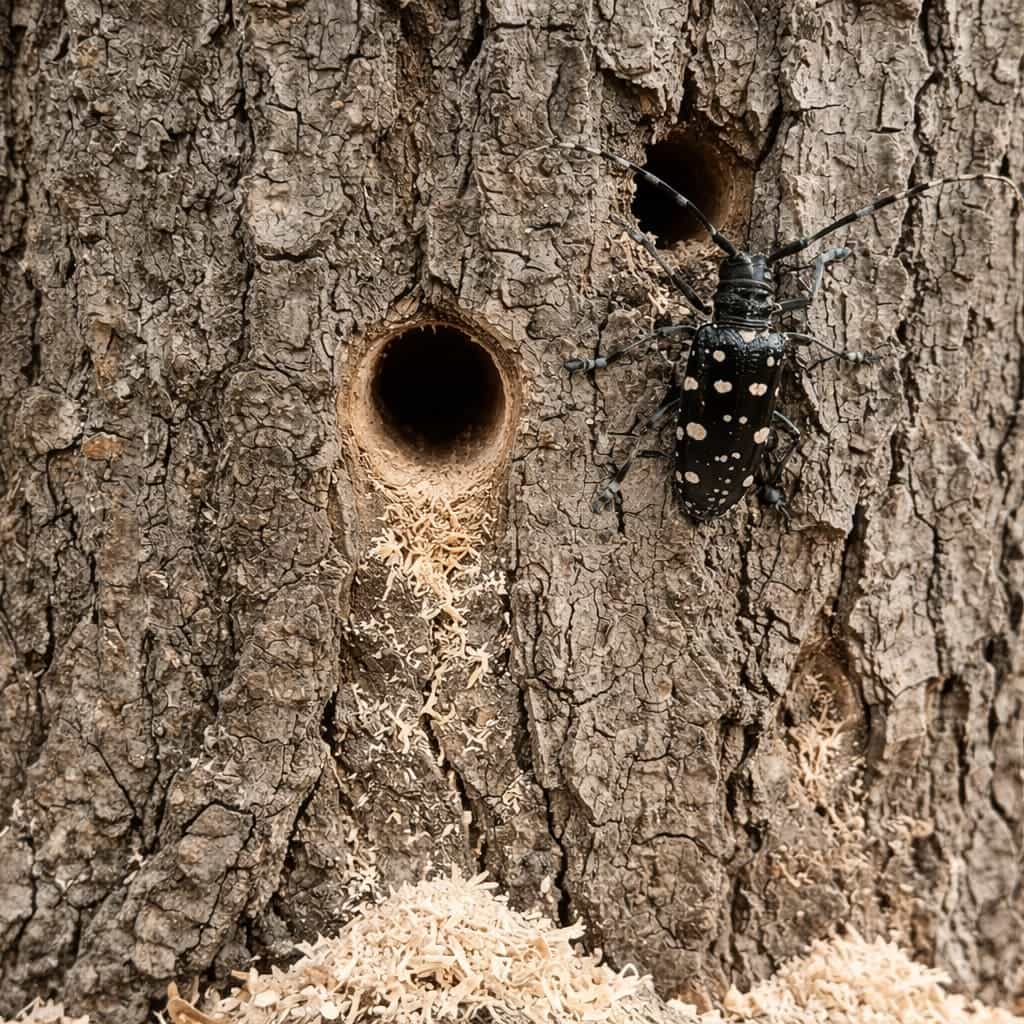
Asian longhorned beetle (ALB) is a serious invasive pest that affects maple trees across Ontario.
Although not that common in Ontario, awareness is critical.
Clear warning signs:
● Perfectly round exit holes in the trunk or large branches
● Sawdust-like material (frass) collecting at the base of the tree
● Large black beetles with white spots (if visible)
This is not a pest homeowners should try to manage.
Suspected ALB must be reported immediately to the Canadian Food Inspection Agency (CFIA). Delayed reporting risks wider spread across Simcoe County and beyond.
When Maple Tree Bugs Become a Bigger Problem
Not every infestation requires intervention.
However, certain patterns indicate a need for action:
- Repeated defoliation across multiple growing seasons
- Branch dieback spreading through the canopy
- Structural weakening from scale or borer activity
- Pest damage combined with storm or winter stress
In Barrie, these issues often show up in older neighbourhood trees that have gone years without structural maintenance.
For trees already showing dead or failing limbs, we often address risk through targeted pruning similar to what’s outlined in Dead Limb Removal Barrie.
Healthy Maple Trees Handle Pest Pressure Better
Healthy maple trees are far more resilient when insects show up. In Ontario, regular watering during dry periods, proper pruning, and monitoring for early stress signs all help maples tolerate aphids, caterpillars, and scale more effectively.
A few simple practices make a difference:
- Water deeply during extended summer dry spells
- Avoid root stress from soil compaction around the base
- Prune dead, weak, or crowded branches at the right time
- Watch for early leaf curl, dieback, or unusual residue
Practical Maple Tree Pest Control Steps for Homeowners
For most maple tree bugs, simple actions go a long way.
Start with:
- Identifying the pest correctly before taking action
- Monitoring whether damage is increasing or stabilizing
- Using low-impact treatments first (water spray, manual removal)
- Avoiding unnecessary chemical use on healthy trees
Consistency matters more than intensity. Light intervention early often prevents larger problems later.
When to Call for Professional Tree Care in Ontario
Some pest situations move beyond basic management.
Professional assessment becomes the right call when:
- Large sections of the canopy are affected
- Structural integrity is compromised
- Pest damage is combined with proximity to structures
- Borer activity appears in the trunk or major limbs
- There is any suspicion of Asian longhorned beetle
In Barrie, pest-related weakening often overlaps with structural concerns. In these cases, controlled pruning or removal may be necessary to manage risk safely. Our Tree Removal Service work in Barrie (https://tylerstreeservices.ca/tree-removal/) often addresses trees that have declined after repeated infestations.
Nearby communities face similar issues as trees mature. We regularly handle advanced cases through Tree Removal Innisfil and Tree Removal Orillia services, where pest damage and structural concerns intersect.
Understanding what’s affecting a maple tree is the first step. Acting early (before damage compounds) is what keeps most trees manageable.
Tree Care Services Near You!
Finding Expert arborists
Curious about tree trimming, stump grinding, or professional tree removal? Explore our website to learn more about how Tyler’s Tree Services can help keep your property safe and beautiful. Whether you need expert advice or a service quote, we’ve got you covered!

8 Years+ Of Expertise
With nearly a decade of experience, we handle everything from precise trimming to safe removals, ensuring top-quality care.

WSIB Certified
Fully insured and WSIB certified, we follow strict safety standards to protect your property and our crew on every job.

Satisfaction Guaranteed
We’re committed to expert service and clean results, ensuring you’re fully satisfied with every tree we trim or remove.

Fully Insured
We are insured with $5M coverage ($2M per occurrence), ensuring a worry-free experience on every job you hire us for.
Disclaimer
The information in this article was compiled from reputable public sources and interpreted by an expert copywriter for general educational purposes. While Tyler’s Tree Services makes every effort to provide accurate and up-to-date guidance on tree care and safety in Barrie & Simcoe County. Conditions can vary by property, tree species, and season. This content is not a substitute for a professional arborist’s inspection or advice. Tyler’s Tree Services and its authors are not responsible for any actions taken based on this article. For personalized tree care recommendations or safety concerns, we strongly recommend consulting a certified arborist