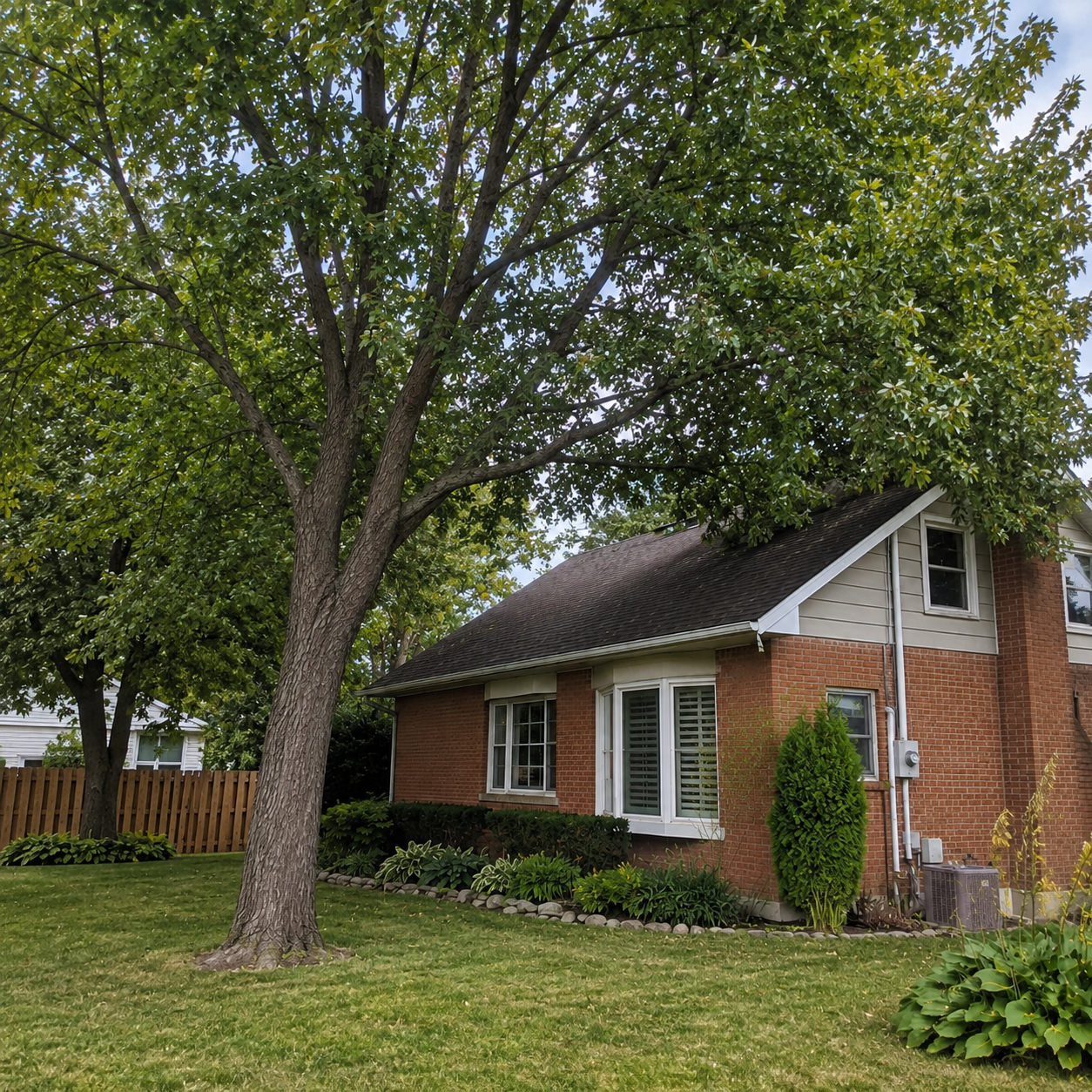
A leaning tree can become a serious safety concern when the lean is new, worsening, or pointed toward a home, garage, driveway, or other structure. Some trees grow with a natural lean for years, but a tree that has shifted recently needs to be treated differently.
Homeowners should not stand, park, work, or let children play below a visibly unstable tree. If the tree has moved, roots are lifting, soil has cracked, or the trunk is splitting, the safest next step is to arrange an assessment promptly.
A tree that has leaned the same way for many years may not be an immediate emergency. The concern rises when the lean appears suddenly or becomes more noticeable after wind, wet snow, heavy rain, construction, or soil movement.
Start by looking at the ground around the base from a safe distance. Fresh cracks in the soil, raised turf, exposed roots, or a lifted root plate can mean the tree has started to lose stability. New gaps between the soil and trunk are also a warning sign.
Look at nearby clues too. A fence panel pushed out of line, fresh damage to a walkway, shifted mulch, or a newly tilted trunk can help confirm that something changed. When the tree is close to a house, even small movement matters.
Compare current photos with older yard photos. A leaning tree often looks more obvious when seen against the same fence, roofline, or driveway edge over time.
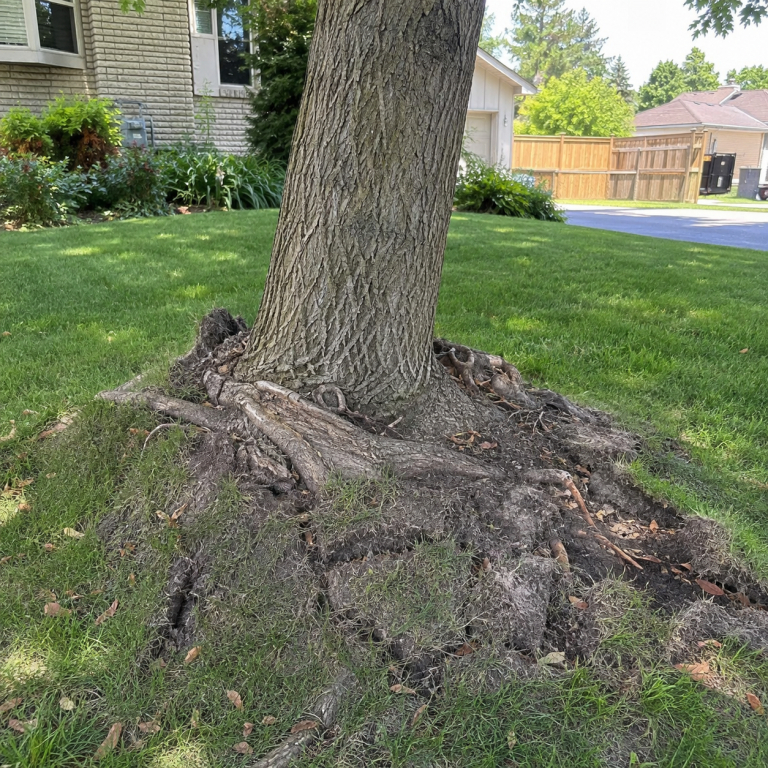
Some leaning trees should not wait for a routine appointment. If the tree is actively shifting, cracking, or pressing toward a structure, treat the area as unsafe until it has been assessed.
Emergency warning signs include a sudden lean after a storm, roots pulling out of the ground, soil lifting on one side of the tree, trunk cracks, hanging limbs, split stems, or movement that seems worse over hours or days. A tree leaning over a bedroom, garage, driveway, deck, or main entrance adds urgency because failure could affect people or property quickly.
Do not try to cable, pull, cut, push, or brace the tree yourself. A leaning tree can move without warning, and cutting the wrong section can release tension in a dangerous way. Keep vehicles, tools, pets, and people out of the fall zone.
For urgent situations in the Barrie area, our page on emergency tree removal in Barrie explains when a damaged or unstable tree may require prompt action.
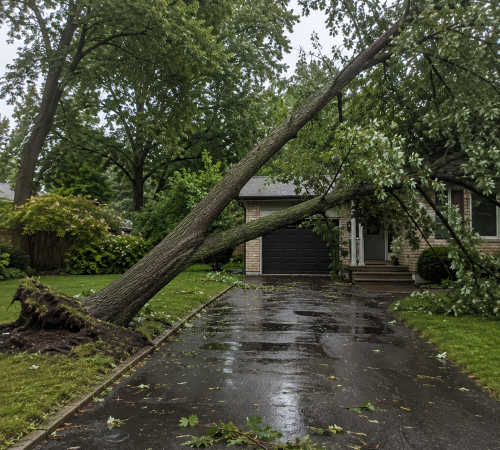
After wet snow, ice, or strong wind in Simcoe County, inspect leaning trees from the ground only. Added weight in the canopy can expose root or trunk weakness fast.
Not every leaning tree is an immediate emergency. A tree may grow at an angle because it reached for sunlight, adapted to wind exposure, or developed that shape over many years.
A scheduled assessment may be appropriate when the lean is long-standing, the soil around the base is stable, the trunk has no visible cracks, and the tree is not close to a home, driveway, fence, walkway, or neighbour’s structure. The tree should still be inspected if the lean is noticeable, but the urgency may be lower when there are no fresh movement signs.
Canopy condition also matters. A tree with a balanced, healthy canopy is different from one with dead limbs, thinning leaves, bark loss, or decay. If the tree looks half dead or has large brittle branches, the lean deserves more attention.
Homeowners who are unsure whether decline is part of the issue can review our guide on how to tell if a tree is dead before deciding whether the concern is mostly structural, health-related, or both.
Roots hold the tree in place. When roots begin lifting, breaking, or pulling away from the soil, the tree may be losing its anchor.
Soil lifting often appears on the opposite side of the lean. That can happen when the weight of the tree pulls the root plate upward. Fresh cracks, heaved grass, or a mound forming around the base can all point to movement below ground.
Heavy rain, poor drainage, clay soil, excavation, grading, and root damage can all affect stability. In Ontario yards, we often see root problems after construction, driveway work, drainage changes, or repeated soil compaction around mature trees.
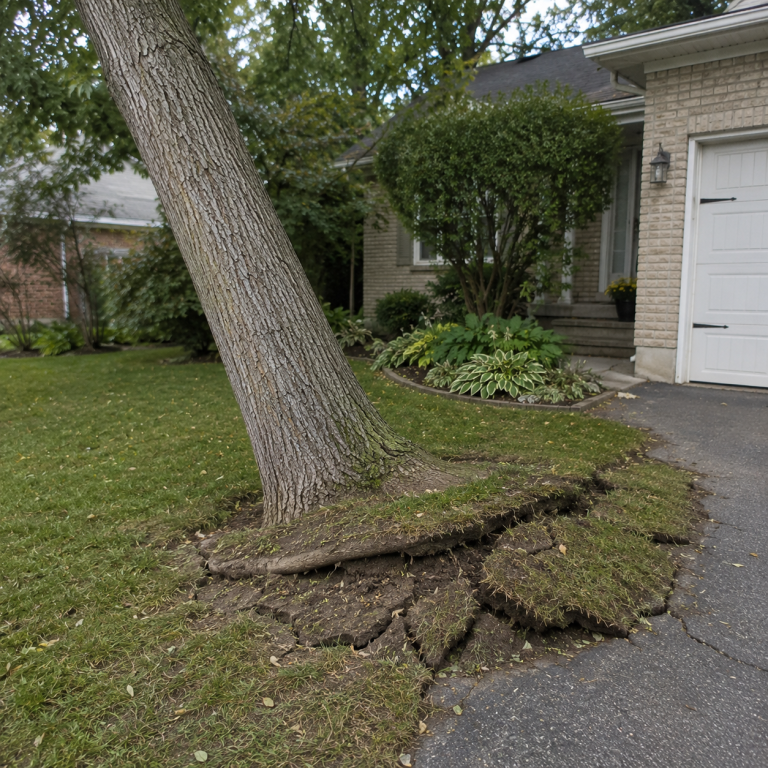
Do not cover lifted roots with soil to make the area look normal. Raised roots are useful evidence during an assessment.
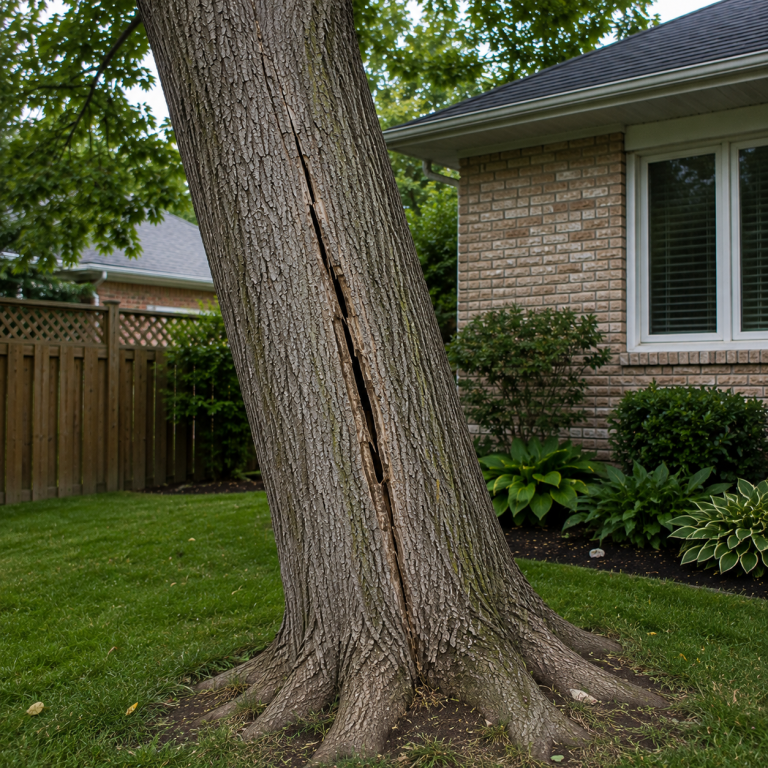
A leaning tree with trunk cracks needs careful attention. Cracks can show that the trunk is under stress, splitting, or losing strength.
Fresh cracks may appear as vertical splits, seams opening in the bark, or gaps where two stems meet. Multi-stem trees can be especially concerning when one side begins pulling away from the other. A split union near the base or main trunk can turn a leaning tree into a higher-risk situation.
Decay makes the concern worse. Cavities, soft wood, fungal growth, loose bark, or hollow sections can reduce the tree’s ability to support its own weight. A tree may still have leaves and look partly alive while the trunk is no longer structurally reliable.
A heavy or uneven canopy can add pressure to a leaning tree. Long limbs on one side, storm-damaged branches, or heavy growth over a roof can increase the load in the direction of the lean.
This does not mean homeowners should cut branches themselves to “balance” the tree. Removing the wrong limb can shift weight unpredictably. It can also make the tree more unstable if the trunk, roots, or main unions are already compromised.
A proper assessment looks at the whole structure: roots, trunk, canopy, lean direction, nearby targets, and access for safe work. Pruning may help in some cases. In others, removal may be the safer recommendation.
Tree preservation is not always possible when a leaning tree is close to a structure. If the tree has shifted, roots are exposed, the trunk is cracked, or the lean has worsened after a storm, safety becomes the priority.
Removal may be recommended when the tree is unstable, severely decayed, dead, or positioned where failure would damage a house, garage, deck, fence, driveway, or walkway. Access also affects the plan because a leaning tree near a home may need controlled section removal rather than a simple fall.
In Barrie and nearby Simcoe County communities, our tree removal services are designed to assess the tree, the property, and the safest removal approach before work begins.
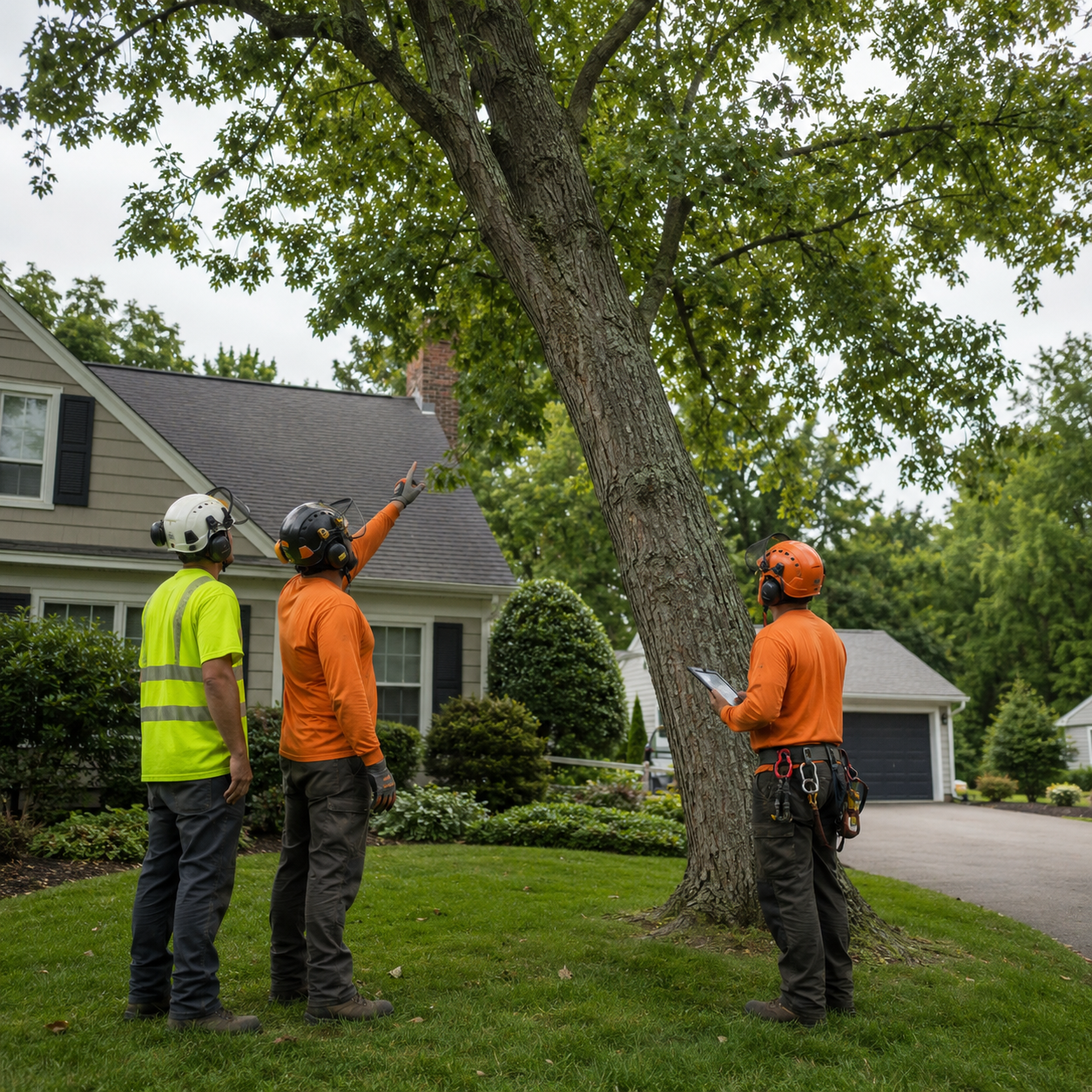
Start by keeping people and vehicles away from the likely fall zone. That includes the area under the lean, nearby driveways, decks, sheds, and walkways. If the tree is visibly unstable, do not mow, shovel, park, inspect closely, or work beneath it.
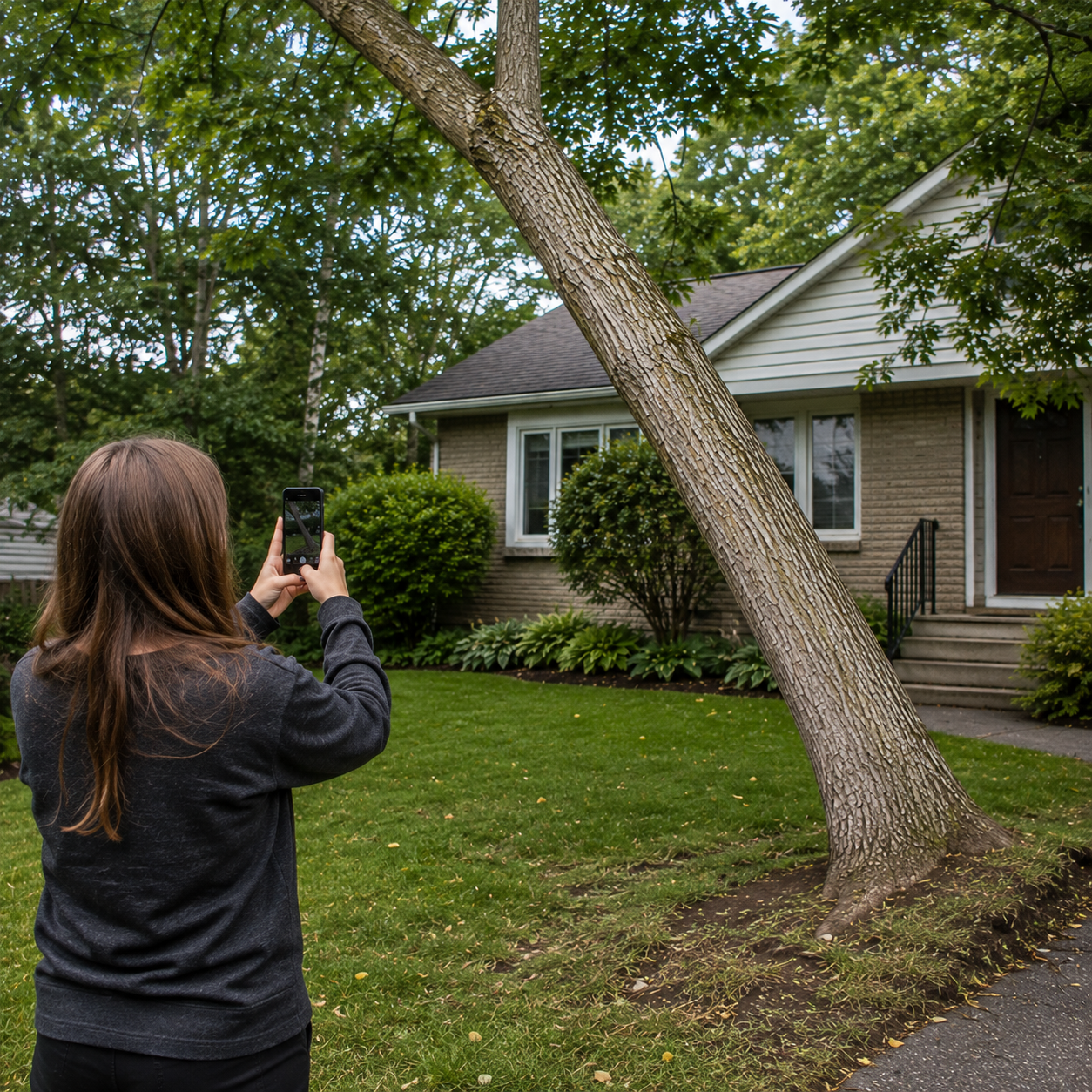
Take photos only if it is safe to do so. Useful photos include the full tree from a distance, the base, exposed roots, soil cracks, the trunk, and the direction of the lean toward the house or structure.
Contact Tyler’s Tree Services promptly when a tree has shifted, exposed roots or is leaning toward a structure. Send the details and request a quote so we can assess the risk and recommend the safest next step.
Curious about tree trimming, stump grinding, or professional tree removal? Explore our website to learn more about how Tyler’s Tree Services can help keep your property safe and beautiful. Whether you need expert advice or a service quote, we’ve got you covered!

With nearly a decade of experience, we handle everything from precise trimming to safe removals, ensuring top-quality care.

Fully insured and WSIB certified, we follow strict safety standards to protect your property and our crew on every job.

We’re committed to expert service and clean results, ensuring you’re fully satisfied with every tree we trim or remove.

We are insured with $5M coverage ($2M per occurrence), ensuring a worry-free experience on every job you hire us for.
The information in this article was compiled from reputable public sources and interpreted by an expert copywriter for general educational purposes. While Tyler’s Tree Services makes every effort to provide accurate and up-to-date guidance on tree care and safety in Barrie & Simcoe County. Conditions can vary by property, tree species, and season. This content is not a substitute for a professional arborist’s inspection or advice. Tyler’s Tree Services and its authors are not responsible for any actions taken based on this article. For personalized tree care recommendations or safety concerns, we strongly recommend consulting a certified arborist
