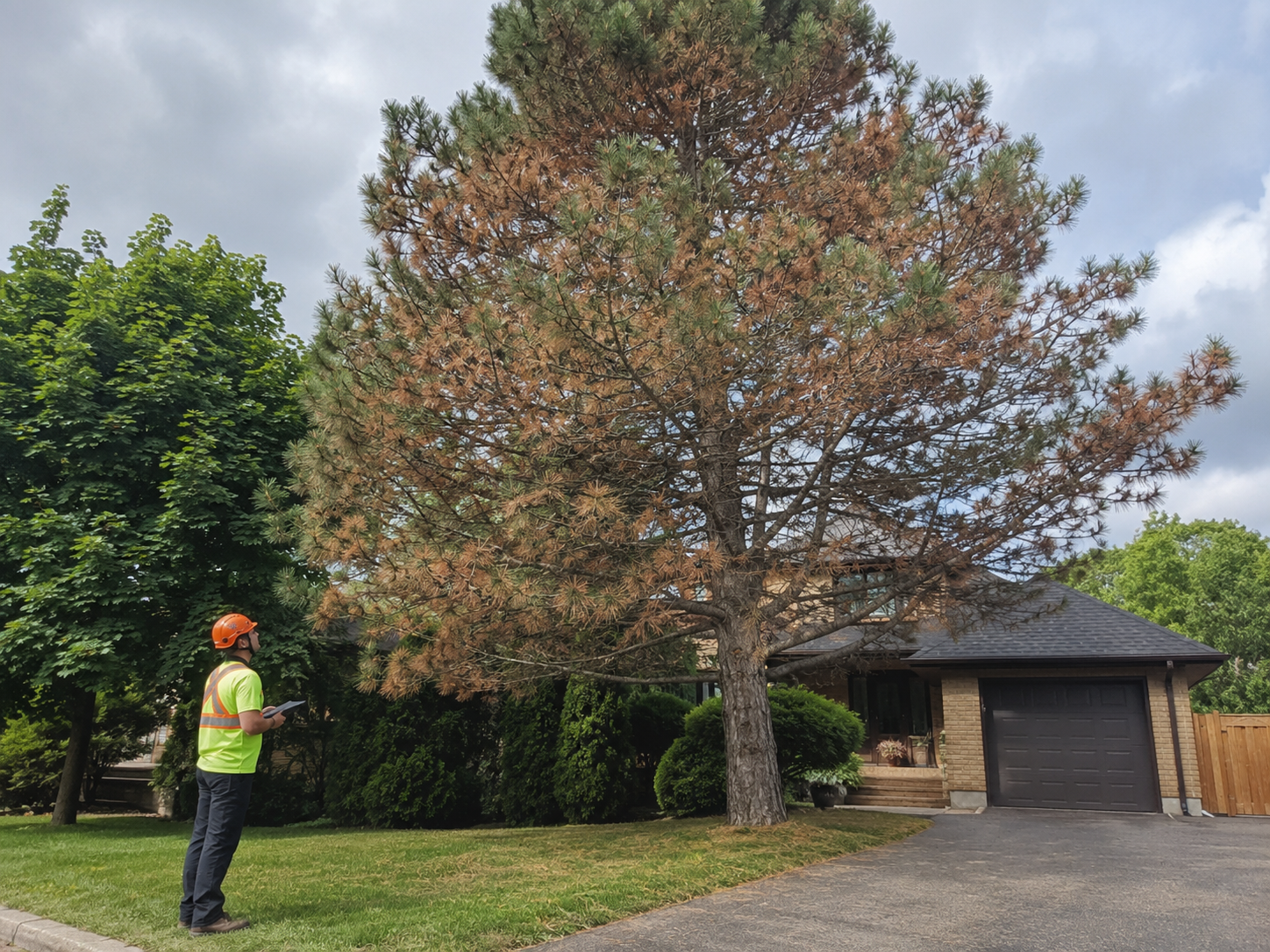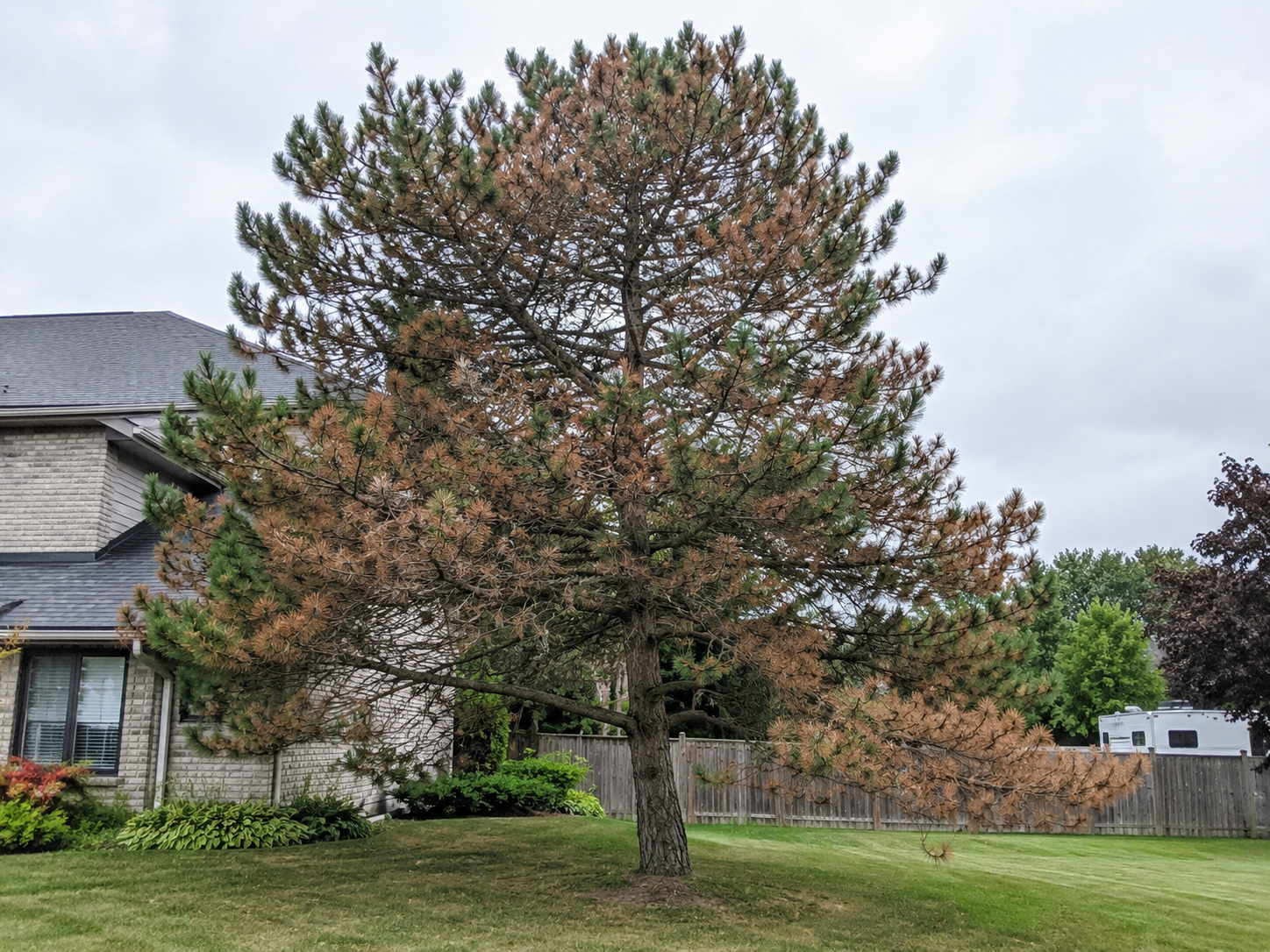
Brown needles on a pine tree do not always mean the tree is dying. Some needle drop is normal, especially when older inner needles yellow and fall while the outer growth stays green.
The concern starts when browning spreads quickly, affects the outer canopy, shows up near the top of the tree, or appears with bark damage, resin, thinning, or dead branches. In Ontario, pine trees can brown from seasonal shedding, drought, root stress, disease, beetle activity, winter injury, or site conditions around the property.
Pine trees naturally shed older needles. This usually happens inside the canopy, closer to the trunk, while newer growth on the outside of the branches stays green.
Seasonal needle drop is most common in late summer or fall. Homeowners may notice yellowing or browning needles inside the tree, then needles falling onto the lawn, driveway, or garden below. That can look alarming, but it is often part of the tree’s normal cycle.
The key is where the browning starts. If older inner needles are changing colour while branch tips remain healthy, the tree may simply be shedding old growth. If the newest outer needles are turning brown, the issue is more likely stress, damage, or decline.
Look at the branch tips first. Green tips with older brown needles inside the canopy are usually less concerning than brown tips across the outside of the tree.
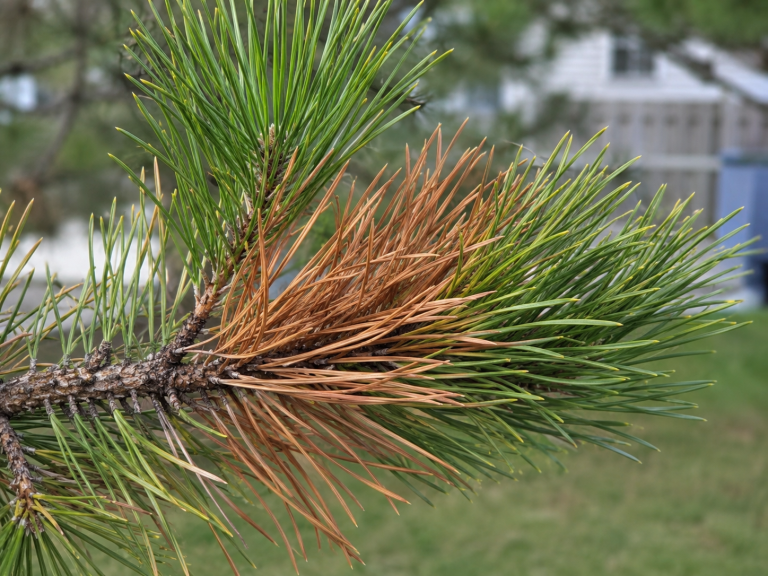
Pine trees can turn brown when the tree is under pressure and cannot move enough water through the canopy. Drought, compacted soil, poor drainage, root disturbance, heat, and harsh winter exposure can all create visible needle changes.
Ontario growing conditions can make this harder to read. A dry summer may weaken the tree, but the symptoms may not fully show until later. Winter burn can also cause browning, especially where the pine is exposed to wind, road salt, or reflected heat from pavement.
Root stress is a major factor that homeowners often miss. A pine may look like the problem is in the needles, but the real issue can start underground. Construction, grading, trenching, driveway work, soil compaction, and changes to drainage can all affect the roots before the canopy shows obvious signs.
Our guide to pine tree care explains practical ways to reduce stress around pines, especially when watering, mulch, soil, and site conditions are part of the problem.
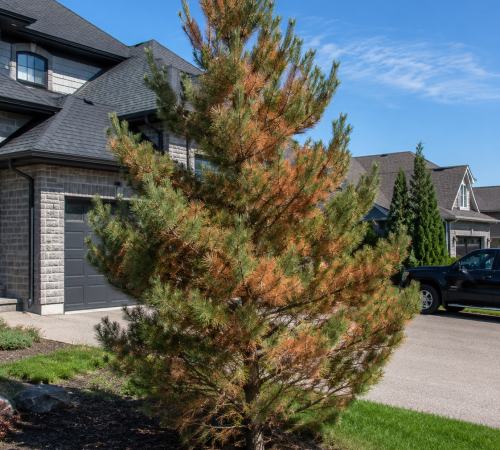
In Simcoe County, pines near roads and driveways can be hit by salt, reflected heat, compacted soil, and snowbank pressure. Those site conditions can make browning worse even when the tree does not have a single obvious injury.
Needle browning can also come from disease. Some pine diseases cause spotting, banding, tip dieback, thinning, or sections of the canopy to decline over time.
Disease symptoms are not always easy to separate from drought or winter injury. A homeowner may see brown needles and assume the tree needs water, while the actual issue is fungal pressure or another health problem. The opposite can happen too. A tree may look diseased when the real issue is stress from poor drainage or damaged roots.
This is why the pattern matters. Disease often shows up unevenly, with certain branches or sections declining first. In other cases, needles may change colour in bands or show small marks before they turn fully brown.
For homeowners comparing pine symptoms with other tree health problems, our article on tree diseases gives helpful context for recognizing when a tree issue may need closer inspection.
The location of the browning can help narrow down what may be happening. It will not give a perfect diagnosis, but it can help decide whether the tree should be monitored or assessed.
Use this simple symptom checklist from the ground:
Do not climb the tree or cut into the bark to investigate. Photos from the ground are usually enough to start the conversation, especially when they show the full tree, the trunk, the base, and close-ups of the affected needles.
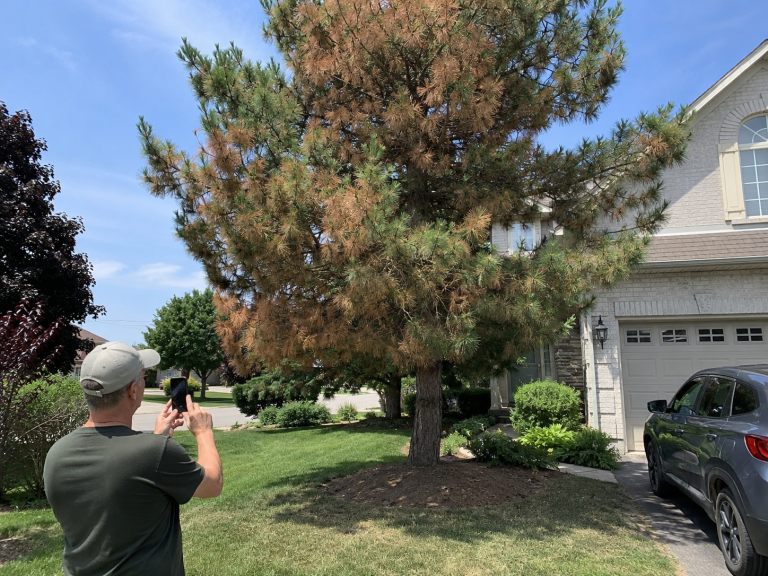
Take photos from the same spot every one to two weeks. If the browning spreads quickly, those photos can show the change better than memory.
Insect activity can cause pine needles to fade, thin, and brown as the tree weakens. Pine beetles and other bark-boring insects may damage the layers under the bark that help move water and nutrients through the tree.
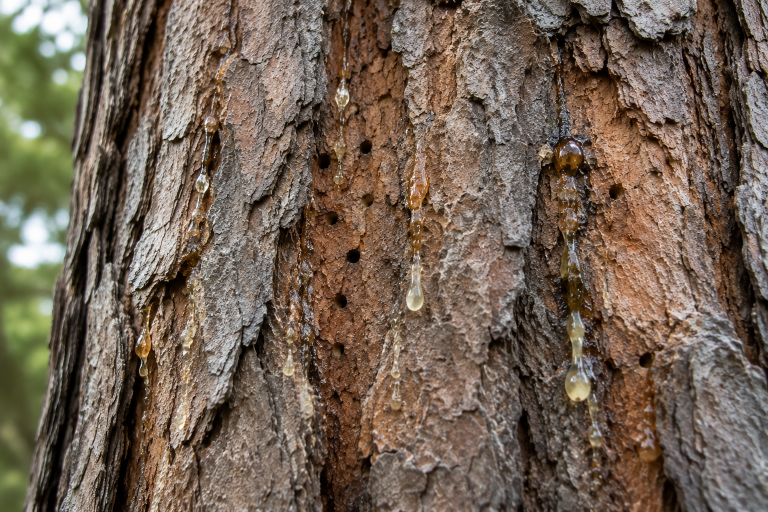
Visible signs may include small holes in the bark, resin on the trunk, sawdust-like material near bark cracks or the base, thinning in the upper canopy, and loose bark. Brown needles alone do not confirm beetles, but browning combined with bark symptoms should be taken seriously.
Homeowners should avoid promising themselves that every affected pine can be saved. Identification comes first. Some trees may still have management options depending on the cause and severity, while others may already be structurally weakened.
Our article on pine beetles in Ontario explains the visible signs homeowners can inspect safely before deciding whether the tree needs professional attention.
A pine with a few brown inner needles is usually not an emergency. A pine with heavy canopy thinning, dead branches, loose bark, trunk damage, sudden lean, or rapid browning is different.
Once a pine starts losing large sections of canopy, the tree may already be struggling to support itself. Dead branches can become brittle, and a declining trunk can become more difficult to remove safely if the tree continues to deteriorate.
Location changes the urgency. A declining pine near a house, driveway, shed, fence, play area, walkway, or neighbour’s property should be looked at sooner than a tree in a low-use wooded area. Waiting for the next windstorm is not a plan.
Monitoring makes sense when browning is limited, slow, and mostly inside the canopy. It stops making sense when the symptoms spread, the outer needles turn brown, the top thins out, or bark and trunk signs appear.
An assessment is the right next step when the tree is changing quickly, close to something valuable, or showing more than one warning sign. Brown needles with resin, sawdust-like material, dead limbs, loose bark, fungal growth, root disturbance, or leaning should not be ignored.
We can inspect the pine, look at the site conditions, and explain whether the tree should be monitored, pruned, treated through the right channel, or removed for safety. If the pine is near a structure or high-use area, the safest next step is to request an assessment before the problem gets worse.
Curious about tree trimming, stump grinding, or professional tree removal? Explore our website to learn more about how Tyler’s Tree Services can help keep your property safe and beautiful. Whether you need expert advice or a service quote, we’ve got you covered!

With nearly a decade of experience, we handle everything from precise trimming to safe removals, ensuring top-quality care.

Fully insured and WSIB certified, we follow strict safety standards to protect your property and our crew on every job.

We’re committed to expert service and clean results, ensuring you’re fully satisfied with every tree we trim or remove.

We are insured with $5M coverage ($2M per occurrence), ensuring a worry-free experience on every job you hire us for.
The information in this article was compiled from reputable public sources and interpreted by an expert copywriter for general educational purposes. While Tyler’s Tree Services makes every effort to provide accurate and up-to-date guidance on tree care and safety in Barrie & Simcoe County. Conditions can vary by property, tree species, and season. This content is not a substitute for a professional arborist’s inspection or advice. Tyler’s Tree Services and its authors are not responsible for any actions taken based on this article. For personalized tree care recommendations or safety concerns, we strongly recommend consulting a certified arborist