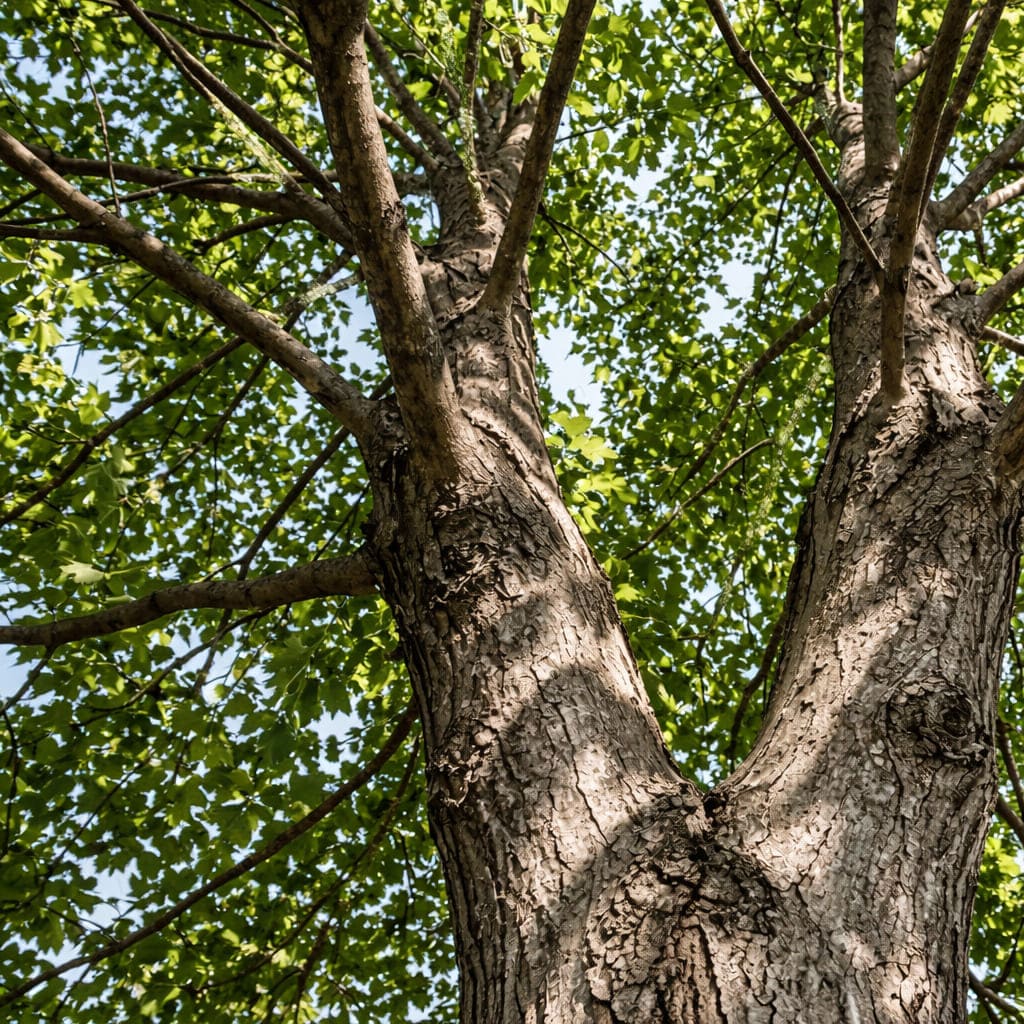
A red maple tree is one of the first trees to signal spring across Ontario, often flowering while snow is still on the ground. That early activity sets it apart, creating specific challenges for homeowners managing growth, seeds, and maintenance timing.
Understanding how a red maple behaves in Ontario helps you stay ahead of issues instead of reacting once they’re already visible.
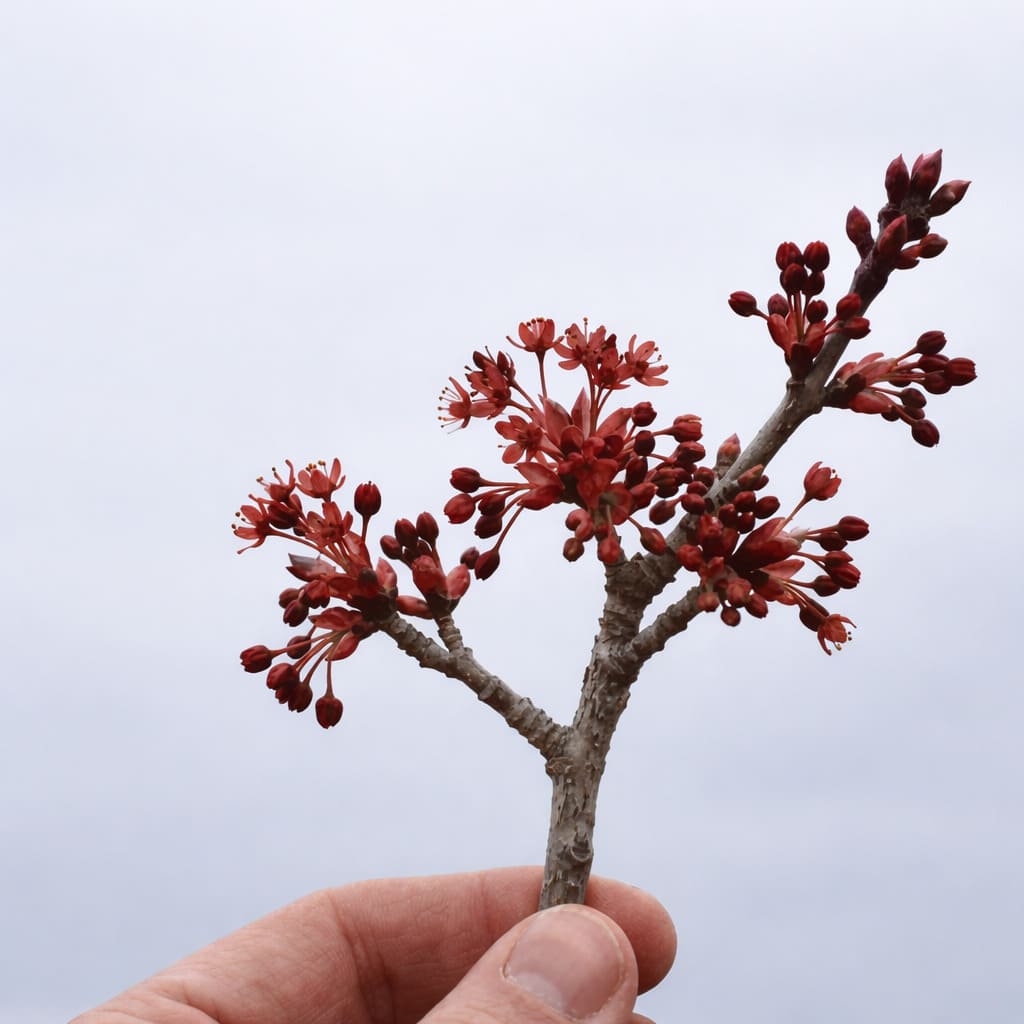
Red maple trees are among the earliest bloomers in Ontario. Before most trees have even leafed out, red maples produce small red flowers that signal the start of the growing season.
This early bloom is functional. It leads directly into one of the most noticeable differences homeowners deal with: early seed production.
While other maples wait until fall, red maple trees move fast in spring, completing flowering and seed development before summer begins.
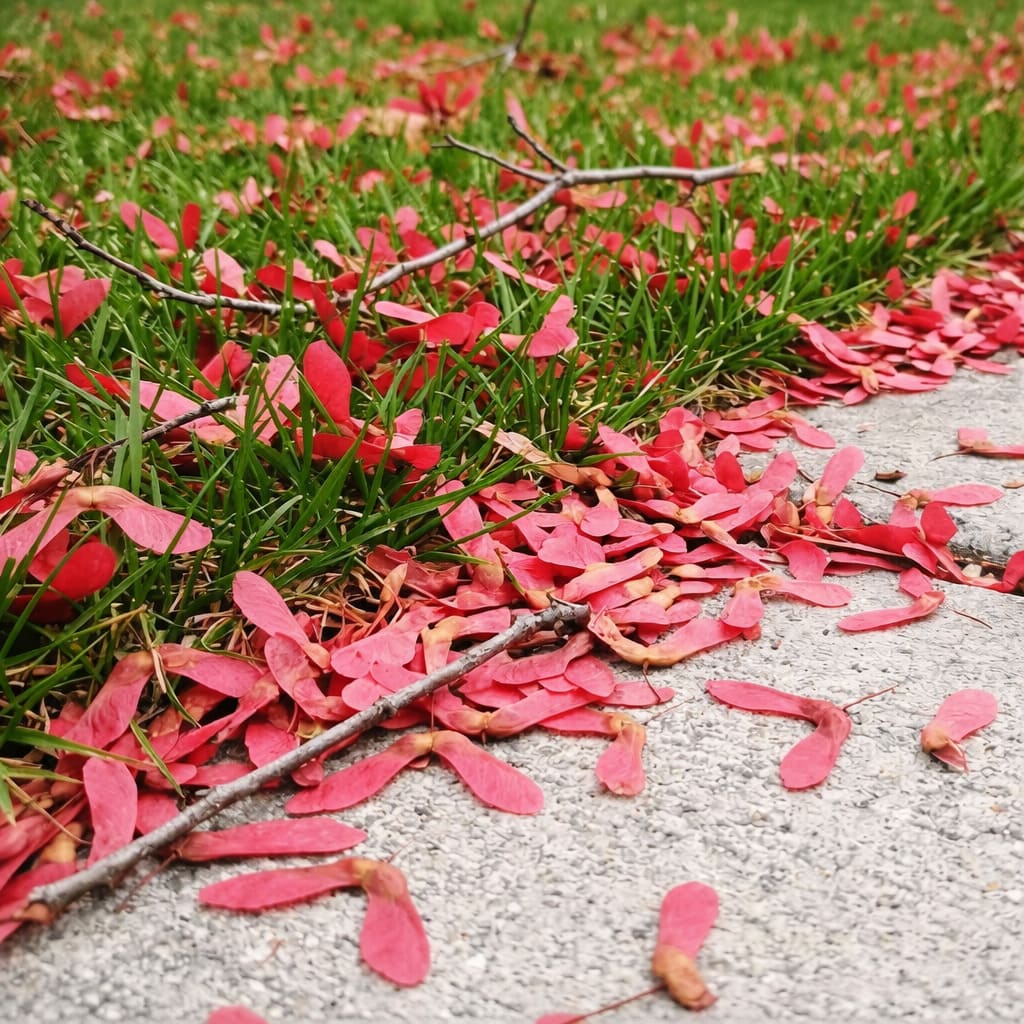
One of the biggest surprises for homeowners is how early red maple seeds appear and fall.
Unlike sugar maples, red maple seeds (samaras) mature and drop in late spring. Often May or June in Ontario.
This creates very specific, practical issues:
Because seeds drop so early, many homeowners mistake them for debris rather than active reproduction.
Managing this cycle becomes part of regular property maintenance, especially in areas with multiple mature red maples.
That accelerated spring cycle has a direct impact on how and when you should maintain a red maple tree.
Sap flow begins earlier than most other species in Ontario, which makes early spring pruning a poor choice. Cutting during this period can stress the tree and lead to excessive sap loss.
Instead, maintenance should be planned around:
This timing difference is critical, especially when comparing red maples to other species on your property.
For a broader breakdown of seasonal timing, the guide on when to trim maple trees in Ontario explains how different maple species respond to pruning windows.
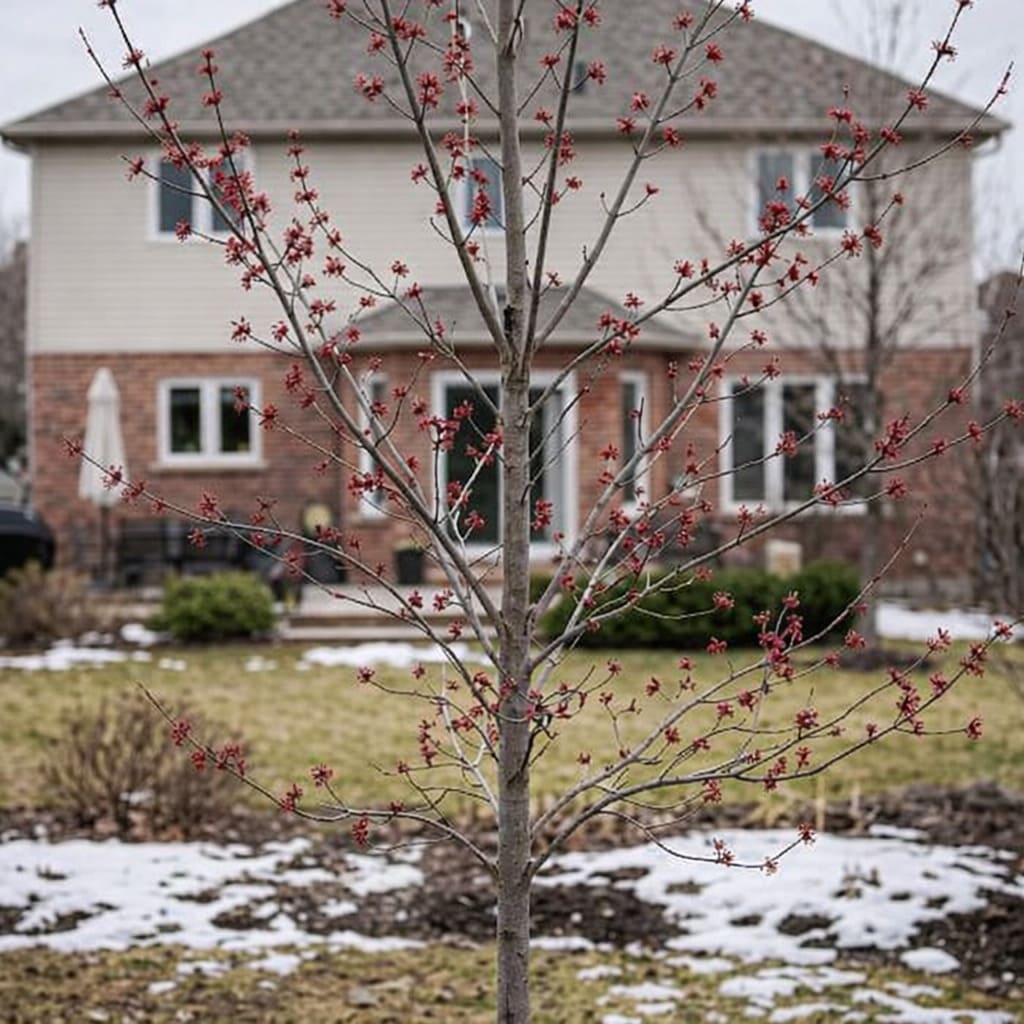
While leaf shape is commonly used for identification, red maple trees are often easiest to recognize in early spring, before leaves fully develop.
Look for:
Later in the season, identification shifts to:
If you’re unsure what species you’re dealing with, comparing seasonal behaviour can often be more reliable than leaf shape alone.
For visual comparisons across species, the resource on maple tree identification in Canada helps clarify differences between red, sugar, and silver maples.
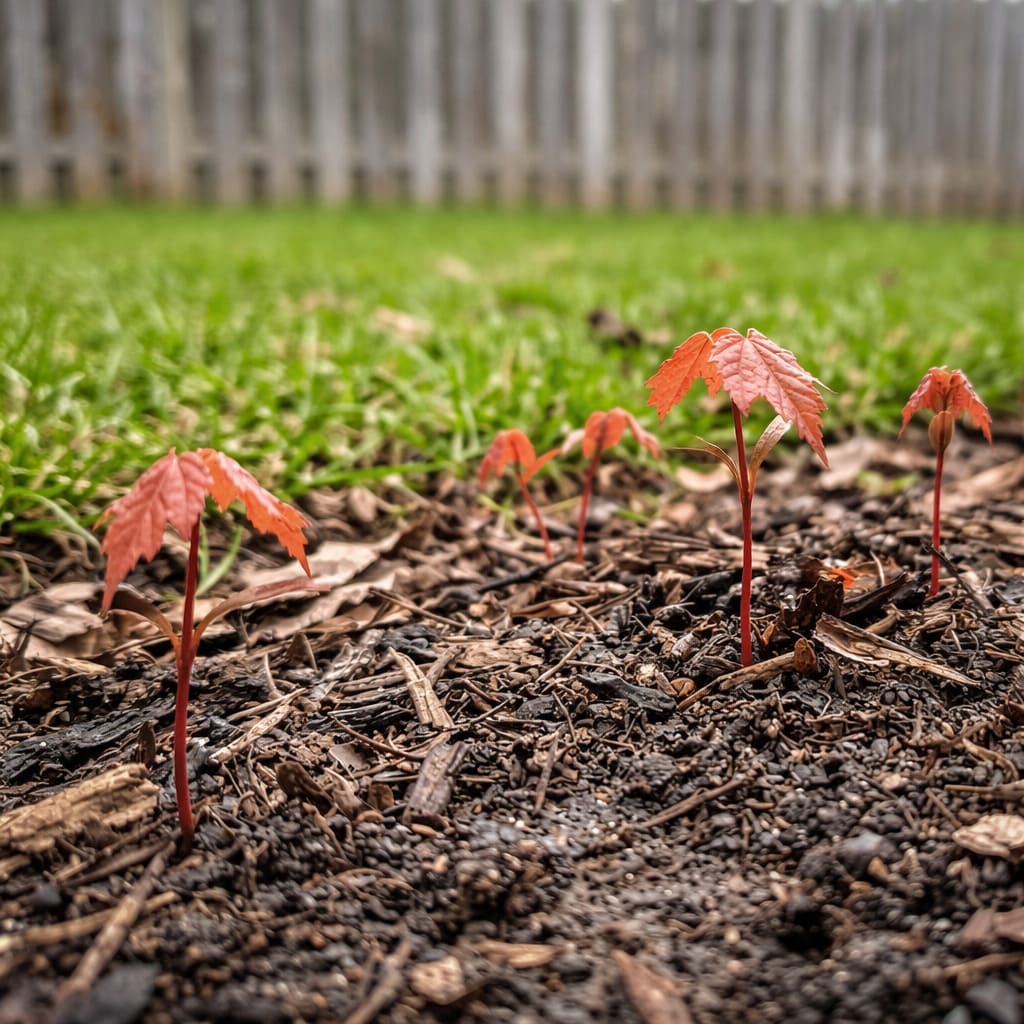
Early seed drop leads to one of the most overlooked issues: uncontrolled seedling growth.
Within weeks of seed fall, red maple seedlings can begin appearing in:
Left unmanaged, these seedlings can establish quickly and compete with other plants.
In residential areas across Ontario, this is especially noticeable in properties with multiple mature trees nearby.
In Barrie neighbourhoods with dense tree cover, spring cleanup should include checking for early red maple seedlings before they establish deeper root systems.
Fast early growth is both an advantage and a concern with red maple trees.
Rapid development often leads to:
Because these issues develop gradually, they’re often missed until branches begin to fail.
Regular pruning plays a key role in correcting structure early.
For homeowners evaluating long-term safety, especially in urban settings, Tyler’s Tree Services tree pruning in Barrie can help manage growth patterns before they become hazardous.
Red maple trees can shift quickly from manageable to risky due to their growth speed and structure.
Pay attention to:
Because growth starts earlier, these risks can develop sooner in the year compared to other species.
For properties where structural concerns are already visible, Tyler’s Tree Services tree removal services in Gwillimburry can assess whether removal is necessary.
Red maple tree removal in Ontario is often tied to structural concerns rather than disease.
Common triggers include:
Due to early seasonal activity, these trees can become problematic faster than expected.
Removal decisions are often made after multiple seasons of monitoring rather than a single event.
Red maple trees are widely distributed across Ontario, including Barrie, Orillia, and Innisfil.
Their adaptability allows them to grow in both well-drained and wetter soils, making them common in a variety of property types.
In rapidly developing areas, construction and soil disruption can accelerate structural issues.
When trees begin to pose a risk, services like tree removal in Barrie help homeowners address safety concerns tied to location and proximity to structures.
Nearby communities also rely on solutions like tree removal in Innisfil when fast-growing trees begin interfering with property use.
A red maple tree can be a valuable part of your landscape, but it requires active management.
It makes sense to keep it if:
You may need to intervene if:
Early awareness of how red maples behave (especially in spring) helps you make better decisions before problems escalate.
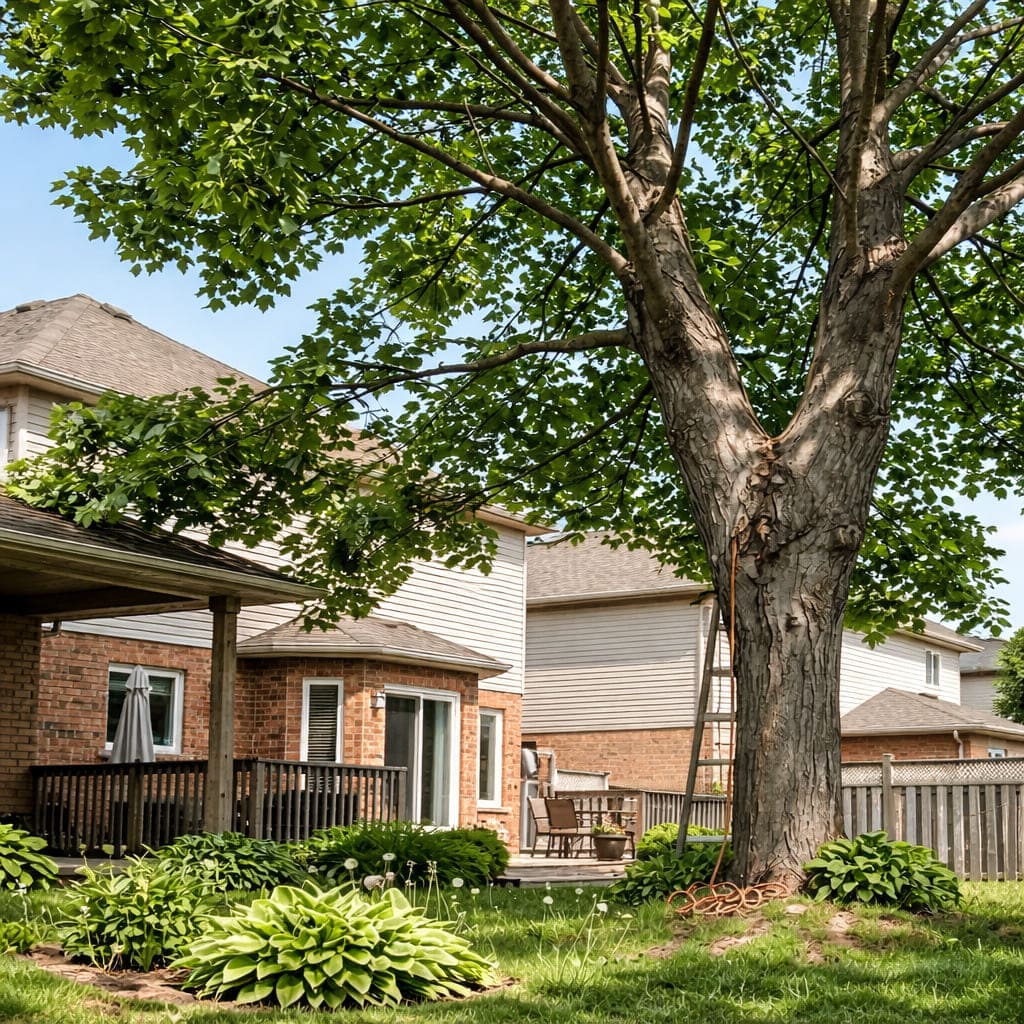
A red maple tree behaves differently from other Ontario maples, with earlier flowering, faster seed cycles, and quicker structural development. Recognizing those differences allows you to manage the tree proactively instead of reacting to issues after they appear.
Curious about tree trimming, stump grinding, or professional tree removal? Explore our website to learn more about how Tyler’s Tree Services can help keep your property safe and beautiful. Whether you need expert advice or a service quote, we’ve got you covered!

With nearly a decade of experience, we handle everything from precise trimming to safe removals, ensuring top-quality care.

Fully insured and WSIB certified, we follow strict safety standards to protect your property and our crew on every job.

We’re committed to expert service and clean results, ensuring you’re fully satisfied with every tree we trim or remove.

We are insured with $5M coverage ($2M per occurrence), ensuring a worry-free experience on every job you hire us for.
The information in this article was compiled from reputable public sources and interpreted by an expert copywriter for general educational purposes. While Tyler’s Tree Services makes every effort to provide accurate and up-to-date guidance on tree care and safety in Barrie & Simcoe County. Conditions can vary by property, tree species, and season. This content is not a substitute for a professional arborist’s inspection or advice. Tyler’s Tree Services and its authors are not responsible for any actions taken based on this article. For personalized tree care recommendations or safety concerns, we strongly recommend consulting a certified arborist
