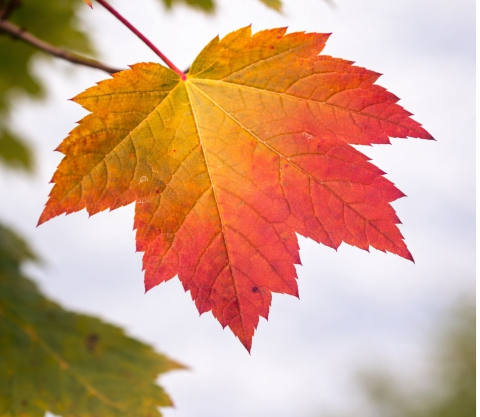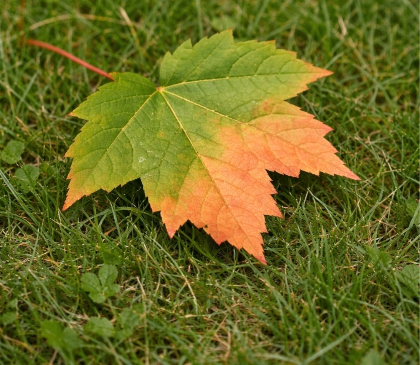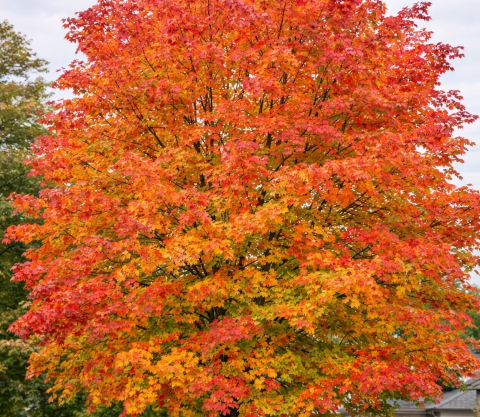
Maple trees are one of the most recognizable tree species in Canada and the maple leaf is even featured on the national flag. If you’re trying to identify a maple tree on your property, there are several clear characteristics to look for. Here’s how to accurately identify maple trees in Canada using leaves, bark, seeds, and growth patterns.
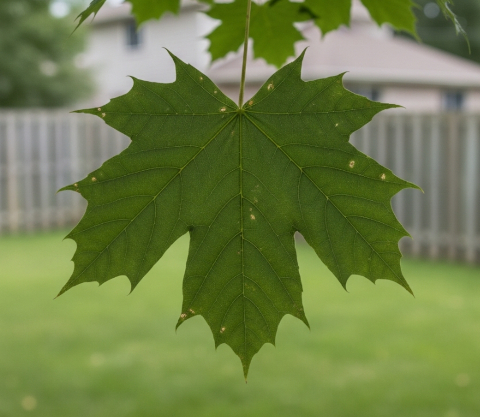
Most Canadian maple species have:
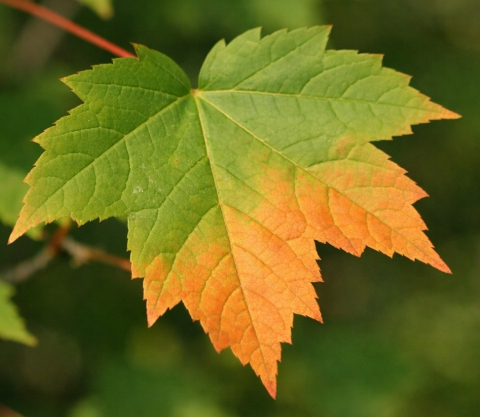
3 to 5 pointed lobes
Deep or rounded sinuses between lobes
Opposite leaf arrangement
Common maple species in Canada include:
Sugar maple
Red maple
Silver maple
Each species varies slightly in lobe depth, edge shape, and fall colour.
If you’re unsure about species before pruning, correct identification matters – specially for structural pruning or thinning.
Learn more about professional reduction pruning services
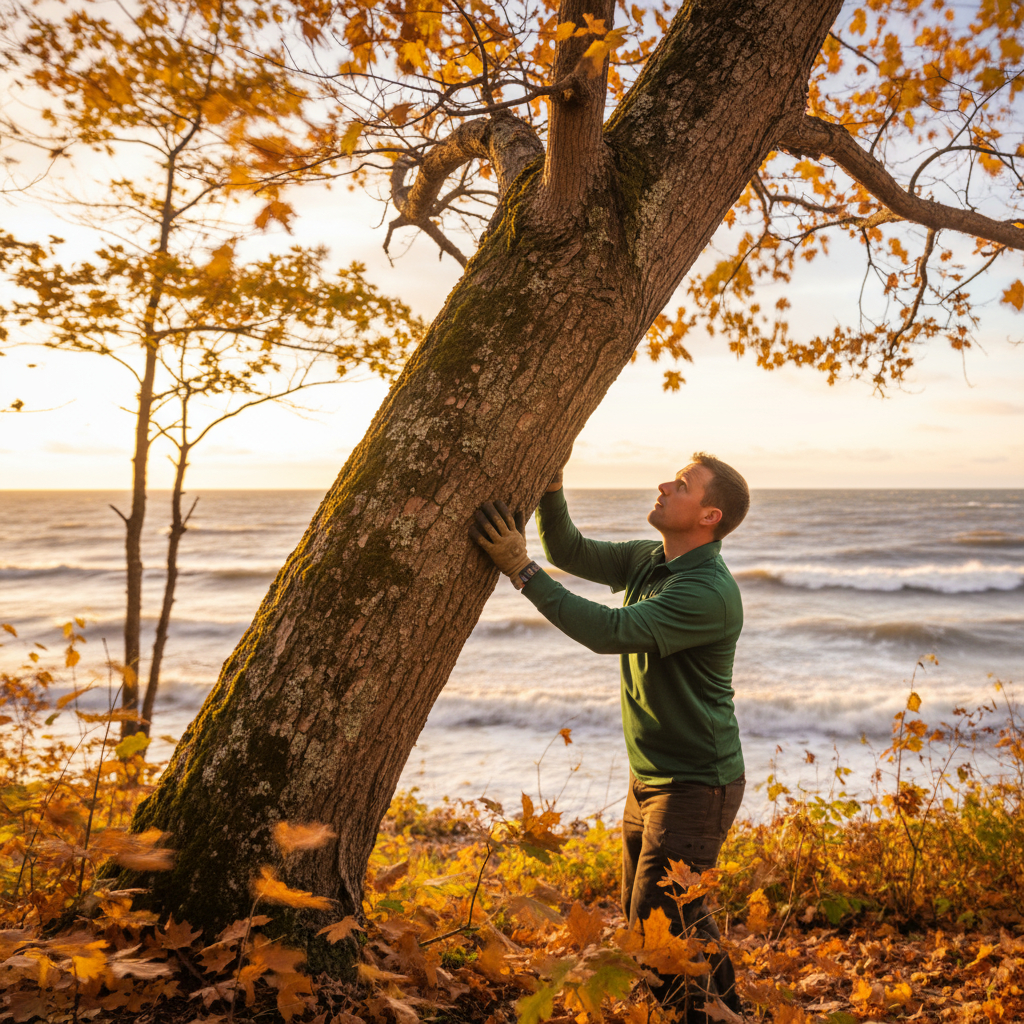
Bark changes as the tree matures.
Young maple trees have smooth, light grey bark.
Mature sugar maples develop darker, ridged bark.
Silver maples often have shaggy or peeling bark.
Red maples tend to have scaly bark as they age.
Bark texture becomes more useful for identification on older trees.
Maple trees produce winged seeds known as samaras — often called “helicopters.”
Sugar maples produce seeds in fall.
Red maples often drop seeds in spring.
Silver maples produce large winged seeds early in the season.
The angle between the wings can help narrow down the species.
Maples generally have:
Rounded or oval canopy shapes
Strong central trunks (when properly maintained)
Fast to moderate growth rates depending on species
Silver maples grow quickly and often develop weaker branch structures. Sugar maples grow slower but develop stronger wood.
If branches are overextended, crossing, or heavy on one side, it may be time for professional thinning or structural pruning.
Learn more about tree thinning services here:
https://tylerstreeservices.ca/tree-thinning/
In Ontario, fall colour can be a strong clue:
Sugar maples: bright orange to deep red
Red maples: vibrant red
Silver maples: yellow
While colour alone isn’t definitive, it helps confirm identification when combined with leaf shape and bark.
Identifying your maple tree correctly helps determine:
When it should be pruned
How aggressively it can be trimmed
Its structural risk factors
Long-term health considerations
For example, silver maples are more prone to limb breakage in storms, especially during heavy snow or ice accumulation.
If your maple tree has dead or hazardous limbs, professional removal may be necessary:
If you’re unsure of the species or if the tree is mature and close to your home, professional assessment is recommended.
Large maple trees require proper cutting techniques to avoid long-term decay or structural weakness.
If you’re located in Simcoe County and need an evaluation, you can request a quote here: https://tylerstreeservices.ca/request-quote/
Maple trees are common throughout the region, especially in established neighbourhoods with mature canopies.
If you’re located in Barrie and need structural pruning or removal, our team provides professional tree removal in Barrie:
Homeowners dealing with large sugar or silver maples in Orillia can learn more about our tree removal services in Orillia.
For properties in Innisfil, especially lakefront homes with mature maples, see our tree removal in Innisfil page.
We also provide safe and insured maple tree removal in Midland and Collingwood, where wind exposure and winter weather can increase structural stress.How to identify maple leaf
Identifying a maple tree in Canada starts with the leaf, but bark texture, seeds, and overall growth habit all help confirm the species.
If you’re planning pruning, thinning, or removal, correct identification ensures the work is done at the right time and in the right way — protecting both your property and the long-term health of the tree.
Curious about tree trimming, stump grinding, or professional tree removal? Explore our website to learn more about how Tyler’s Tree Services can help keep your property safe and beautiful. Whether you need expert advice or a service quote, we’ve got you covered!

With nearly a decade of experience, we handle everything from precise trimming to safe removals, ensuring top-quality care.

Fully insured and WSIB certified, we follow strict safety standards to protect your property and our crew on every job.

We’re committed to expert service and clean results, ensuring you’re fully satisfied with every tree we trim or remove.

We are insured with $5M coverage ($2M per occurrence), ensuring a worry-free experience on every job you hire us for.
The information in this article was compiled from reputable public sources and interpreted by an expert copywriter for general educational purposes. While Tyler’s Tree Services makes every effort to provide accurate and up-to-date guidance on tree care and safety in Barrie & Simcoe County. Conditions can vary by property, tree species, and season. This content is not a substitute for a professional arborist’s inspection or advice. Tyler’s Tree Services and its authors are not responsible for any actions taken based on this article. For personalized tree care recommendations or safety concerns, we strongly recommend consulting a certified arborist