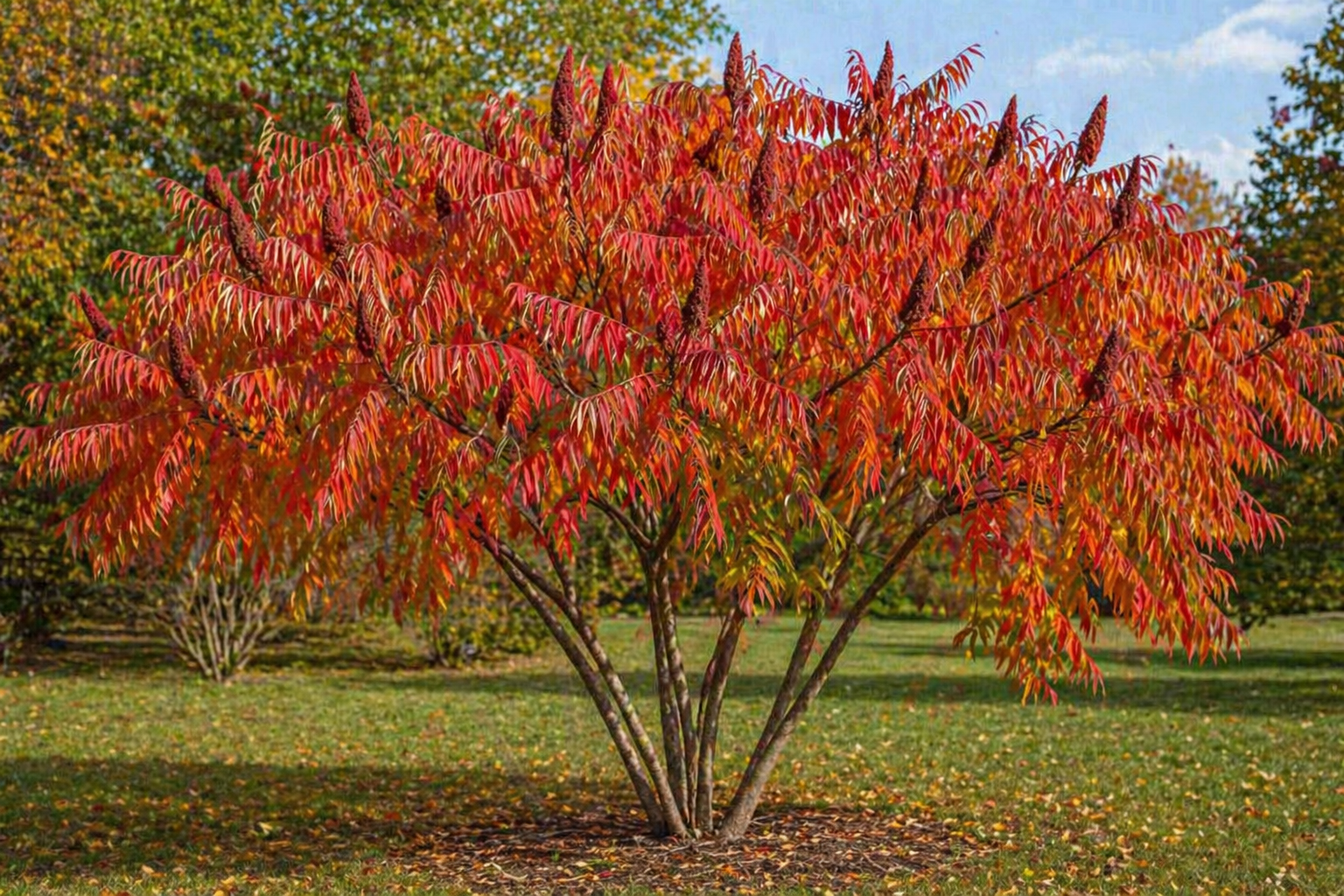
Sumac trees are a common sight across Ontario landscapes, especially along roadsides and property edges. Many homeowners in Barrie and Simcoe County notice these distinctive plants and wonder if they are safe to keep or remove.
Understanding the difference between safe and poisonous sumac is the key to making the right decision.
A sumac tree is a fast-growing shrub or small tree known for its upright shape, feather-like leaves, and clusters of red or green berries. In Ontario, the most common type is staghorn sumac.
Staghorn sumac is easy to recognize:
Most sumac trees found in Ontario are not dangerous. They are often used as natural barriers or left to grow in open areas due to their resilience.
Sumac tends to spread quickly through root systems. This is why it often appears in clusters along fence lines, ditches, and unused areas of land.
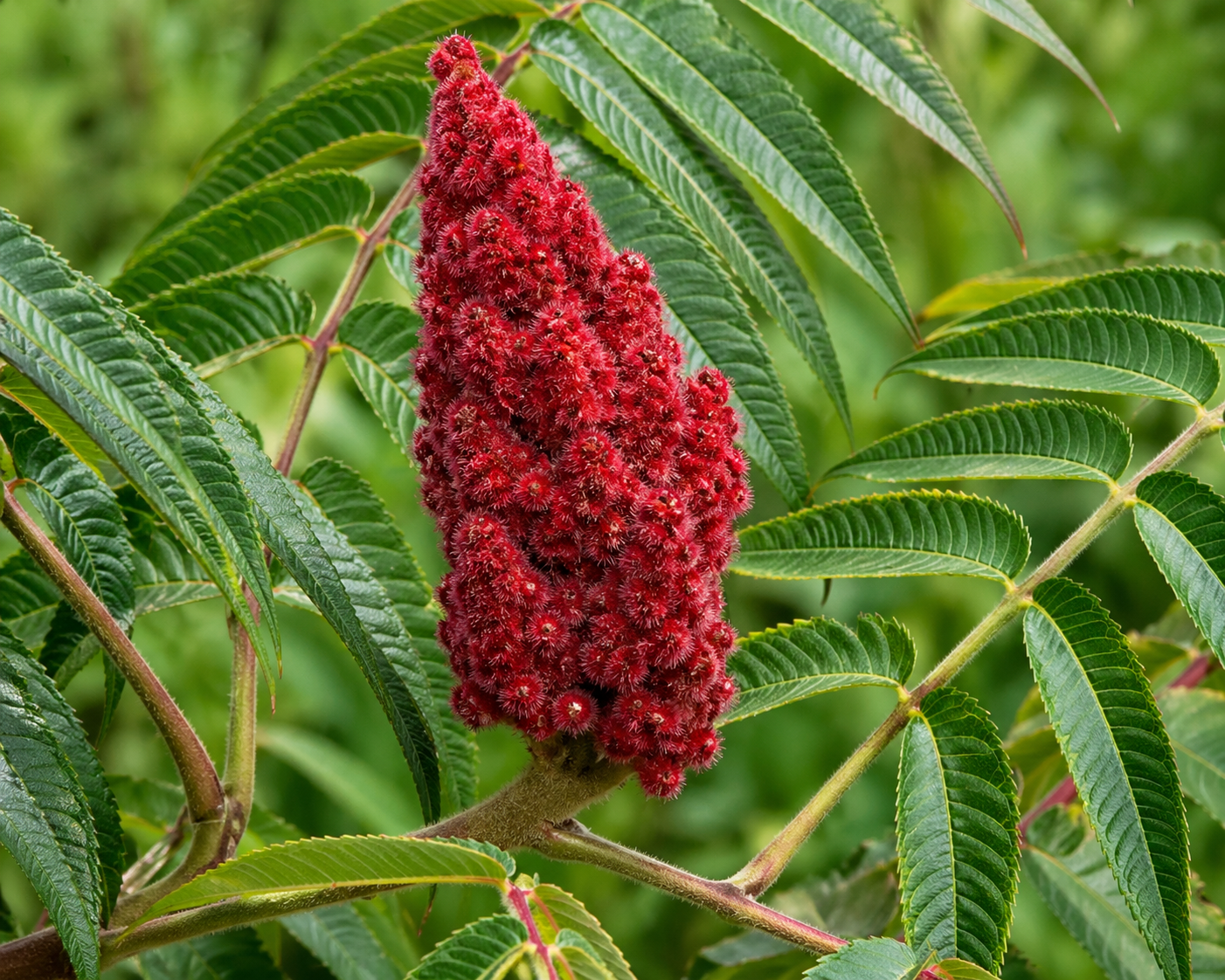
Poisonous sumac tree is a completely different plant from the common staghorn sumac seen across Simcoe County. It contains an oil called urushiol, which can cause skin irritation when touched.
Poison sumac typically grows in:
It looks different from safe sumac:
Most residential properties in Barrie and surrounding areas are not natural environments for poison sumac. However, rural properties or land near water sources may still have it.
When there is uncertainty, it is safer to avoid contact and get a proper assessment. Tyler’s Tree Services arborist reports can help confirm plant identification before any removal or cutting is done.
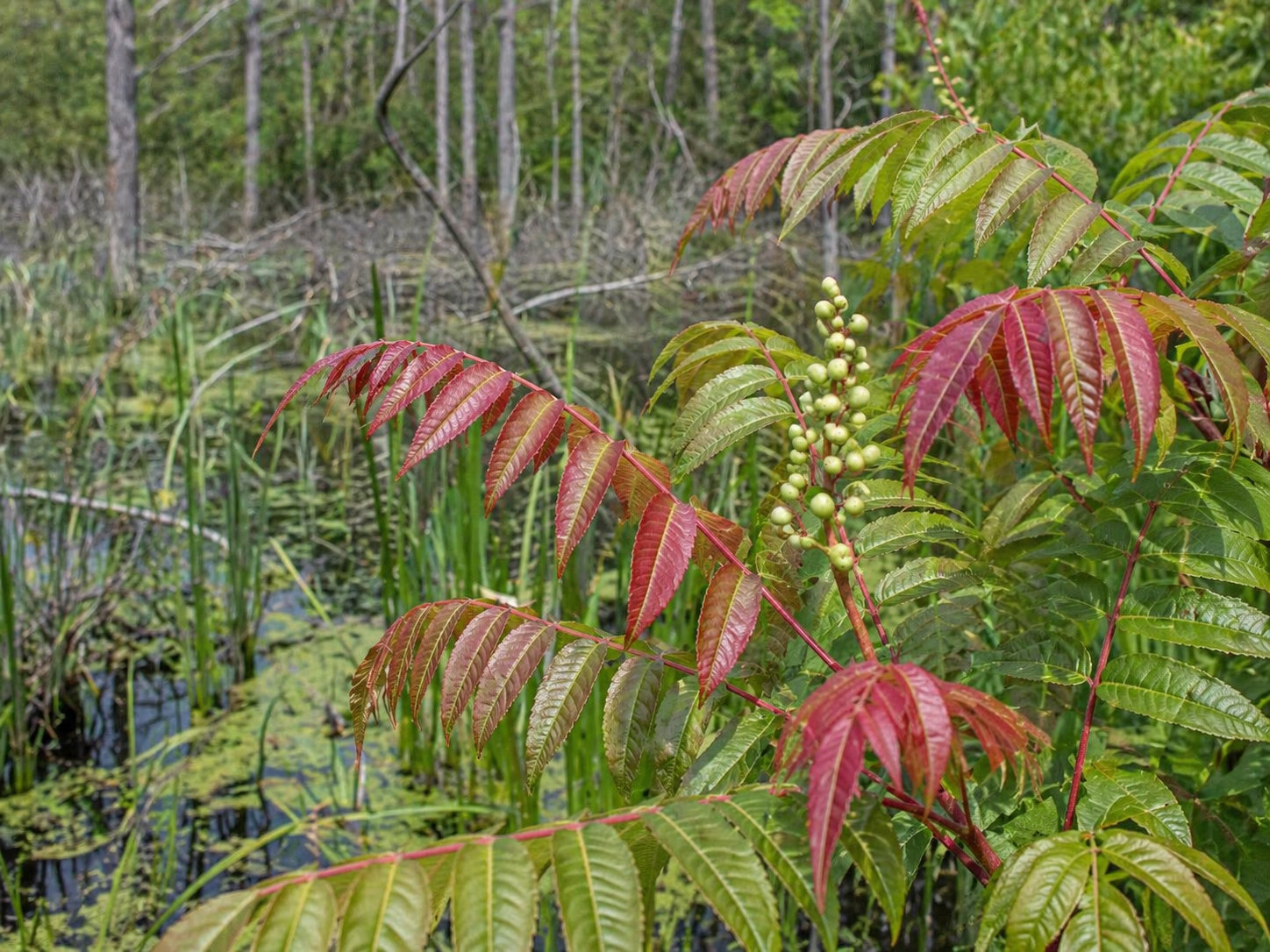
Not all sumac trees are poisonous. This is one of the most common misconceptions.
Here is the clear breakdown:
Skin reactions from poison sumac happen when the plant oil touches the skin. This can occur through:
Once the oil is washed off, the reaction does not spread from person to person.
For homeowners dealing with overgrown or spreading sumac, proper handling is important. Tyler’s Tree Services tree removal service ensures safe removal without spreading the plant or causing unnecessary exposure.
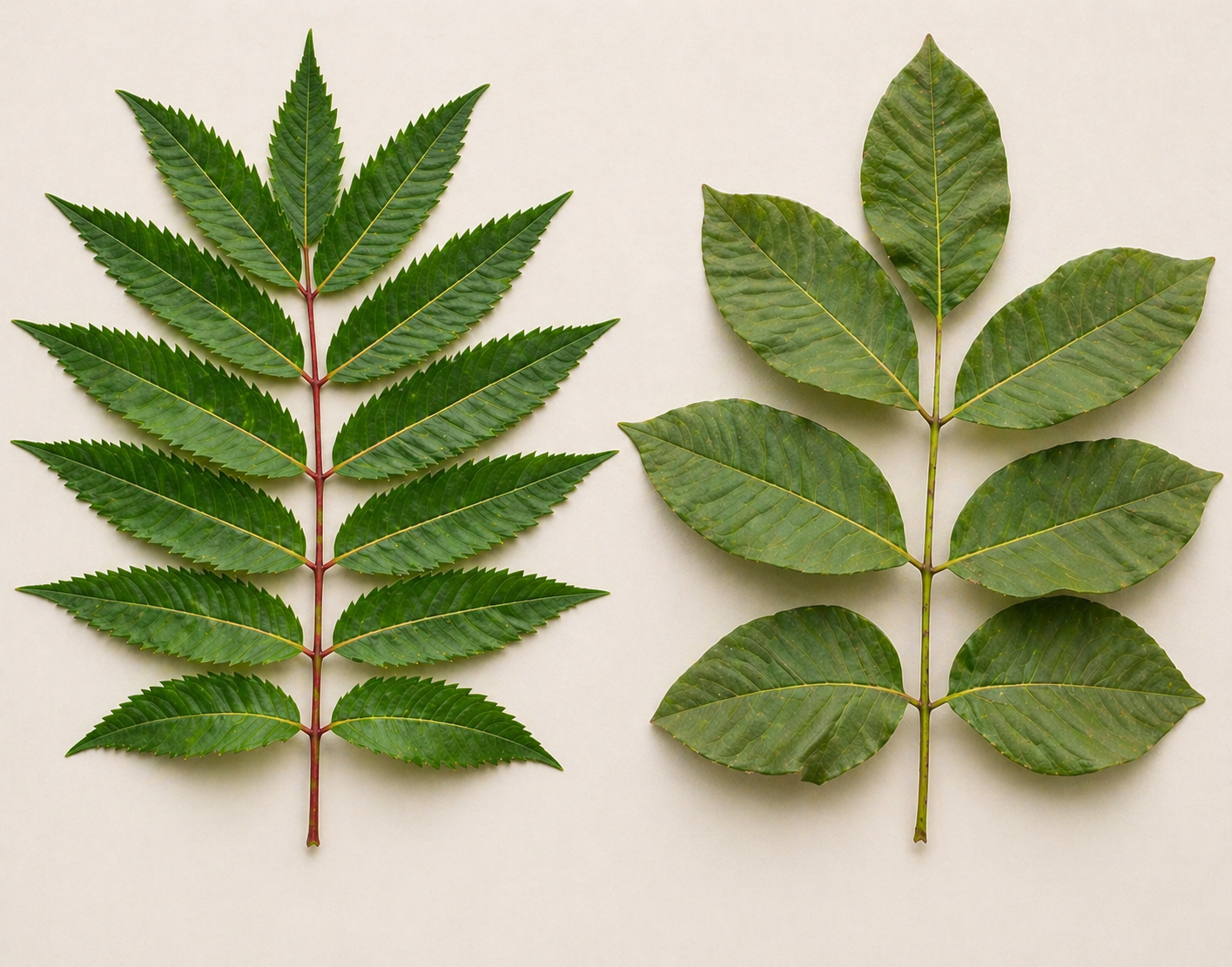
Correct identification is the most important step before deciding what to do with a sumac tree.
Look for these key differences:
Safe sumac:
Poison sumac:
If the plant is growing in a dry backyard or along a roadside, it is most likely staghorn sumac.
When in doubt, avoid cutting or handling the plant until it is confirmed.
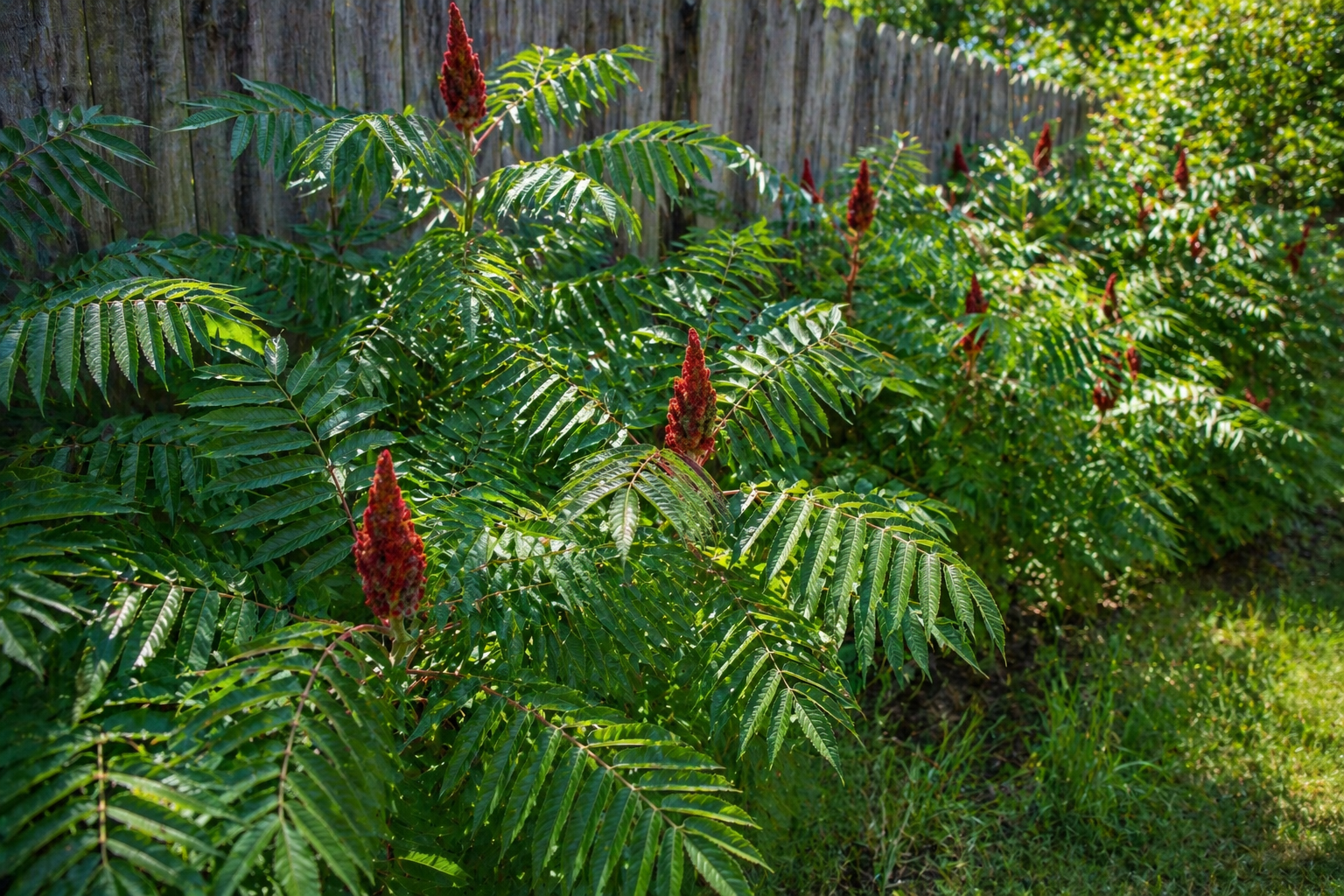
Ontario homeowners frequently encounter sumac trees on:
In Barrie and across Simcoe County, staghorn sumac thrives because it adapts well to poor soil and open sunlight.
This can be useful in some cases. Sumac can help stabilize soil and prevent erosion. It also adds seasonal color to a property.
However, uncontrolled growth can become an issue. Sumac spreads through underground roots, which can lead to:
For localized support, Tyler’s Tree Services tree health check in Barrie can assess whether the sumac should be managed, contained, or removed.
Not every sumac tree needs to be removed.
Consider leaving it if:
Some homeowners choose to keep sumac for its natural look and seasonal color.
If maintained properly, it can remain a low-risk part of the landscape.
Extra care is needed when:
Even safe sumac can cause mild irritation for some individuals when handled without protection.
Protective gloves and long sleeves are recommended for any yard work involving unknown plants.
Professional help becomes important when:
Removal is not just about cutting the visible plant. The root system must be handled properly to prevent regrowth.
For properties in surrounding areas, Tyler’s Tree Services tree removal in Innisfil and Tyler’s Tree Services tree removal in Orillia provide targeted support based on local conditions.
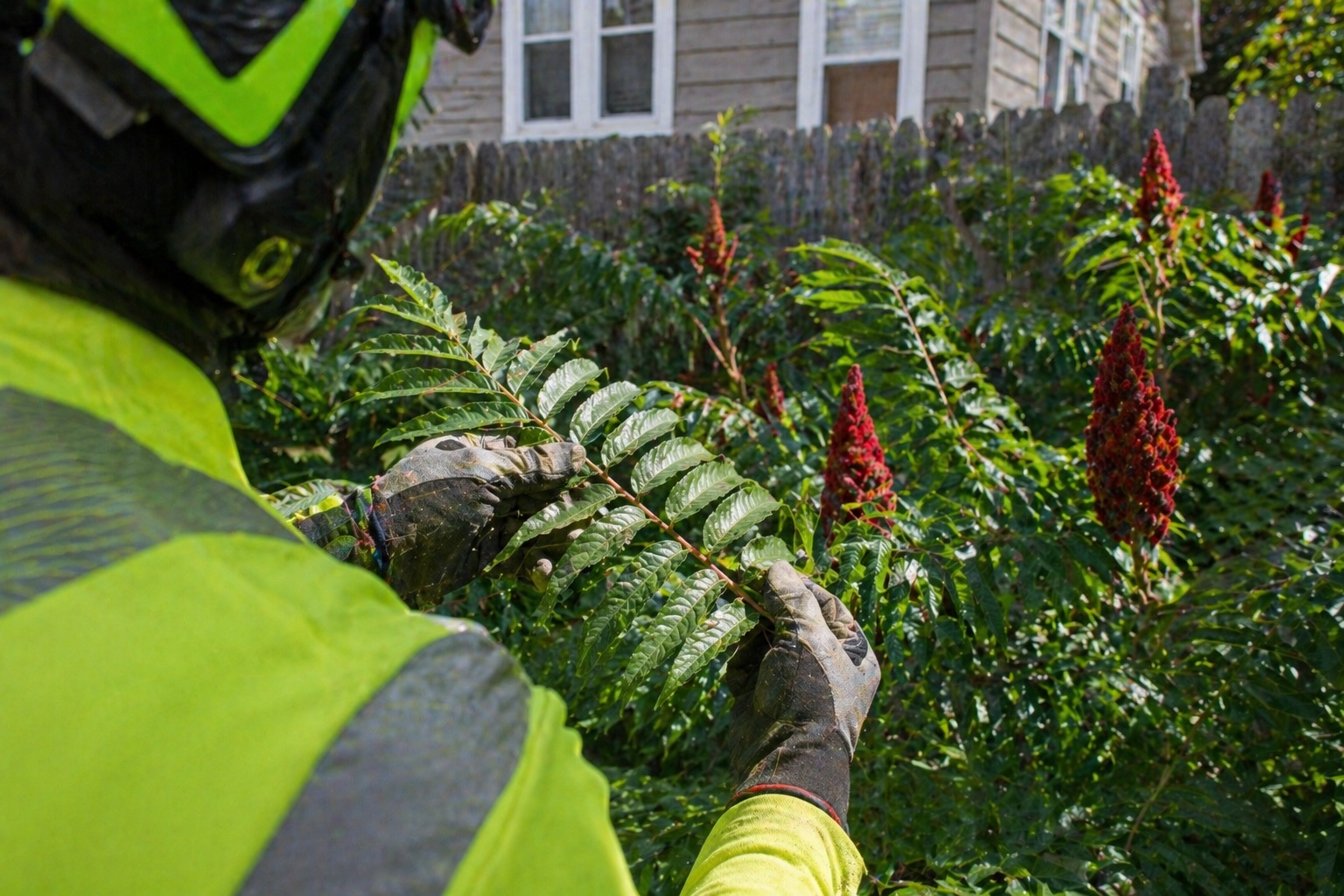
If a sumac tree is present on the property:
For a deeper breakdown on removal methods, Tyler’s Tree Services guide on How To Get Rid of Sumac explains safe and effective approaches for long-term control.
Sumac trees are not always a problem, but they can become one if left unmanaged or misidentified.
Proper assessment prevents unnecessary removal and avoids exposure risks. Safe handling also ensures that the plant does not spread further across the property.
Tyler’s Tree Services provides practical support across Barrie and Simcoe County. From identification to full removal, the focus stays on safety, control, and long-term property health.
Curious about tree trimming, stump grinding, or professional tree removal? Explore our website to learn more about how Tyler’s Tree Services can help keep your property safe and beautiful. Whether you need expert advice or a service quote, we’ve got you covered!

With nearly a decade of experience, we handle everything from precise trimming to safe removals, ensuring top-quality care.

Fully insured and WSIB certified, we follow strict safety standards to protect your property and our crew on every job.

We’re committed to expert service and clean results, ensuring you’re fully satisfied with every tree we trim or remove.

We are insured with $5M coverage ($2M per occurrence), ensuring a worry-free experience on every job you hire us for.
The information in this article was compiled from reputable public sources and interpreted by an expert copywriter for general educational purposes. While Tyler’s Tree Services makes every effort to provide accurate and up-to-date guidance on tree care and safety in Barrie & Simcoe County. Conditions can vary by property, tree species, and season. This content is not a substitute for a professional arborist’s inspection or advice. Tyler’s Tree Services and its authors are not responsible for any actions taken based on this article. For personalized tree care recommendations or safety concerns, we strongly recommend consulting a certified arborist
