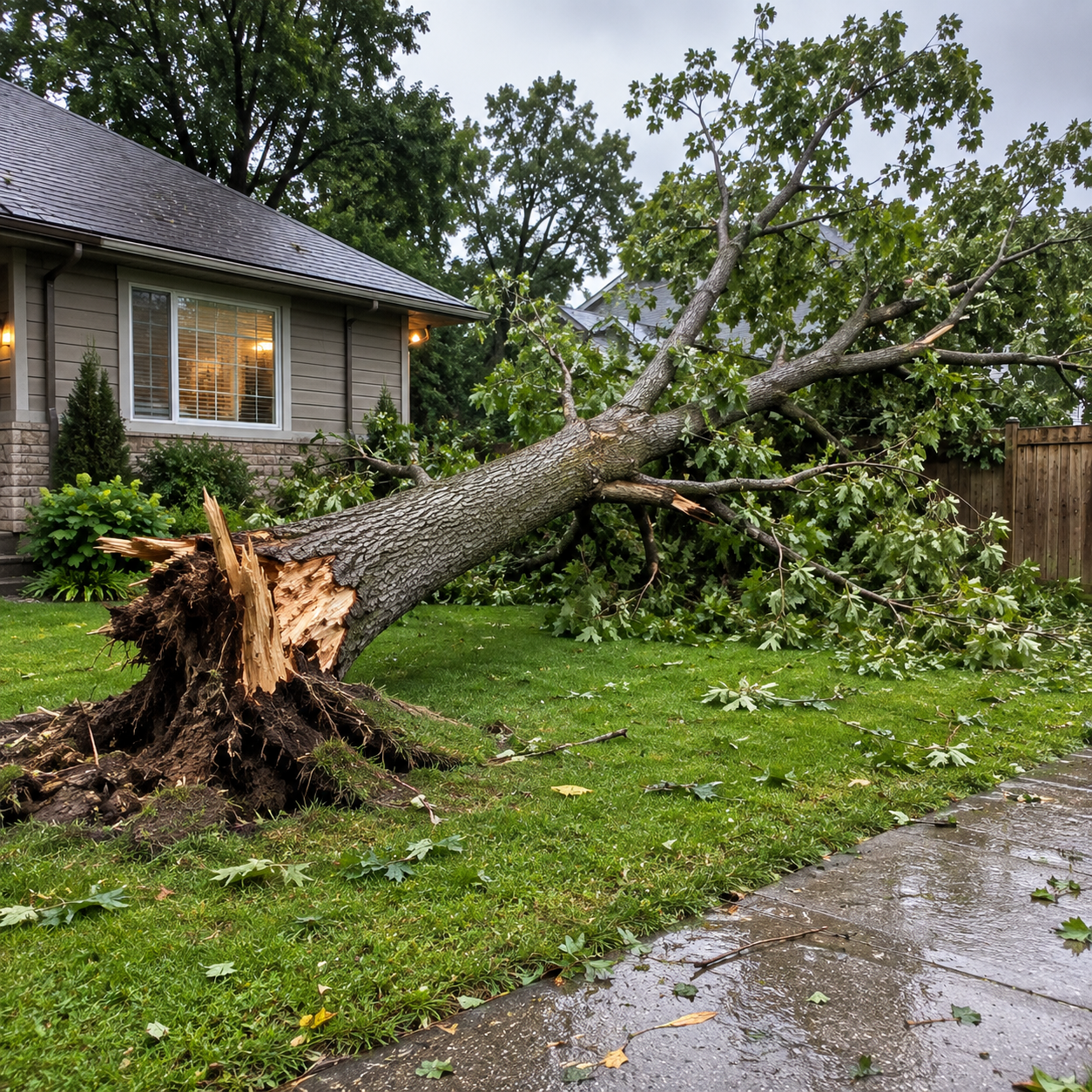
When a tree falls on a property, the first question is usually whether insurance will cover the removal. In Ontario, the answer often depends on what the tree hit, what damage occurred, and what the homeowner’s policy says.
This article is general information only. It is not insurance or legal advice. We remove fallen trees, clear storm damage, and provide estimates or invoices homeowners can share with their insurer, but coverage decisions belong to the insurance company.
A fallen tree can still be dangerous after it is on the ground. Large limbs may be under tension, the trunk may shift, and branches can be tangled with fences, roofs, decks, sheds, or wires.
Do not stand, park, work, or let anyone walk beneath broken limbs or unstable sections. If the tree is touching a powerline, stay back and contact the proper utility or emergency service before arranging cleanup.
For non-emergency situations, slow down long enough to document the scene and contact the insurer. When the tree is creating an immediate hazard, blocking access, or damaging a structure, safety comes first.
Take photos from a safe distance before anyone starts cutting. Wide photos and close-ups can both be useful for an insurance conversation.
A common insurance distinction is whether the fallen tree damaged insured property. A tree that falls onto a house, garage, insured shed, fence, or other covered structure may be handled differently than a tree that falls in the middle of the yard without damaging anything.
That does not mean every structure-related claim is automatically covered. It also does not mean a tree on the lawn is never covered. Policy language, deductibles, cause of loss, maintenance history, and insurer requirements can all affect the answer.
For homeowners asking, “does insurance cover tree removal,” the practical answer is this: your insurer decides coverage, and the removal company handles the safe cleanup. We can assess the tree, provide a removal estimate, and document the work, but we do not interpret your policy.
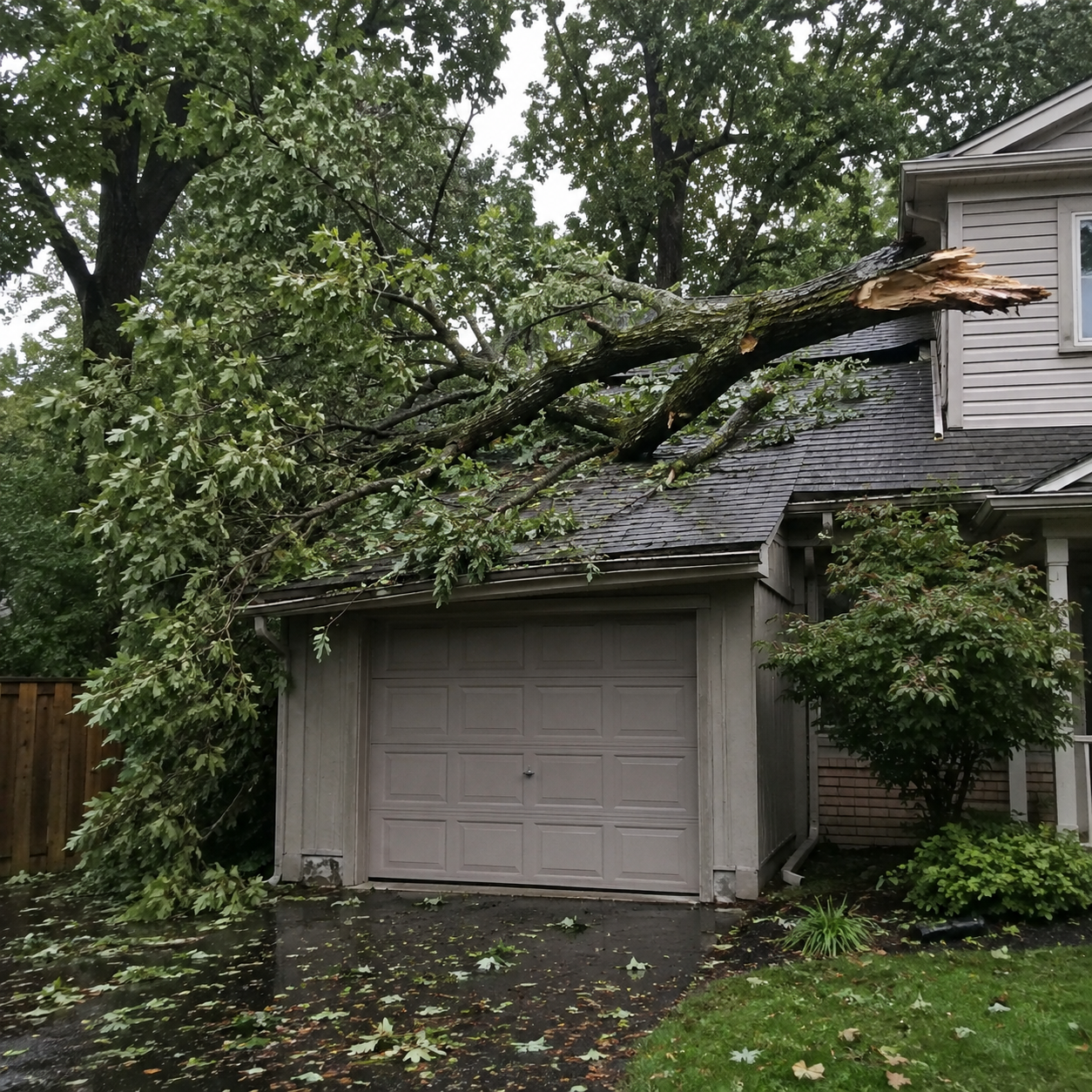
If a tree falls without damaging insured property, some policies may offer limited cleanup coverage or no coverage at all. For example, a tree that falls into an open backyard may be treated differently than one that lands on a roof or blocks a covered driveway access.
Another factor is why the tree fell. Storm damage may be reviewed differently than a tree that was visibly dead, neglected, or already showing major structural problems before it failed. Insurers may ask questions about the condition of the tree, recent weather, photos, and whether the tree had obvious warning signs.
This is why documentation matters. A clear record helps the insurer understand what happened before the site changes during cleanup.
Ontario storms can bring heavy wind, wet snow, ice, and saturated soil. After severe weather, document the date, the damage, and the condition of the tree before moving debris when it is safe.
Before non-emergency cleanup, contact your insurance company when practical. Ask what they need before the tree is removed, whether they want photos, and whether an estimate should be submitted first.
Useful documentation usually includes photos of the full tree, the point of impact, damaged structures, broken limbs, the trunk, and the base of the tree. Keep notes about when the tree fell, what weather conditions were happening, and whether access to the home or driveway is blocked.
Avoid changing the scene more than necessary before the insurer has had a chance to advise you. If cleanup is urgent, take photos first when it is safe, then focus on reducing risk.
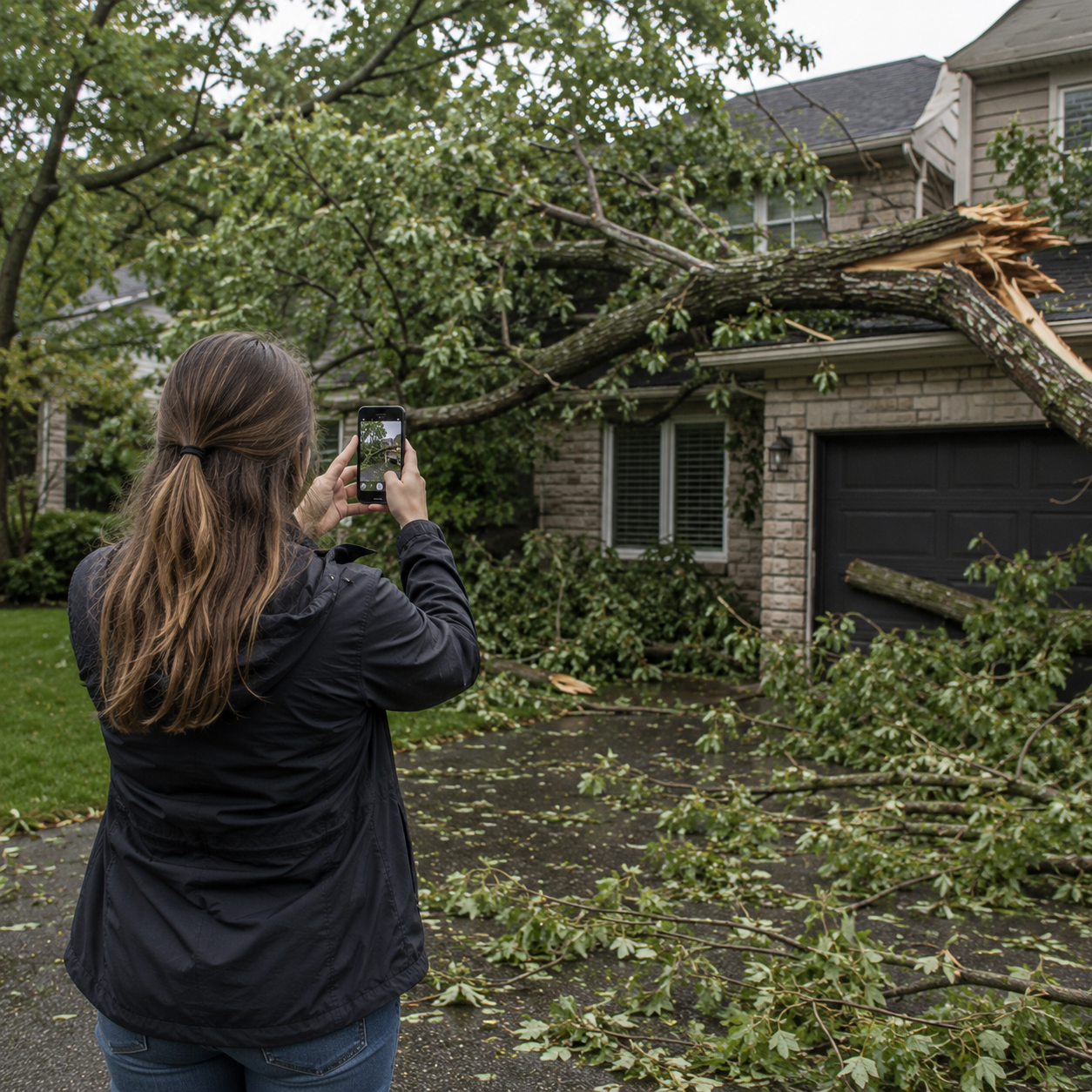
Sometimes waiting is not practical. A fallen tree may block a driveway, press against a home, damage a roof, lean on another tree, or create a hazard in a high-use area.
In urgent cases, the priority is preventing further damage and keeping people away from unstable wood. If the situation involves a home, garage, driveway, or active hazard in the Barrie area, our emergency tree removal service can help address the immediate risk.
Even during urgent cleanup, photos and written notes can help. If safe, document the scene before work begins and keep copies of the estimate, invoice, and any communication related to the removal.
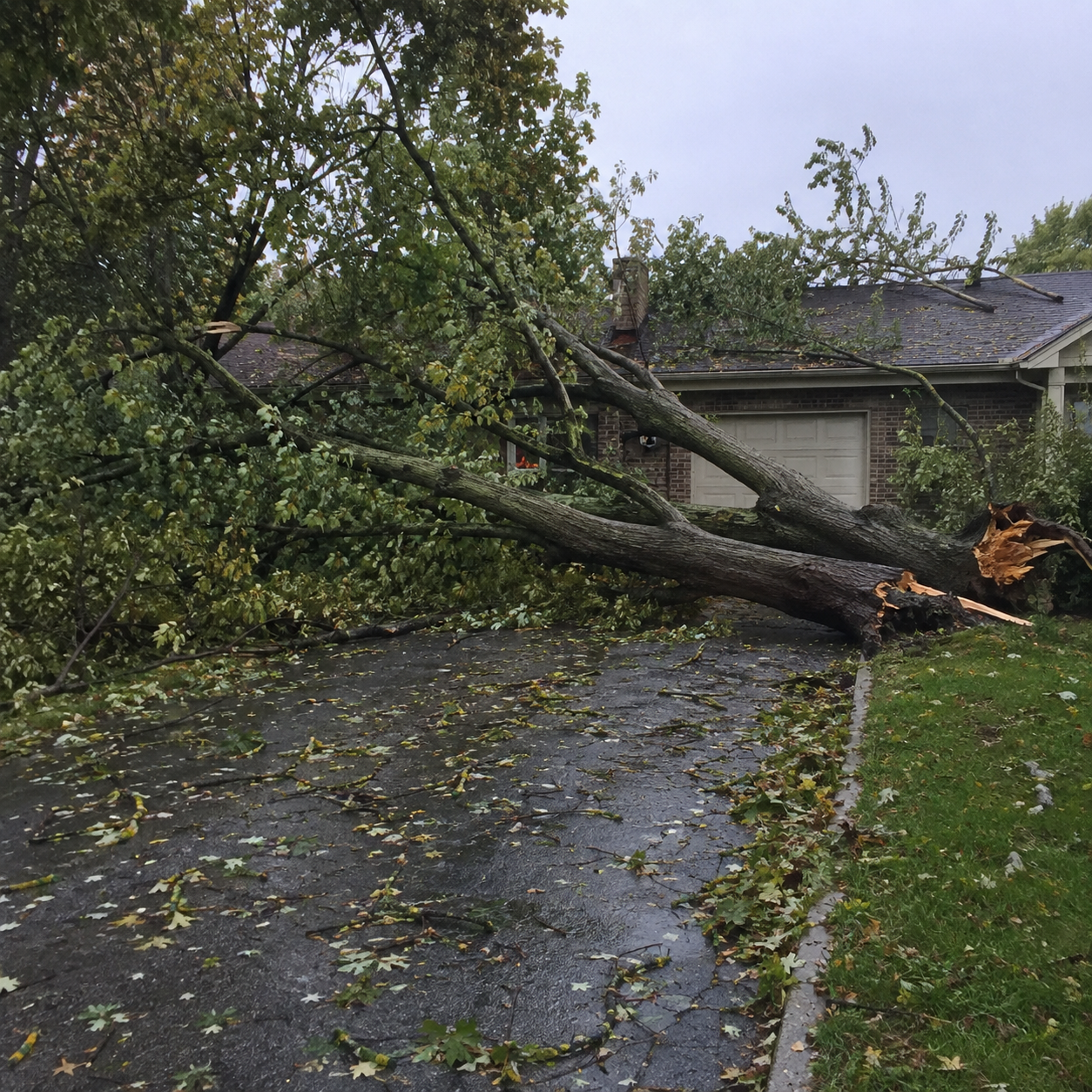
Home insurance policies are not all the same. Coverage can vary by insurer, policy type, deductible, cause of damage, property use, and what exactly was damaged.
Some policies may cover removal only when the fallen tree damages covered property. Others may include limited debris removal in certain circumstances. A deductible may also affect whether it makes sense to open a claim.
We cannot tell a homeowner whether a claim will be approved. The insurer must confirm that. Our role is to remove the tree safely, explain what work is required, and provide the estimate or invoice the homeowner can share when needed.
Before approving non-emergency cleanup, ask your insurer whether they need the estimate, photos, or claim number included on the paperwork.
Fallen tree removal is often more complicated than cutting up wood on the ground. Branches can be loaded with tension, trunks can roll, and nearby structures may need protection while sections are removed.
Our crew looks at how the tree fell, where the weight is sitting, what structures are nearby, and how debris can be removed without causing more damage. For planned removals, storm cleanup, and fallen-tree situations, our tree removal services focus on safe removal and clear cleanup planning.
In Wasaga Beach and nearby Simcoe County communities, storms and wind exposure can create fallen-tree situations around cottages, driveways, fences, and treed residential lots. Homeowners looking for local service support can review our page for tree removal in Wasaga Beach when a fallen or damaged tree needs professional attention.
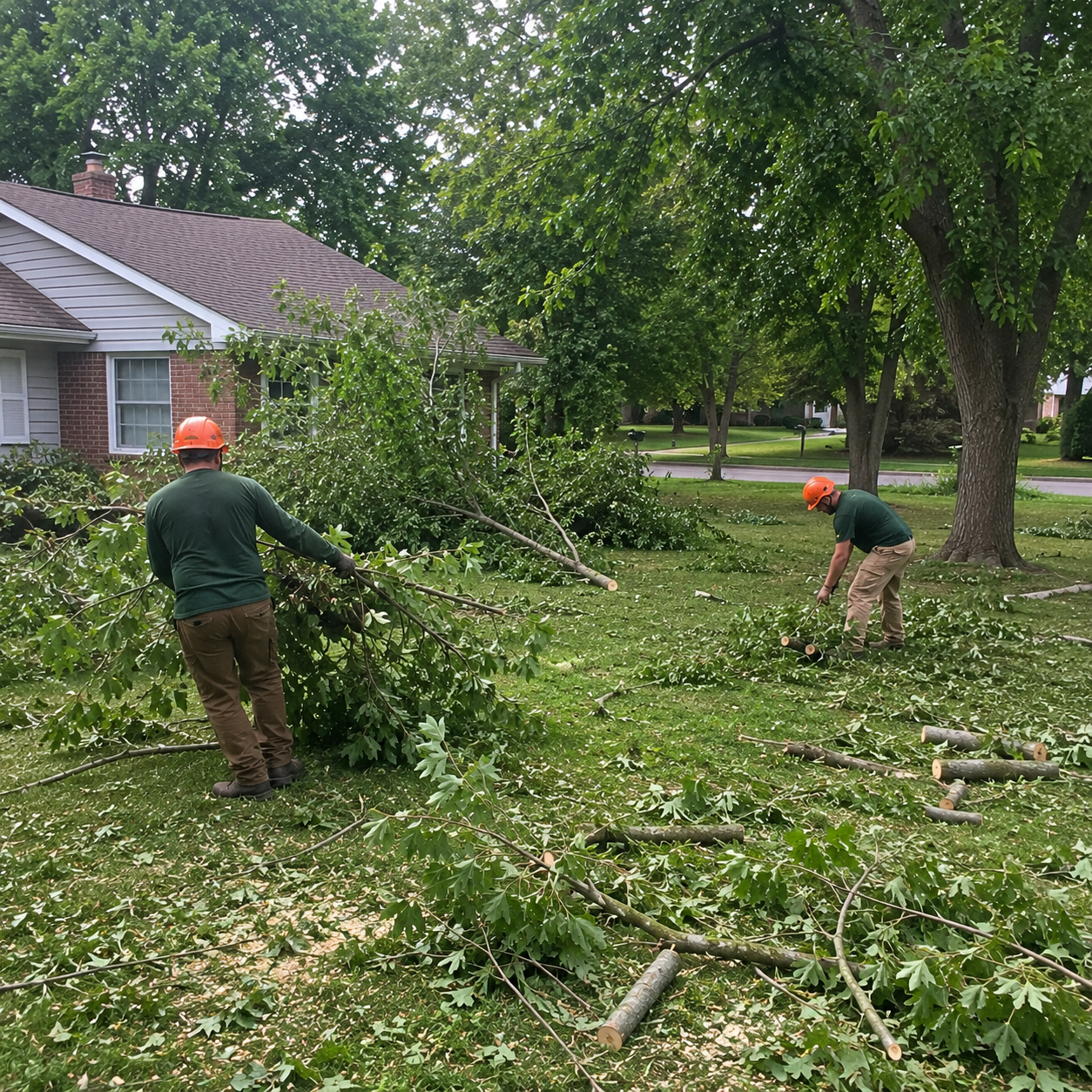
A good estimate starts with clear information. Send the address, photos, what the tree landed on, whether access is blocked, and whether the insurer has provided any instructions.
Helpful details include whether the tree is touching a structure, whether wires are nearby, whether the trunk has shifted, and whether the cleanup is urgent. Also mention if you need the estimate or invoice for an insurance file.
Request an estimate for safe fallen-tree removal and provide it to your insurer when required. Send the details and request an estimate so we can assess the situation and explain the safest cleanup plan.
Insurance coverage for fallen tree removal depends on the policy and the damage involved. A tree that damages insured property is usually a different situation than a tree that falls without damaging a covered structure, but every policy needs to be reviewed by the insurer.
Start with safety, document the scene, contact the insurer before non-emergency cleanup when practical, and arrange professional removal when the tree creates risk or debris that cannot be handled safely.
We can remove the fallen tree, clean up the site, and provide documentation for the work performed. Your insurance company is the right place to confirm coverage, claim requirements, and reimbursement.
Curious about tree trimming, stump grinding, or professional tree removal? Explore our website to learn more about how Tyler’s Tree Services can help keep your property safe and beautiful. Whether you need expert advice or a service quote, we’ve got you covered!

With nearly a decade of experience, we handle everything from precise trimming to safe removals, ensuring top-quality care.

Fully insured and WSIB certified, we follow strict safety standards to protect your property and our crew on every job.

We’re committed to expert service and clean results, ensuring you’re fully satisfied with every tree we trim or remove.

We are insured with $5M coverage ($2M per occurrence), ensuring a worry-free experience on every job you hire us for.
The information in this article was compiled from reputable public sources and interpreted by an expert copywriter for general educational purposes. While Tyler’s Tree Services makes every effort to provide accurate and up-to-date guidance on tree care and safety in Barrie & Simcoe County. Conditions can vary by property, tree species, and season. This content is not a substitute for a professional arborist’s inspection or advice. Tyler’s Tree Services and its authors are not responsible for any actions taken based on this article. For personalized tree care recommendations or safety concerns, we strongly recommend consulting a certified arborist
